
Professor Huy P. Phan
Professor - Faculty of Humanities, Arts, Social Sciences and Education; School of Education
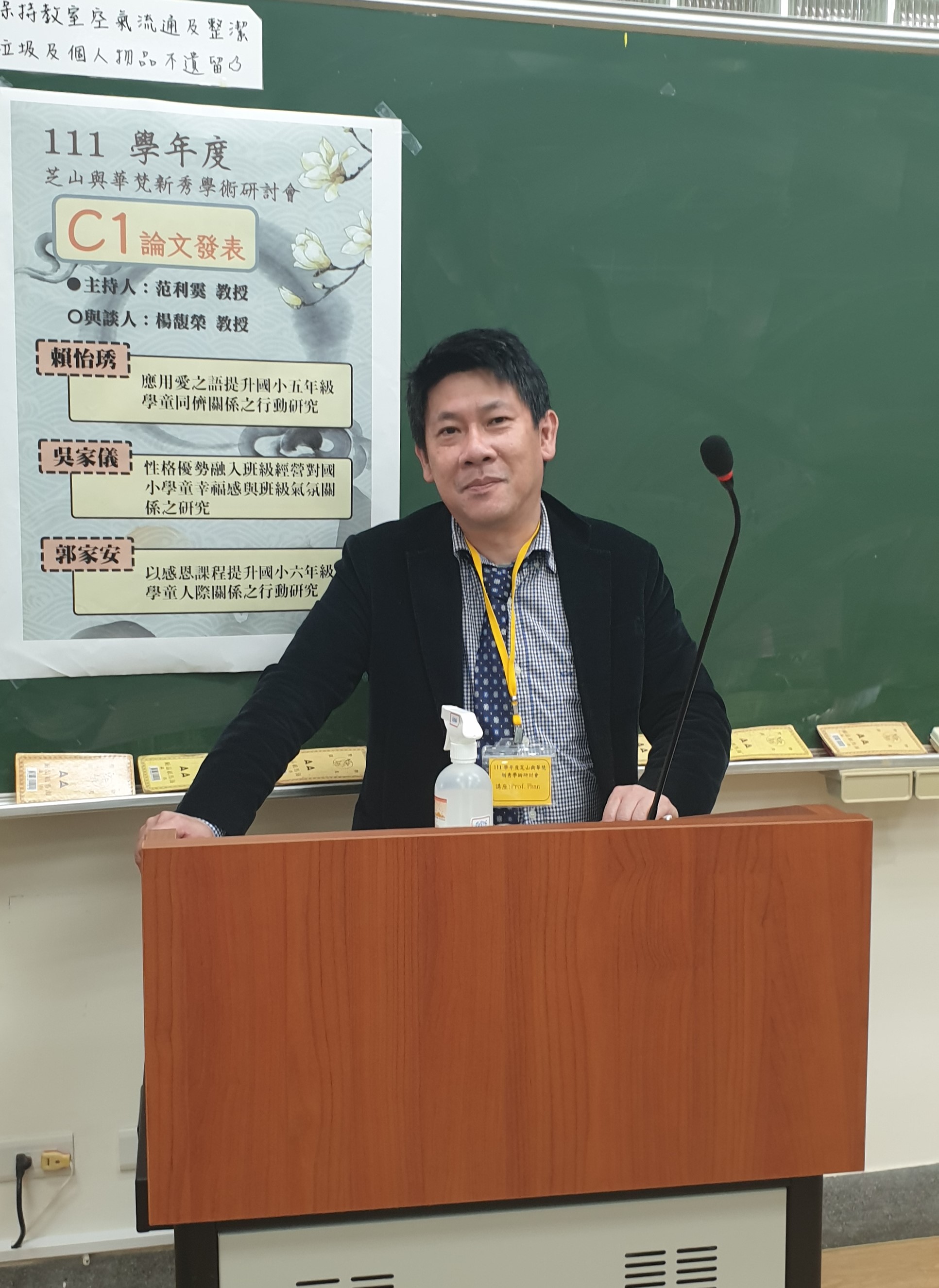
Biography
Research Interests, Knowledge and Expertise
My academic journey began several years ago after completing my Ph.D. in Educational Psychology at the University of Sydney, Australia. In the early stages of my career, I was influenced by social cognitive theory (Bandura, 1997, 2018). My research initially focused on key themes such as achievement goals (e.g., Phan, 2009a, 2010), epistemology (e.g., Phan, 2008; Phan, 2009a), future time perspective (e.g., Phan, 2009a, 2015b), reflection (e.g., Phan, 2009b; Phan, 2014), hope (e.g., Phan, 2013, 2015a), self-efficacy (e.g., Phan, 2007, 2009c), student approaches to learning (e.g., Phan & Deo, 2007, 2008), and student engagement (e.g., Phan, 2016; Phan, Ngu, & Alrashidi, 2016). A significant milestone in my career was the publication of Teaching, Learning and Psychology (Phan & Ngu, 2019), a comprehensive book co-authored with Associate Professor Bing Ngu and published by Oxford University Press, which encapsulated and expanded upon my expertise in these domains.
My passion for acquiring new knowledge has driven my evolution as an academic, enabling my teaching and research to extend into diverse fields, including life and death education, holistic psychology, human optimization, trans-mystical psychology, and esoteric experiences. Over the past decade, I have focused on conceptualizing and developing original theoretical frameworks for research, such as the proposition of contextual mindsets.
I actively engage in research networking and collaboration, working with scholars and students across various countries, including Belgium, China, Fiji, Indonesia, Malaysia, Mexico, Singapore, Spain, and Taiwan. These collaborations have afforded me opportunities to contribute to book chapters, lead teaching and research workshops, and undertake consultancy work in countries such as Indonesia and Taiwan. My national and international research projects, often published in high-tier journals, employ a variety of methodological approaches, including cross-sectional, longitudinal, quasi-experimental, and philosophical designs, alongside advanced causal modelling techniques such as latent growth modelling. These collaborative efforts have also resulted in the development and submission of international grant applications, such as those to the European Union and the Indonesian Ministry of Education. My notable contributions focus on the theoretical understanding of pedagogical approaches, human agency, motivational beliefs, and psychological well-being. Key distinctions in my research include the exploration of these themes within broader frameworks that integrate both theoretical and practical perspectives. This trajectory reflects my ongoing commitment to advancing knowledge and fostering impactful academic collaborations – for example:
- Advancement of appropriate instructional designs, using cognitive load theory to facilitate effective learning experiences (e.g., Ngu & Phan, 2023; Ngu, Phan, Usop, & Hong, 2023; Phan, Ngu, & Li, 2021b).
- Advancement of cognitive load theory by focusing on key concepts of what I termed as optimal efficiency (Phan & Ngu, 2021c; Phan et al., 2021b), cognitive entrenchment (Phan & Ngu, 2021a), and perceived zone of certainty/uncertainty (Phan & Ngu, 2021d).
- Advancement of the study of optimal best practice (e.g., Phan, Ngu, & Williams, 2016; Phan, Ngu, & Yeung, 2017) and the development of the theory of human optimization, known as ‘The Framework of Achievement Bests’ (e.g., Phan, Ngu, & McQueen, 2020; Phan et al., 2017; Phan, Ngu, & Yeung, 2019), which focuses on the optimization of individuals’ life experiences.
- Advancement of the study of optimal best practice with the development of a theoretical premise, which I termed as student profiling or the ‘Consonance-Disconsonance of Best Practice’ (Phan & Ngu, 2021b; Phan, Ngu, Wang, Shih, Shi, & Lin, 2018).
- Advancement of the study of mindfulness and meditation practice and the proposition of an alternative model of mindfulness, which I termed as a Multifaceted Model of Mindfulness (e.g., Phan, Ngu, Chen, Wu, Shi, Shih, Wang, & Lin, 2020; Phan, Wang, Shih, Shi, Lin, & Ngu, 2019).
- Advancement in research designs and development of an alternative methodological design, which I termed as a Multi-time series, Multi-Group Single-Case Experimental Design (Phan & Ngu, 2017) for usage in social sciences research.
- Advancement of the study of positive psychology with the development of an alternative theoretical premise, which I termed as holistic psychology (e.g., Phan, Ngu, Chen, & Hsu, 2024; Phan, Ngu, & White, 2021c).
- Advancement of the study of cognitive processes of learning with proposition of alternative theoretical premise pertaining to the concept of cognitive entrenchment (e.g., Phan & Ngu, 2021a, 2021d).
- Advancement of the study of esotericism and spirituality by considering an alternative theoretical premise, which I termed as a trans-mystical framework for understanding of life and death experiences (e.g., Phan et al., 2024; Phan, Ngu, Hsu, Chen, & Wu, In Press).
- Advancement of methodological designs for usage with a recent focus on what is known as philosophical psychology discourse (e.g., Phan, Chen, Ngu, & Hsu, 2023; Phan et al., 2024)
- Advancement of the study of life and death education (e.g., Phan, Ngu, Chen, Wu, Lin, & Hsu, 2020; Phan, Ngu, Chen, Wu, Shih, & Shi, 2021a) by proposing a conceptual-theoretical framework of life and death education for teaching and research purposes (Phan et al., 2023), and the development of a universal blueprint known as the ‘Life + Death Education Framework’ (Phan, Ngu, Hsu, & Chen, 2024c) for teaching and research purposes.
- Advancement of the study of personal mindset from a different anthropological-sociocultural perspective with the development of an alternative theoretical premise, which I termed as a holistic self and holistic mindset (Phan et al., 2023; Phan et al., 2024).
- Proposition of a new line of inquiry and theoretical premise, which I termed as trans-humanistic life experiences(Phan & Ngu, 2025; Phan et al., 2024c).
- Proposition of a theoretical model of ‘character building’, which I termed as the 4-Stage Model of Character Building (Phan, Ngu, Hsu, Chen, Usop, & Anding, 2026).
My research achievements, as briefly mentioned, are both innovative and impactful, positioning me among the top 3.5% of researchers worldwide (https://elsevier.digitalcommonsdata.com/datasets/btchxktzyw/6). This distinction reflects the depth and expertise of my contributions to the academic community. In 2019, for example, my work was recognized when Professor Heiko Daniel, then Deputy Vice-Chancellor (Research) at the University of New England (UNE), nominated me for the prestigious ARC College of Experts. Furthermore, my teaching and research endeavours, undertaken individually and collaboratively with colleagues such as Associate Professor Bing Ngu, have elevated UNE’s Excellence in Research for Australia (ERA) profile in Educational Psychology to an internationally competitive level, achieving an ERA rating of 4. This accomplishment aligns UNE’s standing with leading institutions in the field.
My leadership in both teaching and research, exemplified by numerous single and lead authorship publications in high-quality journals, has enabled me to provide meaningful mentorship to early-career researchers and students from diverse sociocultural contexts, including Australia, Bhutan, Fiji, Indonesia, Malaysia, and Taiwan. Collaborating with scholars and students from these varied backgrounds is a deeply rewarding aspect of my academic journey, fostering cross-cultural exchange and enabling the exploration of new frontiers in teaching, learning, and practical applications.
A central thesis of my work is the rigorous use of advanced methodological designs and statistical analyses (e.g., Ngu et al., 2023; Phan & Ngu, 2017). Examples include longitudinal structural equation modelling (e.g., Phan, 2008, 2009c), autoregressive longitudinal modelling (e.g., Phan & Ngu, 2016), and exploratory-confirmatory factor analysis (e.g., Phan, Ngu, Wang, Shih, Shi, & Lin, 2019). Recent contributions, such as those in Ngu et al. (2023) and Phan and Ngu (2017), highlight my commitment to methodological precision and theoretical innovation. Currently, I am collaborating with several colleagues to develop a holistic, unifying model of human agency that integrates the complexities of life, death, and transcendence. This ambitious project seeks to bridge diverse anthropological and sociocultural perspectives, offering nuanced insights into the subjective and objective dimensions of the physical world. This endeavour reflects my broader academic vision: to push boundaries, foster interdisciplinary inquiry, and contribute meaningfully to understanding the human agency in its entirety.
