
OORALA 40 YEARS: 1986–2026
This exhibition can be seen on the walls of the Dixson Library in the main stairwell and second floor landing.
Oorala Aboriginal Centre stands as one of the oldest continuously operating Aboriginal and Torres Strait Islander university centres in Australian higher education. Since opening on 14 April 1986, it has grown from a single room with 20 students to a purpose-built facility serving approximately 1,100 students annually, almost 6% of UNE’s student population. Over 1,500 Aboriginal and Torres Strait Islander graduates have completed their degrees at UNE and are proudly presented with their individualised sashes as part of their academic dress. This 40-year journey demonstrates that sustained institutional commitment to equity and access transforms lives and communities
Oorala’s significance to UNE cannot be overstated—it represents 40 years of sustained commitment to equity, a model of best practice that has transformed lives, and a culturally affirming space where Aboriginal and Torres Strait Islander students belong. At a critical moment when universities are called to uphold rights and support self-determination, Oorala demonstrates what’s possible.
Oorala is woven into the identity and aspirations of UNE.
This exhibition explores the ten themes that encapsulate Oorala
- The Beginning (1986)
- Frank Archibald Memorial Lecture
- On Country: Oorala's Physical Evolution
- Connecting with Our Students
- Teaching an Aboriginal Perspective
- Culture and Community
- TRACKS Indigenous Foundation Program
- Graduation and Sashing Ceremonies
- Ronyera Ekina: pathways to Higher Education
- The Oorala Awards: Celebrating Excellence
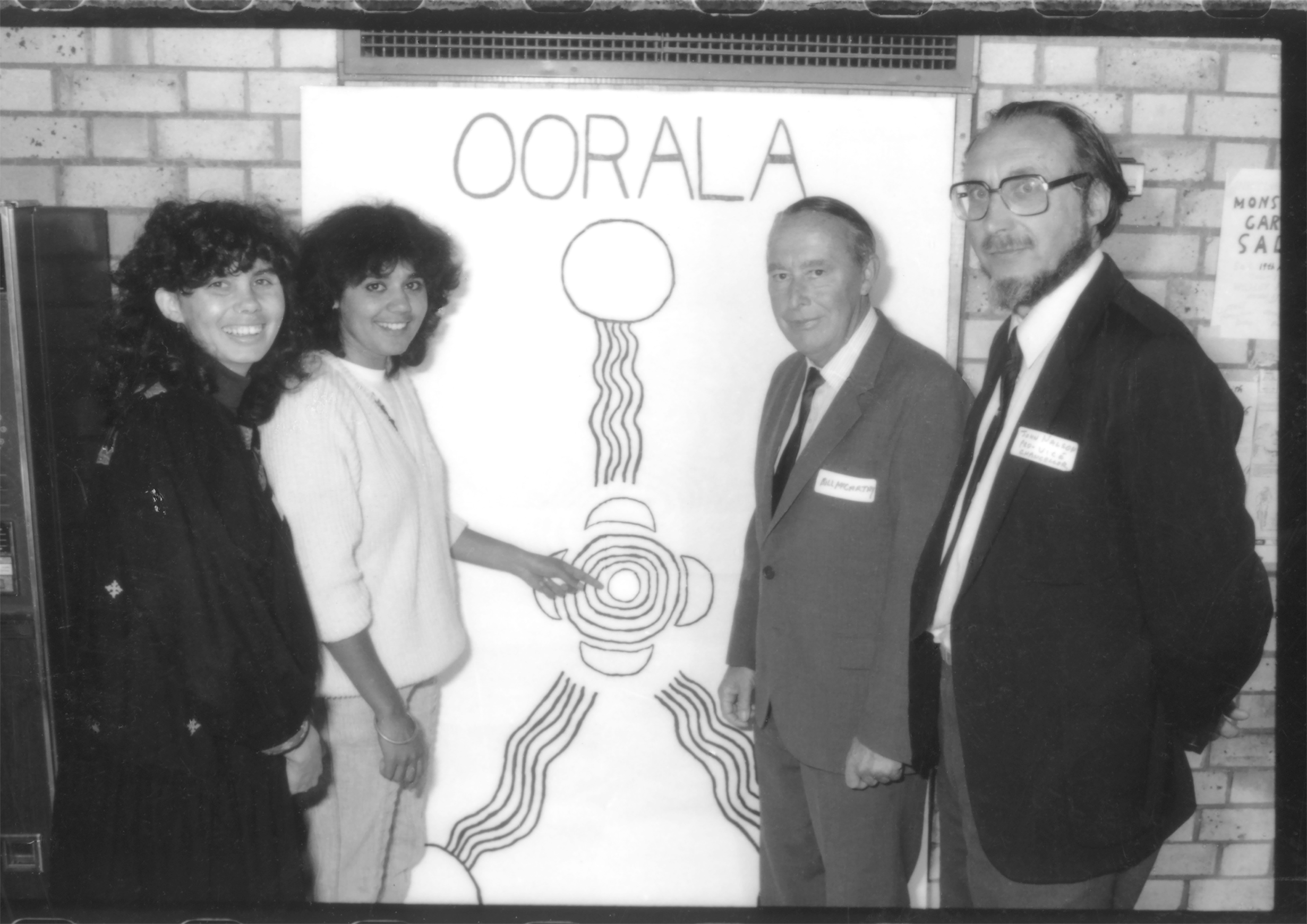
image: Lynette Riley, Cheryl Kitchener, Bill McCarthy and John Nalsen with thee newly designed Oorala logo
1. THE BEGINNING (1986)
Oorala emerged from genuine institutional commitment, articulated in UNE Council resolutions (1985) that promised Aboriginal and Torres Strait Islander education wouldn’t be peripheral, it would be central to the university’s operations.
On 14 April 1986 a single room in the Archaeology building opened its doors to just 20 Aboriginal and Torres Strait Islander students. The team was tiny, three staff members. Lynette Riley was appointed the Aboriginal Research Fellow and founding Director, Ms Rose Lovelock, as a Student Support Person, and Debbie Green as secretarial assistant. Yet they had something bigger than numbers, they had passion and vision.
The name “Oorala” was chosen with care. Staff, students and community members selected a word from the local Aboriginal language, one that meant “a camp” or “a place where people come together.” It was perfect because that’s exactly what they wanted to create.
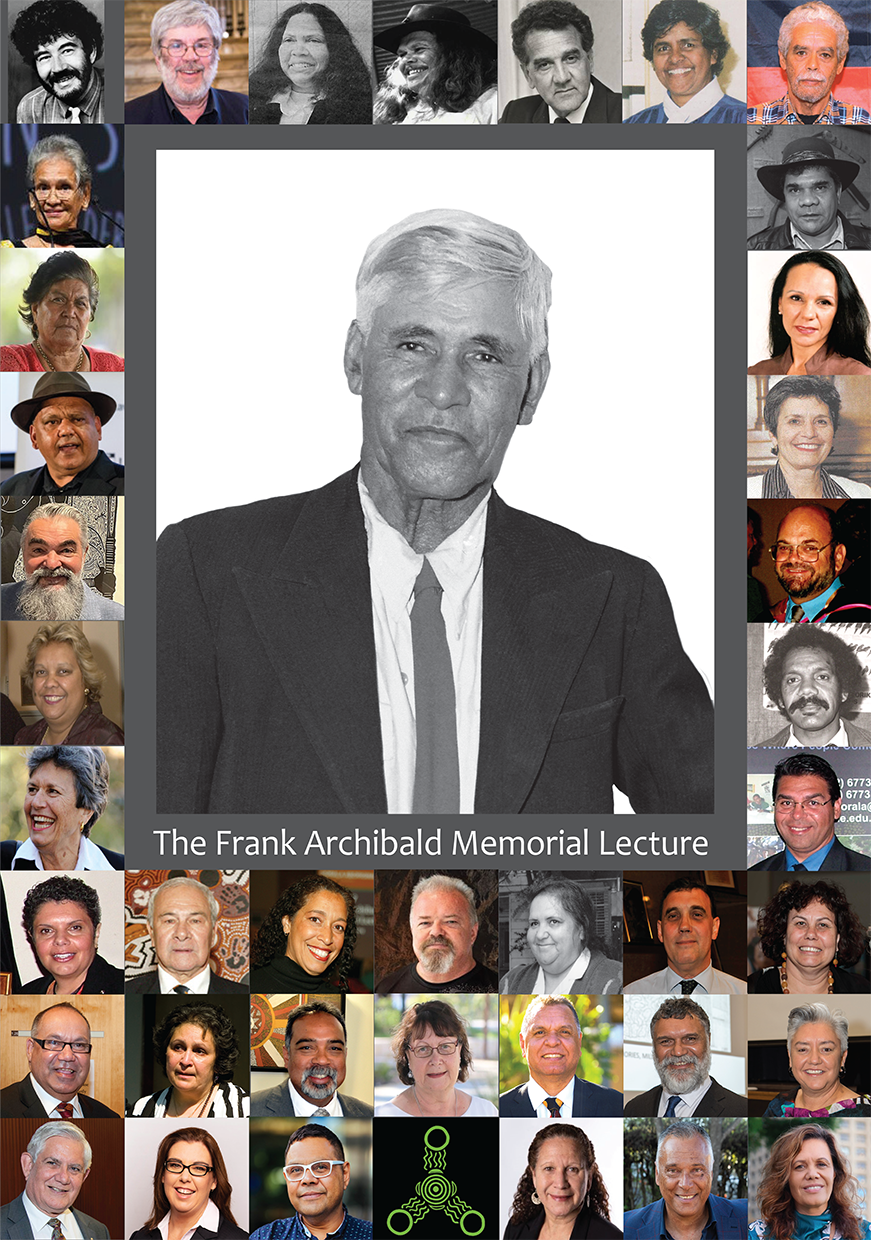
image: Frank Archibald surrounded by all the speakers guest 1986 - 2025
2. FRANK ARCHIBALD MEMORIAL LECTURE
In that same founding year, the small Oorala team established what would become one of UNE’s most enduring traditions, the Frank Archibald Memorial Lecture. From the beginning, it was designed as a platform for intellectual Indigenous leadership. The lecture was named after Frank Archibald, a revered local Aboriginal community member, renowned for his knowledge and interest in all issues affecting Aboriginal and Torres Strait Islander people, particularly education.
Each year, prominent Aboriginal and Torres Strait Islander leaders, scholars, activists, and storytellers have shared their knowledge, lived experience and passion with UNE students and the broader community. For 40 years, the lecture series has become a flagship event. The kind of thing that people look forward to, that gets talked about, that makes a difference. It’s helped shape how people at UNE and beyond understand Aboriginal and Torres Strait Islander history, culture, and contemporary issues.
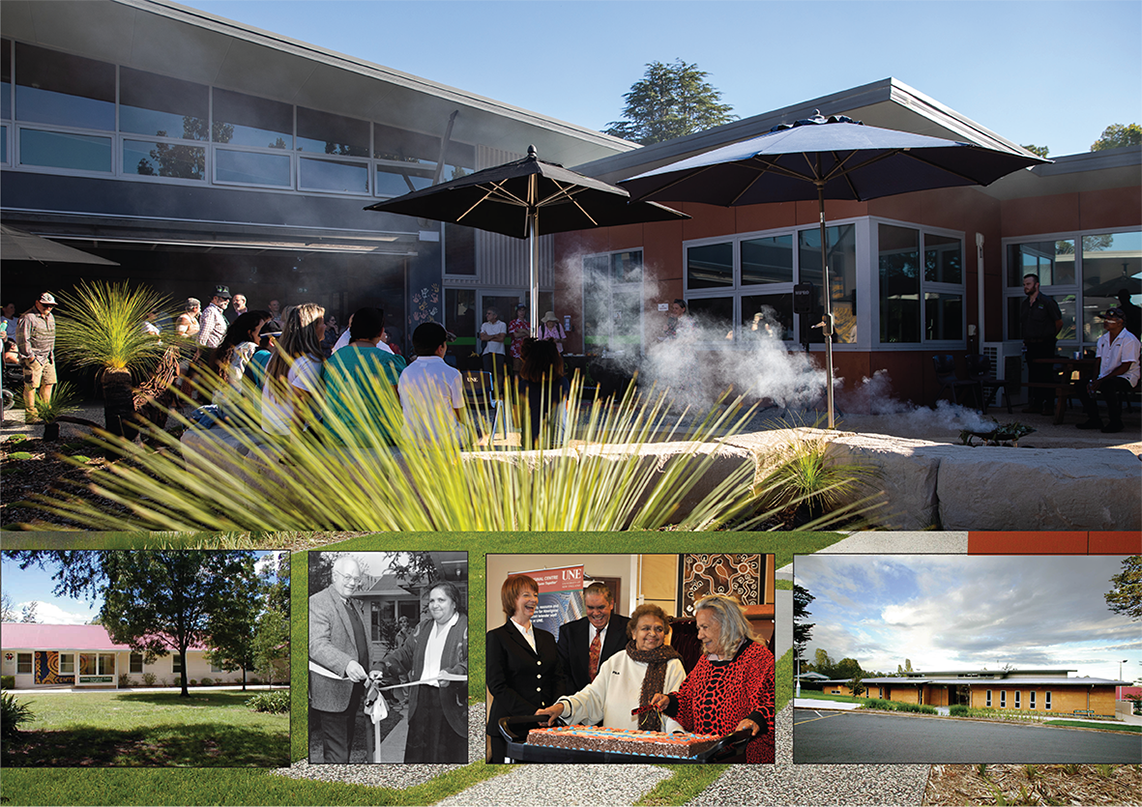
image: top - 2024 Oorala Courtyard; bottom left to right -1992 Oorala Building; Cliff Hawkins and Dianne Roberts oening the 1992 building; Deputy Prime Minister Julia Gillard opening the Oorala Buildiong; 2007 Oorala Building
3. ON COUNTRY: OORALA’S PHYSICAL EVOLUTION
Oorala’s physical journey tells a story of growing commitment and deepening recognition.
1990: the team moved from the room in the Archaeology building to some offices in the Alluna building (no longer standing).
1992: Oorala had its first dedicated building on Booloominbah Drive, a significant milestone in its own right.
2008: The Hon. Julia Gillard MP, Deputy Prime Minister and Minister for Education, officially opened the purpose-built centre on Booloominbah Drive which had been completed and operational in 2007.
2023: The courtyard redesign, with its yarning circle and native gardens opened.
These physical spaces have evolved to a comprehensive facility, yet they’ve always served the same purpose, creating a gathering place where Aboriginal and Torres Strait Islander students belong.
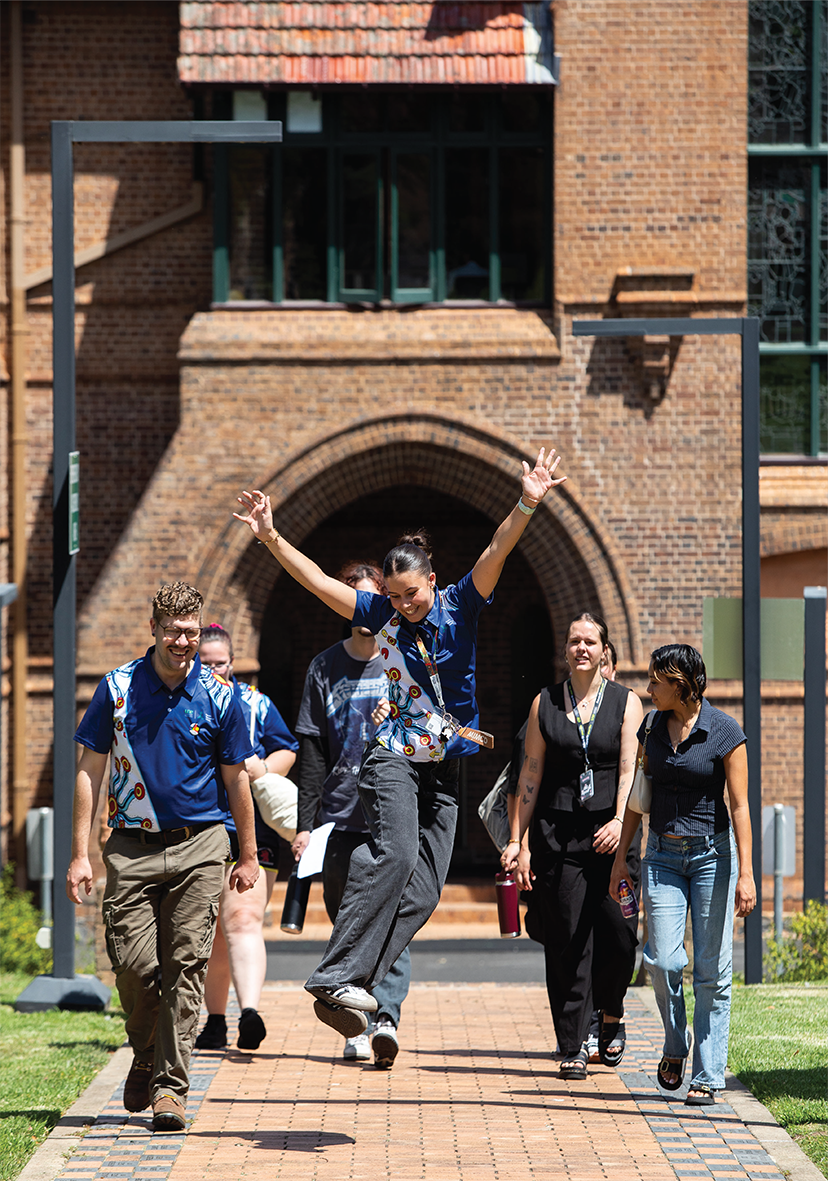
image: 2026 Yinga Kara students and Oorala staff: Kal Smith; Olivia Tapim; Courtney Baker & Destiny Roberts
4. CONNECTING WITH OUR STUDENTS
What distinguishes Oorala’s approach to student is its comprehensiveness. Oorala’s staff meet students at every stage of their journey, just starting out, in the middle of a degree, or approaching graduation. With 85% of Oorala’s students studying online maintaining a sense of connection becomes even more critical. The Centre has embraced the challenge creatively through a dedicated Student Hub in the UNE MyLearn space, redefining what a “gathering place” looks like in a digital age.
From the beginning Oorala has run orientation programs to ease students’ entry into university life.. This has evolved into today’s Yinga Kara Orientation program where new students are invited to spend two or three days on campus finalising enrolments, registering for tutoring, navigating online systems, learning about scholarships and making friends. In 2022, the Student Ambassador Program was introduced giving current on-campus students meaningful employment opportunities that allows them to financially support themselves while they study and sharing their stories with prospective students in community.
The growth across all these programs tells a compelling story. With the right foundations in place, Aboriginal and Torres Strait Islander students don’t just participate in tertiary education they thrive. Oorala has proven that when barriers are removed and genuine support is provided, the possibilities are extraordinary.
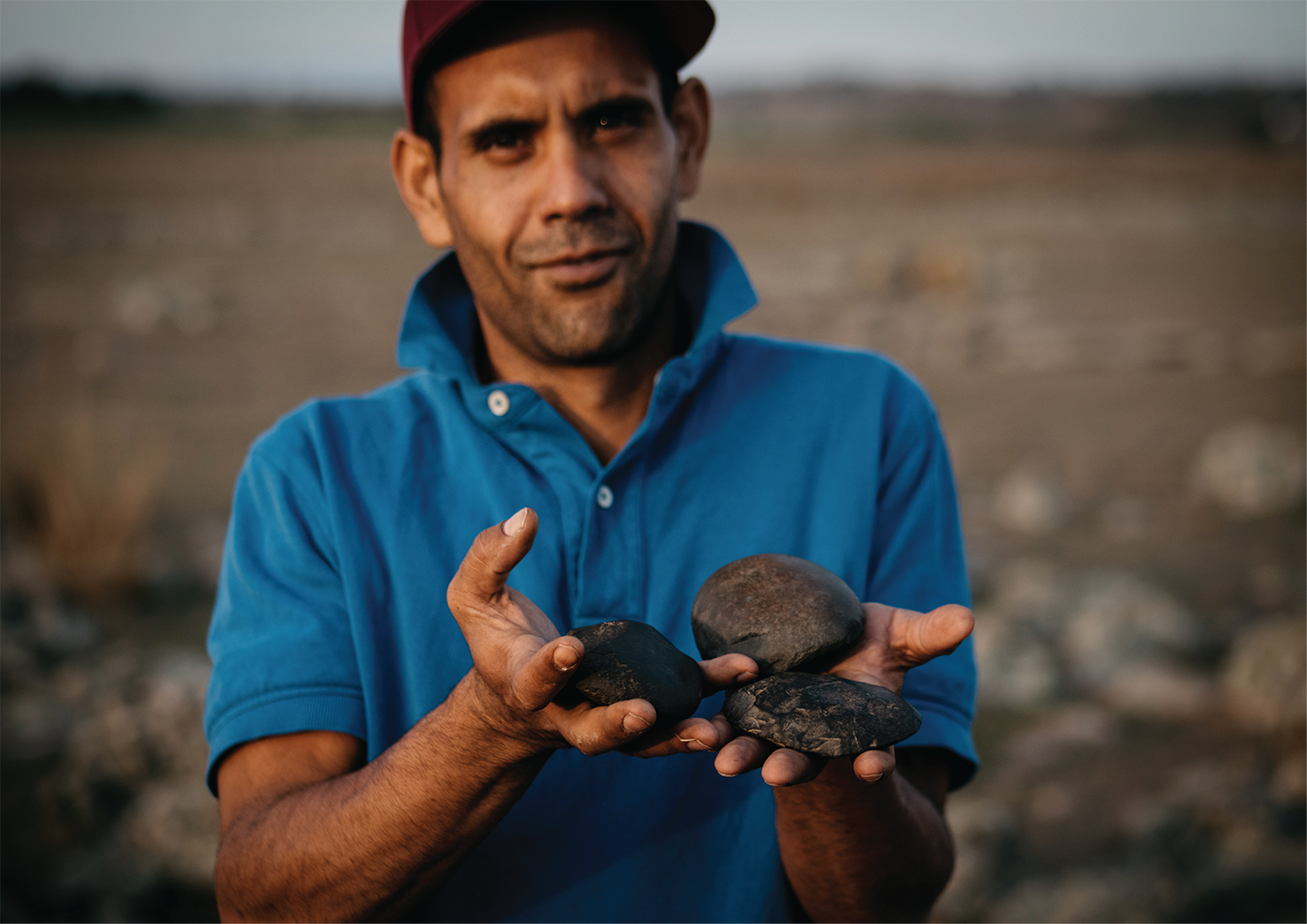
image: Colin Ahoy, UNE Archaeology student with local axe heads at the Gostwyck Grinding Grooves site, 2022
5. TEACHING AN ABORIGINAL PERSPECTIVE
From the very beginning, Oorala was committed to ensuring Aboriginal perspectives weren’t an afterthought they were woven into the fabric of academic studies.
In 1987, the Oorala Lecture Series was established, placing Aboriginal voices front and centre. Local Academics and Community members were invited monthly to share their stories and research with others.
This was extended in 2017 to provide visiting Indigenous Academics or current PhD students with a platform to share their research with a broader audience.
In 2013, Oorala introduced OORA units : OORA100/300 Aboriginal Resilience and the Arts, and OORA200/400 Working with Aboriginal People. These units were designed for all at UNE. OORA 200/400 unit now educates hundreds of students annually and has become integral to course accreditations. This represents a fundamental shift; Aboriginal perspectives aren’t supplementary they’re essential knowledge. Every UNE student now has the opportunity to engage with Aboriginal perspectives as part of their degree. This is a fundamental transformation in how a university teaches.
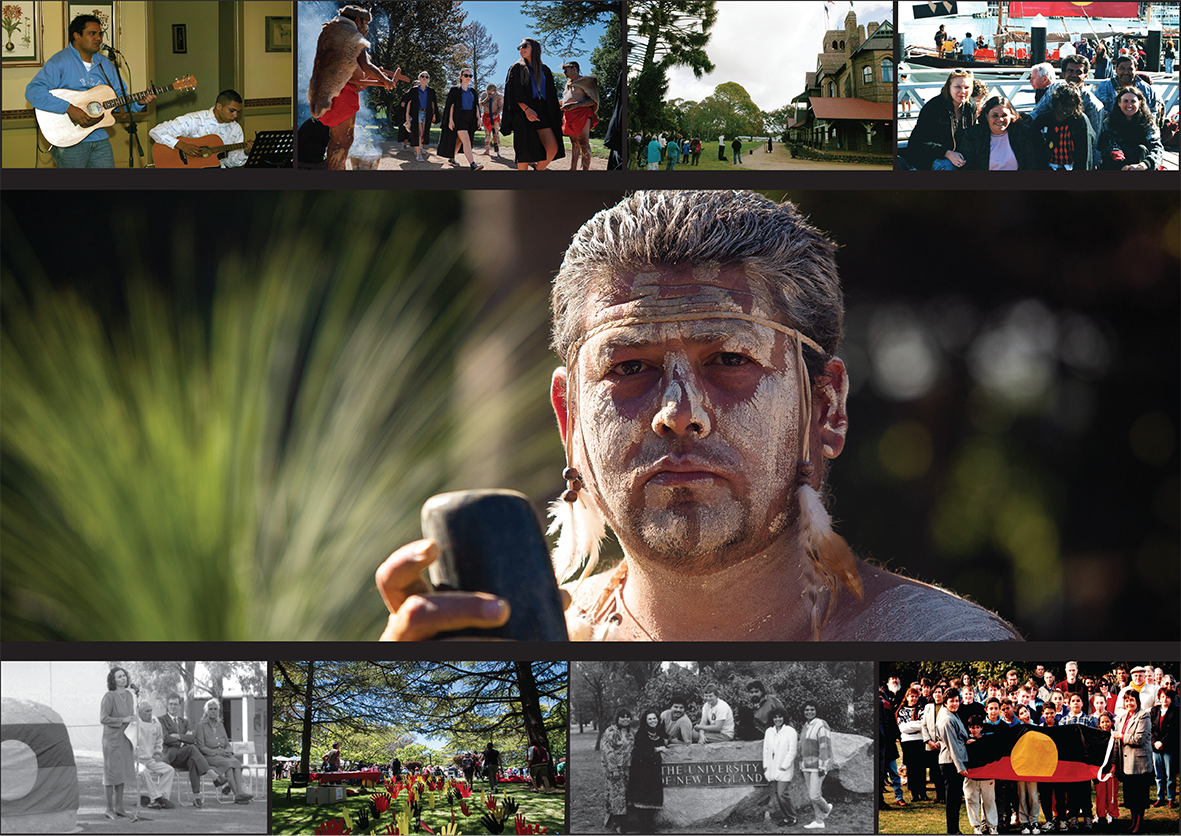
image: top row; Tone and Anthony Green; 2022 NAIDOC Smoking Ceremony; 1994 NAIDOC Ceremony; 2000 Sorry Day in Sydney. Middle row: Kristian Morrow Bottom Row: 1988, Lynette Riley, Bill Murray, VC & Ethel de Silva at the Indigenous Commemorative Event; 2017 Sea of Hands, Oorala 30 Open Day; 1986 Staff and students; Pat O'Shane and community members holding the Aboriginal flag.
6. CULTURE and COMMUNITY
Oorala has always been more than a student support centre, it is a cultural hub where Aboriginal and Torres Strait Islander culture is celebrated, community is built, and identity is affirmed. The building houses a collection of cultural arts and throughout the year, Oorala hosts events that keep culture alive and visible.
In 2013, after many years as a valued member of the Oorala team, Uncle Colin Ahoy was appointed UNE’s inaugural Elder-in-Residence, a position he continues to hold today.
NAIDOC celebrations, Sorry Day observances, Myall Creek Symposiums and special Elders events are not extras they are central to Oorala’s mission. The annual Oorala Community T-shirt Design Competition, launched in 2021, is a deliberate affirmation that Aboriginal and Torres Strait Islander creativity and identity matter. Alongside this the Your Place Our Culture Photographic Competition running since 2022, may be modest in scale but carries genuine significance.
Together, these events and initiatives create spaces where culture is honoured, where community gathers and Aboriginal and Torres Strait Islander students see themselves reflected in the university itself.
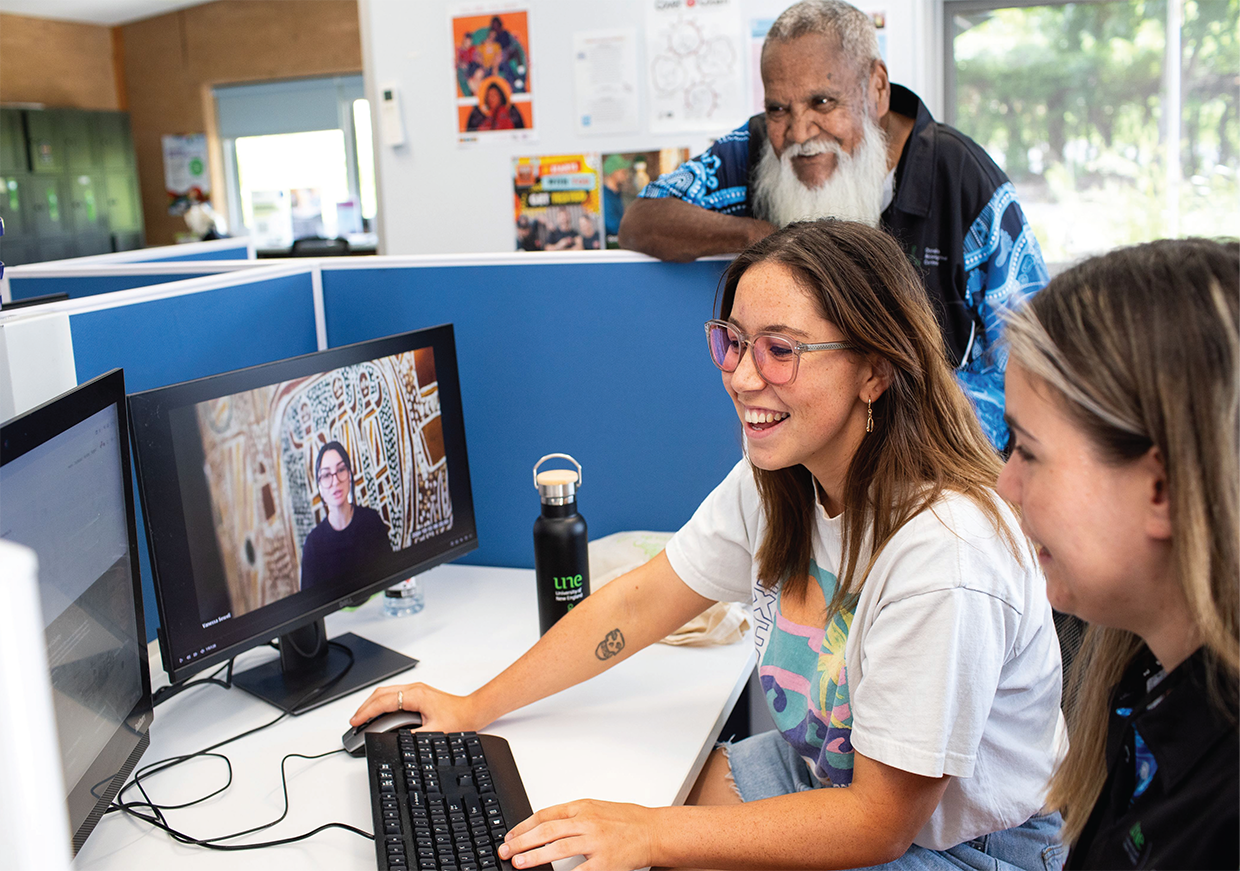
image: Uncle Colin Ahoy, UNE Elder in Residence with Tracks students Brook Herczog and Summer beveridge in the Oorala Study Lab
7. TRACKS Indigenous Foundation Program
The TRACKS Program began in 1994 with just 14 students and was originally known as the TRACKS Tertiary Preparation Program. TRACKS has now grown into a nationally recognised program that promotes academic learning and cultural wellbeing, meeting students where they are and creating genuine pathways into in university life.
In 2001, TRACKS received the Australian Award for University Teaching for its work delivering tertiary preparation within correctional centres, national recognition of the innovative and impactful teaching Oorala staff were undertaking in some of the most challenging educational environments in the country.
In 2004, TRACKS was included on the Australian Universities Quality Agency’s Good Practice Database, confirmation that TRACKS met national standards for innovation in higher education. In 2007, TRACKS was honoured with the Vice-Chancellor’s Award for Excellence in Learning and Teaching and a Carrick Citation for Outstanding Contributions to Student Learning, validation not just of results, but of a fundamentally different approach to tertiary preparation.
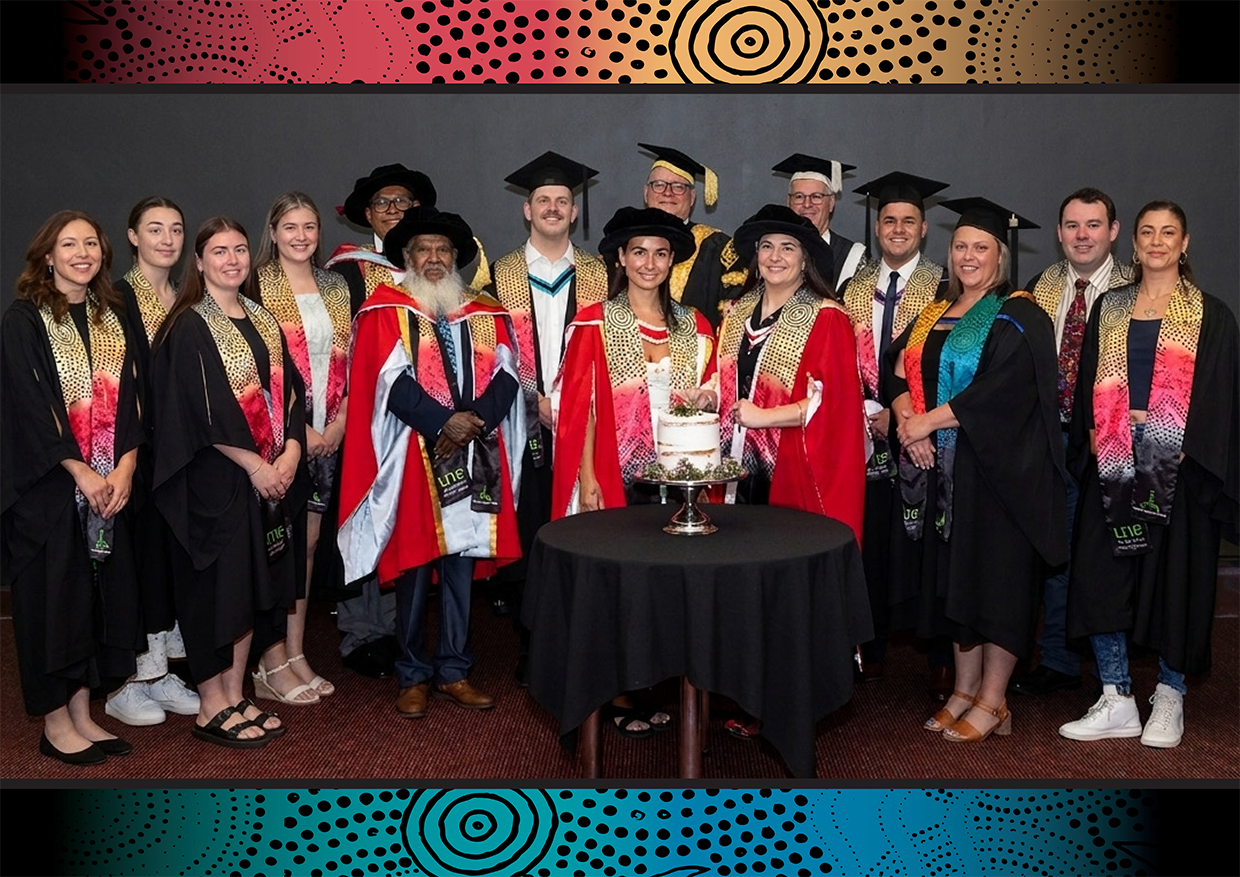
image: 2025 Indigenous Sashing Ceremony cake cutting
8. GRADUATION & INDIGENOUS SASHES
Around 2000, Oorala introduced the Indigenous sash for Aboriginal and Torres Strait Islander graduates, a simple idea with profound meaning. At graduation, students walk across the stage wearing their sash with pride. It is visible, a celebrated cultural declaration of identity and an honouring of the academic journey.
In 2018, the sashes were redesigned to reflect contemporary cultural aesthetics with student input shaping their evolution. The new design was based on the work ‘Anaiwan Dreaming’ by local artist Larissa Ahoy. The look changed but the significance remained.
With over 1,500 Aboriginal and Torres Strait Islander graduates, the sash represents something far greater than individual achievement. It speaks to the families that know the work they put in, the communities that know what is possible and inspiration for the younger generation.
Attending the Oorala Sashing Ceremony and wearing the sash at graduation can be one of the most meaningful moments of the student journey.
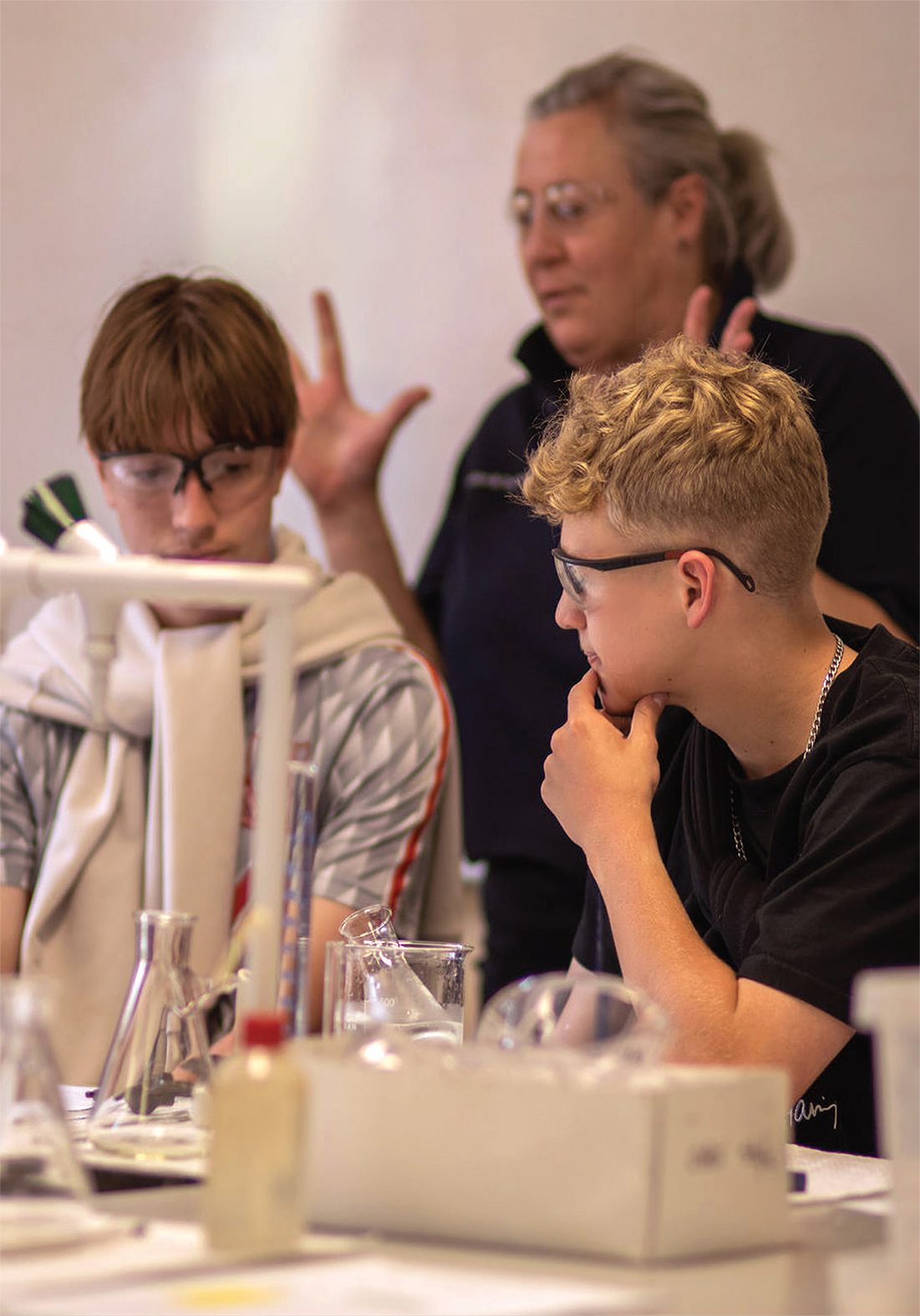
image: High school students at an Experience day chemistry session with UNE Lecturer Erica Smith
9. RONYERA EKINA: PATHWAYS TO HIGHER EDUCATION
By 2024, Oorala had developed a wide range of initiatives for young Indigenous Australian people. Bringing these together under a single, cohesive framework became a natural next step. The result was the launch of the Ronyera Ekina Pathways Program, consolidating high school activities into one comprehensive and strategic program. Ronyera Ekina represents a shift in approach. Rather than waiting for students to arrive at university, Oorala actively engages with them in their own communities.
Programs such as the Youth Leadership Camps (2016–2020) received the Cynthia Briggs Empowerment Through Education Award in 2018 and were shortlisted for an Australian Financial Review Higher Education Award. The on-campus Experience Program, the school-based curriculum and partnerships with Murdi Paaki extend opportunities to students from as early as Year 7.
Together, they build aspiration, broaden awareness, and demonstrate that higher education is both accessible and achievable. These programs are more than enrichment opportunitiesthey are actively reshaping how young people see their futures.
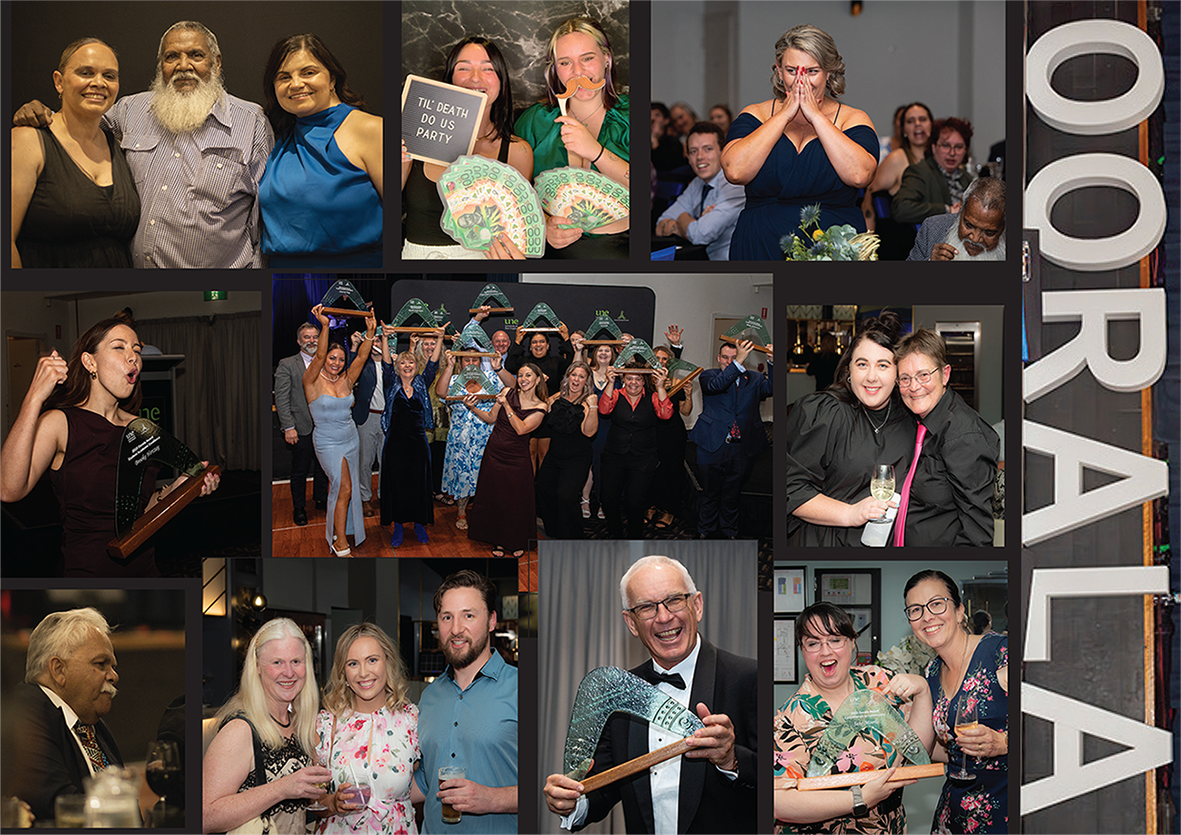
image: Top row: Allira Cutmore, Uncle Colin Ahoy, Lexie Mc Gourty 2024; Vanessa Sewell, Courtney Baker 2023; Sam Fowler 2025. Middle row: Brooke Herczog 2025, The winners 2025, Caitlin Davey, Donna Moodie 2022. Bottom row: Uncle Steve Widders 2025; Sally Bristow, Areluen, Eli Wright 2022; Peter Smith 2025; Lyn Stahlut, Lynda Lynch 2022.
10. THE OORALA AWARDS: CELEBRATING EXCELLENCE
Launched in 2022, the Oorala Awards are more than a gala event they are a statement of values. When a community gathers to celebrate student achievement, staff dedication, and community partnership, it places value and honours to the work that has been done.
The awards recognise student excellence, academic achievement, leadership, community contribution, personal resilience. It’s about celebrating the whole person, not just grades. They also recognise staff excellence acknowledging the UNE staff whose dedication has made a genuine difference to Aboriginal and Torres Strait Islander success. In a sector that often measures success only in completion rates and employment outcomes, the Oorala Awards offer a different model one that honours leadership, resilience and community as achievements worthy of celebration in their own right.
As Oorala enters its next chapter, the Awards remind us of what has always been true: Aboriginal and Torres Strait Islander excellence is not something to be quietly acknowledged. It is something to be celebrated loudly and proudly.
