Past Exhibitions
Never Smile at a Crocodile
October 2025 - February 2026
The crocodile is a large semiaquatic reptile found in the tropical regions of Africa, the Americas, Asia, and Australia. They are ambush predators and aggressive scavengers found in both fresh and salt water habitats. Ancient bibliotheca and Medieval bestiaries report the myth that crocodiles weep in order to lure their prey. From this story the term “crocodile tears” was developed to describe insincere displays of grief. When on land, a group of crocodiles is called a Bask. When in the water, they are called a Float. In UNEMA, they are a temporary exhibition called "Never Smile at a Crocodile." Running from October 2025 to February 2026, come and see a selection of the calm, crazed, and superbly carved wooden crocodiles found in UNEMA's Oceanic, East Asian, and African collections. They are quite charming but, when you visit, remember to hide your smile...
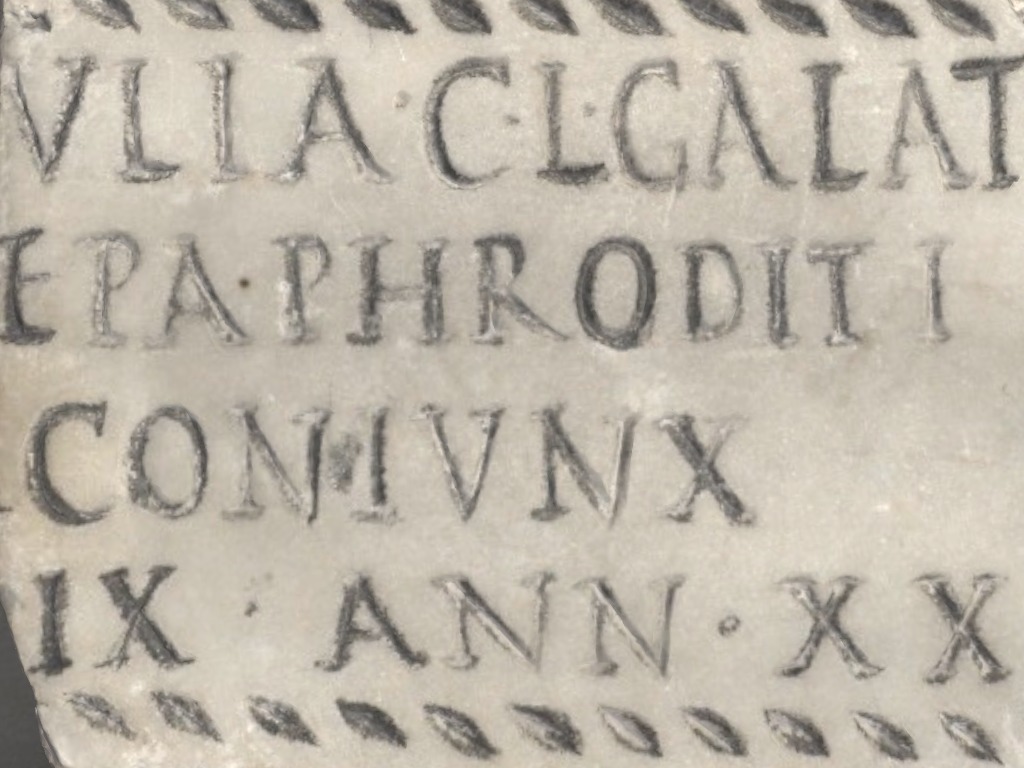
A Museum of Words and Deeds
20-24th October 2025
Almost two thousand years ago, in the first century CE, the ancient Roman writer Valerius Maximus collected roughly one thousand tales of individuals and groups and organised them into two categories: those about the Romans and those about everyone else. These stories embodied key ideas about people and their cultures by recording what they did and what they said. The text as a whole provides a unique insight into how ancient Romans categorised the different peoples they encountered and how they thought about themselves. Whether in catalogues or in gallery labels, museums separate ancient objects into culture categories based on what they look like and where they were found. Classified with terms like ‘Greek’, ‘Roman’, or ‘Egyptian’ or combined into even broader mixtures such as ‘Greco-Roman’ or ‘Romano-Egyptian’, these categories come to represent many places, long time periods, and many groups of people. This online exhibition is a conceptual experiment which combines these ideas and explores how culture categories can be constructed and creatively confused.
https://une.pedestal3d.com/page/wordsanddeeds/
Positively Medieval I
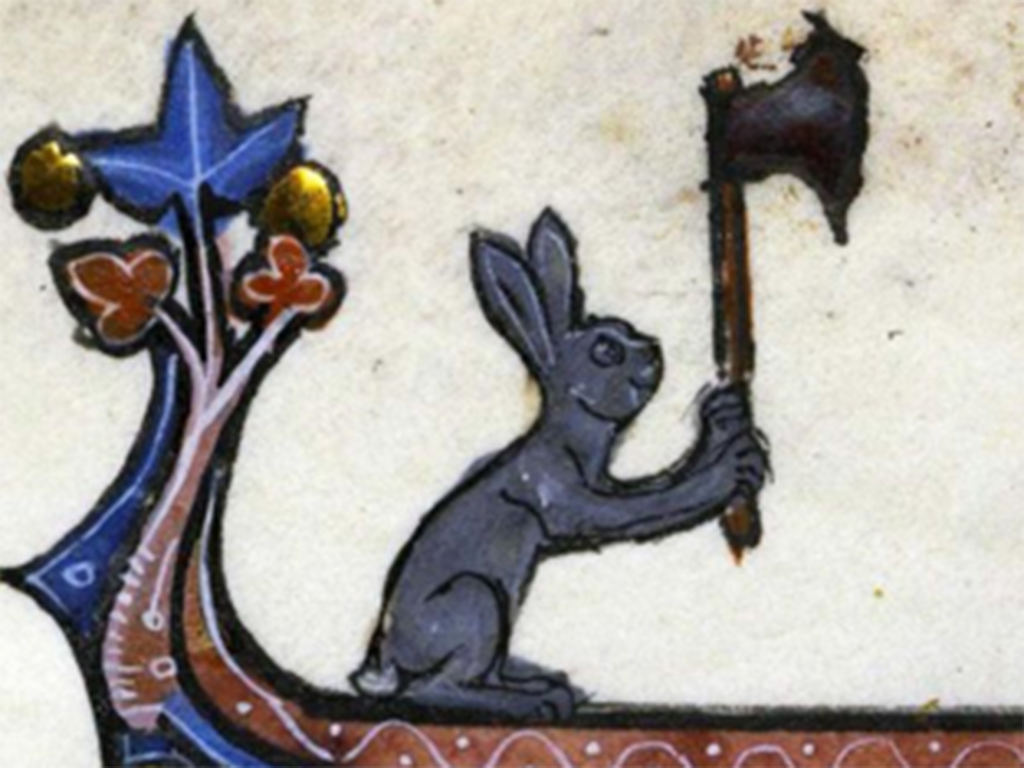
We challenged Armidale Secondary College’s Year 8 History classes to create a medieval artefact and museum information card exploring an aspect of the Medieval World. The inaugural exhibition was held at the UNE Museum of Antiquities (UNEMA) in collaboration with the Armidale Folk Museum, Armidale Secondary College, and New England Medieval Arts Society, where the public was invited to explore perceptions of the Medieval world through the artefacts displayed.
Epic Shadows
January-April 2025
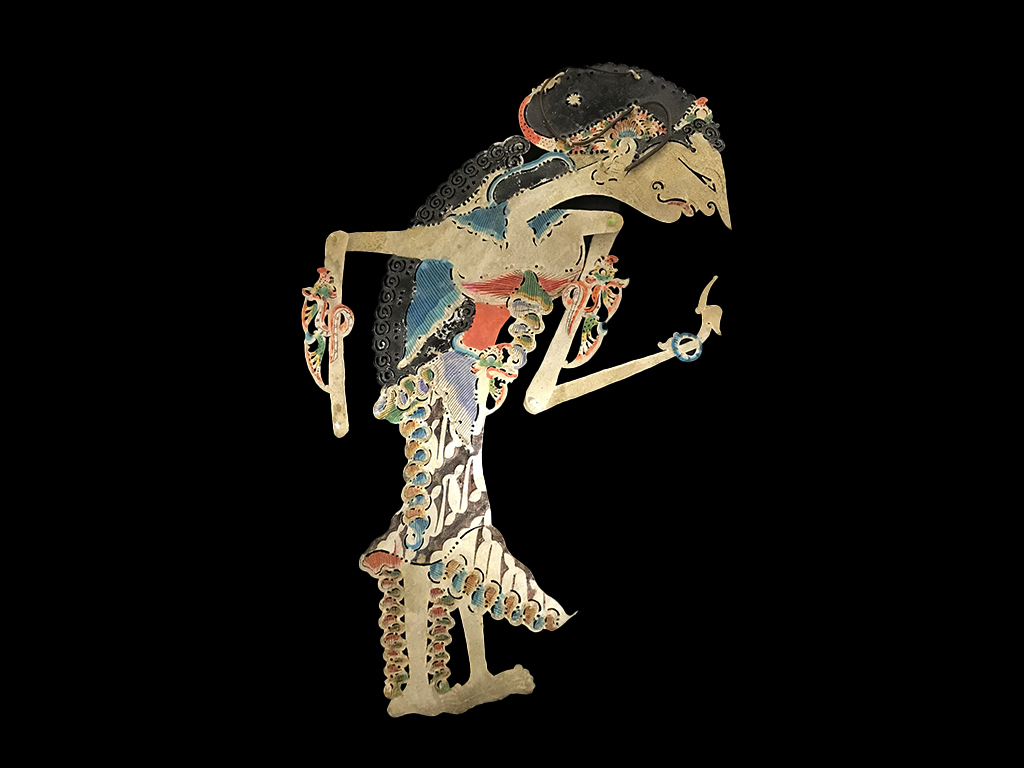
Shadow theatre puppetry has a long history as a dramatic style of storytelling. A puppeteer or narrator manipulates elaborately carved and painted characters to appear as shadows on a backlit screen and depict scenes from a traditional tale or epic. These epics often tell the story of a hero’s adventures and life lessons, and of the battle between good and evil or right and wrong. The traditional Indian epics – the Mahabharata (about an ancient war) and the Ramayana (which is featured in this display) are thought to date back to the c.8th century BC. These stories were introduced to Java around the 1st century AD and, finding the tales relatable, the Javanese created their own versions. The epics are very elaborate, and often taken the whole night to perform. With the addition of music and songs, they were a much-loved form of family entertainment in India and Java. There are twenty-six Javanese Wayang kulit or shadow puppets in the UNE ethnomusicology collection, thirteen of which are displayed in this exhibition, showing a scene from the Indian epic known as the Ramayana.
Sounds of India
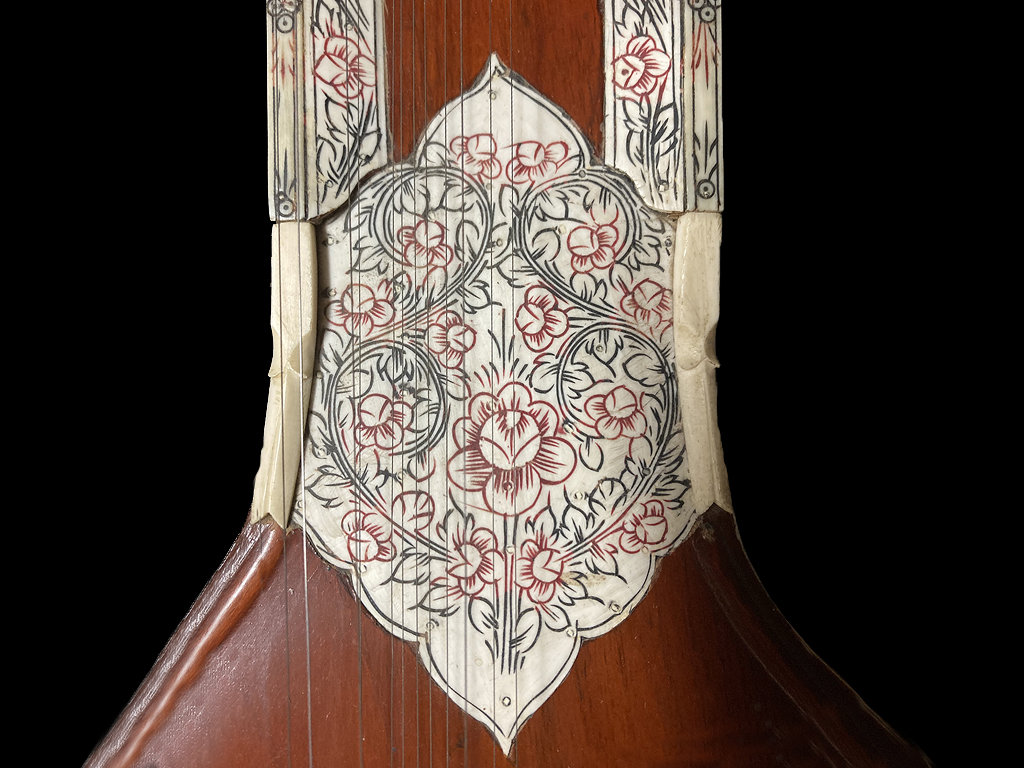
India has a long tradition of tribal, folk, and classical music, which has influenced contemporary styles of music including rock. India’s music and instruments have also been influenced by the musical traditions of other cultures like Persia. The exchange of musical ideas over centuries has encouraged experimentation in instrument making. This experimentation includes changes in the shape, size, and design of instruments, as well as with the types of wood, metal, and decorative elements used to create them. Musicians like George Harrison have helped to popularise Indian instruments in Western music by writing songs that use Indian instruments like the Tambura, Sitar, and Tabla – all of which are featured in this exhibition. Indian instruments can be simple and unadorned, or they can be complex, multi-stringed creations with beautiful decorative elements.
Parramatta Lanes Festival Now
12th October 2022
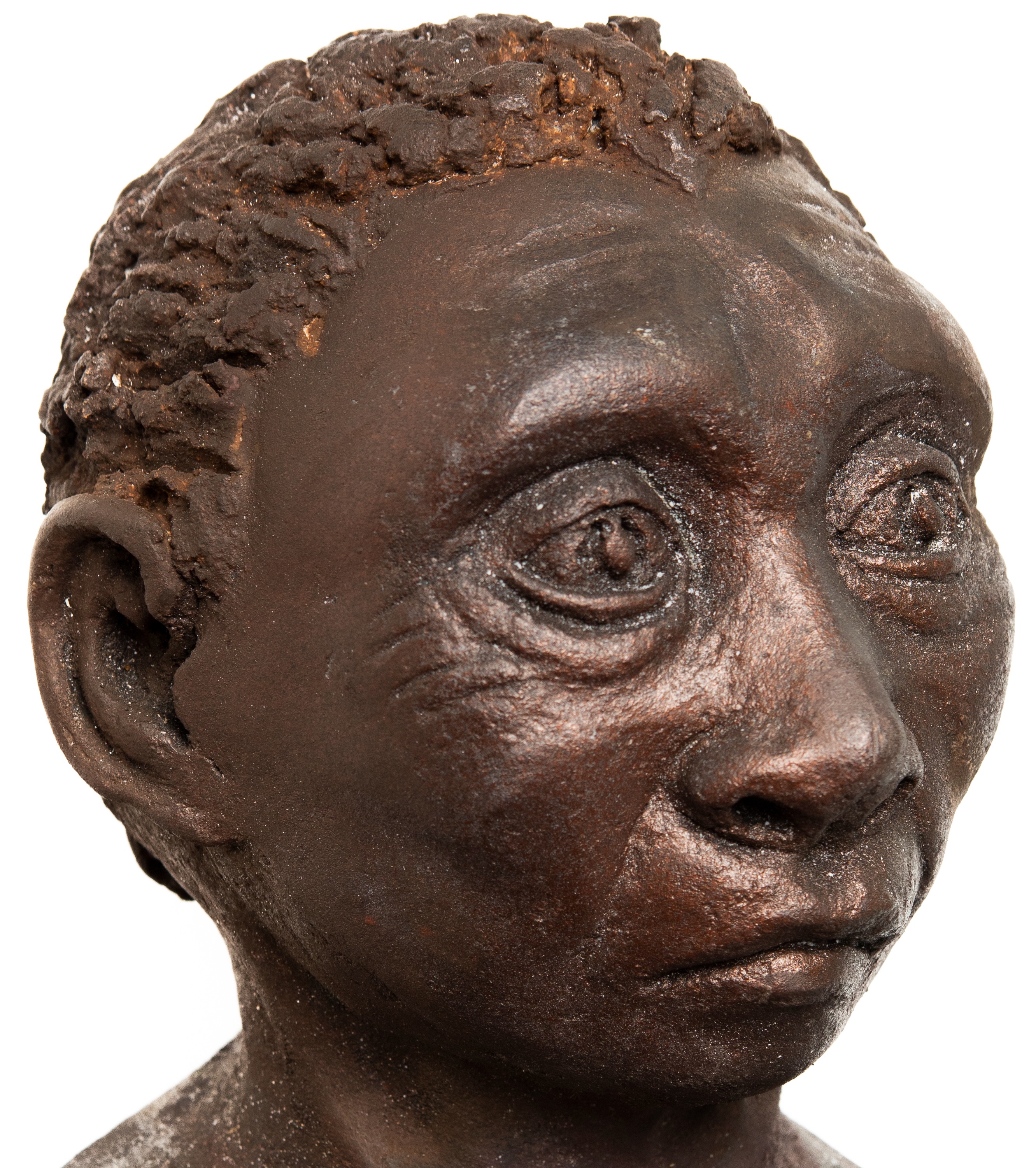
The UNE Museum of Antiquities (UNEMA) in collaboration with the UNE Sydney Campus created a hybrid exhibition for the 2022 Parramatta Lanes Festival, which was held from 12-15 October 2022. Two themed street exhibitions "Animal Alley" and "Finding Humanity" were created, providing a photographic exhibition of 16 artefacts from UNEMA's collections, accompanied by QR code access to a curated online exhibition of the artefacts in 3D, complete with an Animal quiz treasure hunt and a "Selfies of Humanity" portraits challenge.
60th Anniversary Commemorative Egyptian Sandal

6 February 2019 @ 3:30pm
In 2019 the UNE Museum of Antiquities (UNEMA) celebrated its 60th anniversary. To mark the occasion UNEMA unveiled a new acquisition for its Egyptian Collection – a sandal of woven gazelle leather from the 18th-20th Dynasty (c.1550-1069 BC), formerly held in the private collection of Kurt Kramer of Karlsruhe, Germany. At 23.4cm in length, the sandal has a central thong, is decorated by a thin dark band encircling the central sole and heel, and an elaborate checkerboard pattern between the band and outer edge of the sandal. The exposed underside of the sandal reveals the stitching technique used. Most sandals surviving from Ancient Egypt are made of reed-work, while examples in leather, worn by the very wealthy, are comparatively rare.
ONE: Our New England

4 February 2019 – 4 February 2020
A photographic exhibition celebrating the New England Region. Photos of Armidale and the New England North West accompanied by a tactile map of the region were presented in the UNEMA Corridor Gallery for the duration of the 40th ASCS Annual Conference 2019 (Feb 4-7), 50th Anniversary of the Australian Academy of the Humanities (2019), and 60th Anniversary of the UNE Museum of Antiquities (2019). The exhibition displayed images from local photographers provided by Destination NSW, a strategic partner and sponsor of the conference.
The Art of Agriculture

4 February 2019 – 7 February 2019
In the antique Roman calendar, February 4th was the official first day of spring and marked the recommencement of agricultural activity. In the revised ancient Roman calendar February 7th heralded the commencement of spring. In Armidale, February marks the change from stone fruit to apple season. Under these auspices for the 40th ASCS Conference (4-7th February 2019), the UNE Museum of Antiquities (UNEMA) and Department of Classics and Ancient History, in collaboration with Greenhills Orchards, an 8th generation family farm and last remaining commmerical orchard in the New England, created an interactive exhibition in 2D and 3D, celebrating the Art of Agriculture. The exhibition recreated ancient Roman festive garlands of interwoven flowers, fruit, and ox skulls, known as bucrania, accompanied by bowls of fresh produce from Greenhills Orchards to be enjoyed by the public. These interactive diorama were illuminated by a photographic display of agricultural life at Greenhills Orchard, interspersed with excerpts of ancient Roman agricultural treatises, to provide a literary, pictorial, and gastronomic study of the rhythm of agricultural life on the ancient and modern family farm.
40,000 Years of Footwear

4 February 2019 – 31 July 2019
An artefact and pictorial display of footwear through the ages highlighting changes in fashion, design, and technology, to promote the unveiling of 60th Anniversary commemorative artefact of the UNE Museum of Antiquities (UNEMA).
Classics in the Library

4 February 2019 – 14 April 2019
A display of old, rare, and interesting works relating to Classics, Ancient History, and Archaeology was created by the UNE Museum of Antiquities (UNEMA) and hosted by Dixson Library. The display included rare editions of Homer, Valerius Maximum, and Ovid, a dig sketch book from the private notes of James Stewart, Professor of Near Eastern Archaeology, held in the UNE Heritage Centre, and classical architectural engravings from the Dixson Library rare books collection.
The Frank Archibald 2019 Lecture Exhibition Windows
 |
|
19 November 2019
Window exhibitions installed at the UNE Museum of Antiquities (UNEM
A) and Oorala Centre displaying bark paintings, traditional basketry, and stone and wooden tools, to celebrate the 2019 Frank Archibald Memorial Lecture Series, delivered by the Minister for Indigenous Australians, the Hon Ken Wyatt AM MP on “Teaching Indigenous Australia - Understanding our past and unlocking our future”.
Treasures from the UNE Collections Travelling Exhibition
25 July 2019
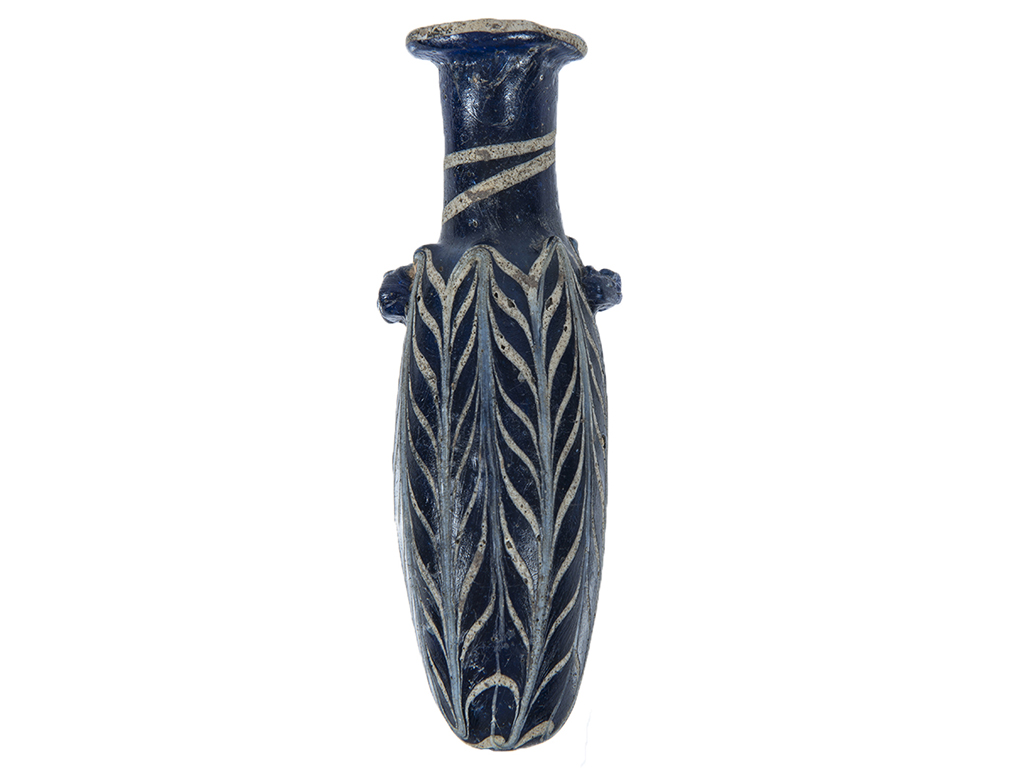
A collaboration between the Collections of UNE and Tamworth Regional Gallery showcasing a selection of artefacts from the cultural and scientific collections of UNE including massive meteors and delicate fossils, ancient Egyptian sandals, Greek glass perfume vials, and an early mechanical printing press.
Time To Explore
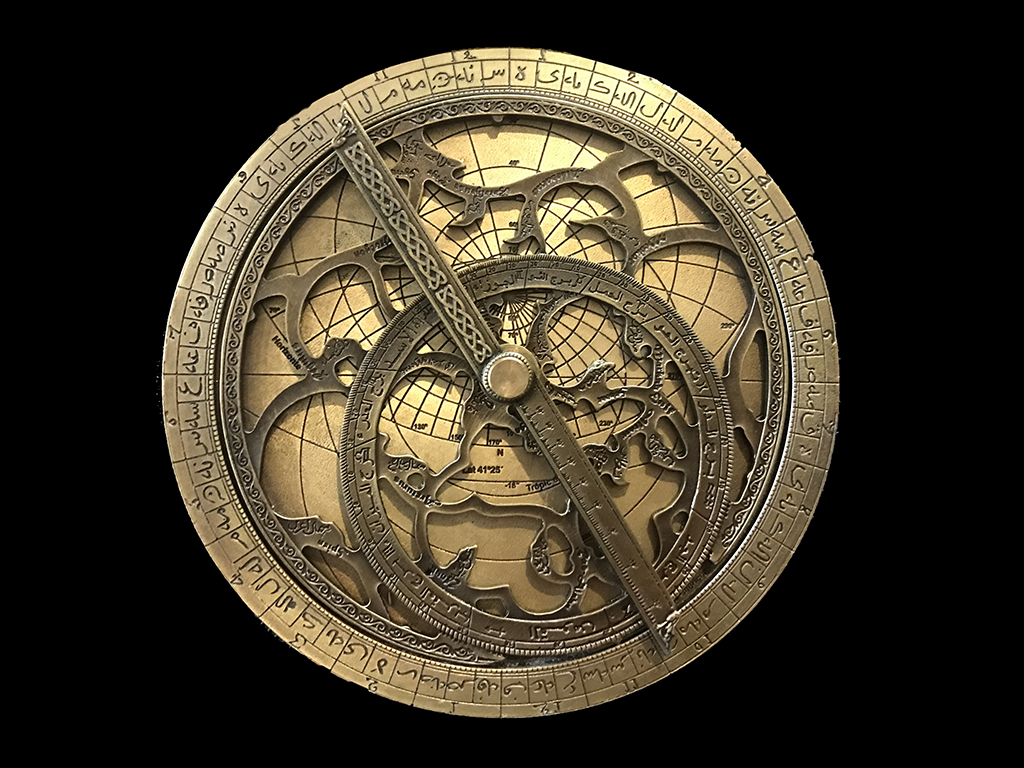
1 September 2018 – 1 September 2021
From Clepsydras and calendars to nocturlabes and nuclear clocks, this exhibition explores some of the key tools and ideas behind mankind’s endeavours to calculate and control time. Located in the Museum of Antiquities Corridor Gallery, in UNEMA there is always plenty of time to explore.
McCready Serapis Bust
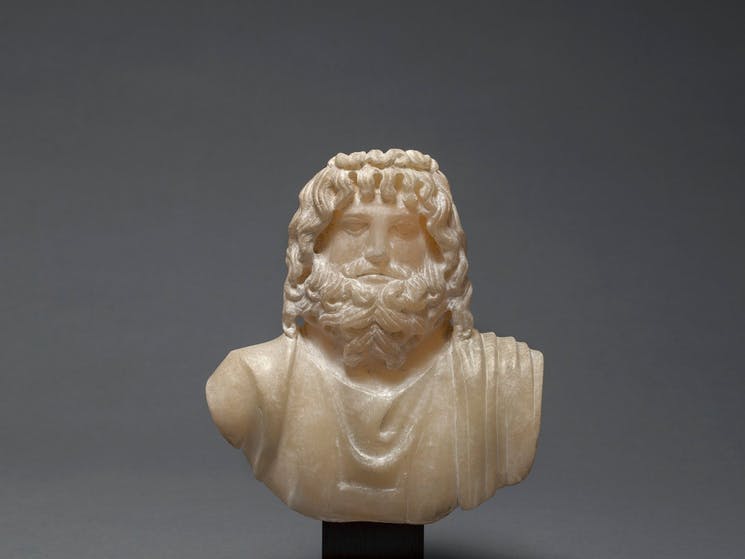
22 March 2018 – 20 December 2018
In 2016 an alabaster portrait bust of the god Serapis was purchased by Mr & Mrs Lam, life-long friends of A.G. “Mac” and Irene McCready, and long-time supporters of UNEMA. The purchase was made to celebrate the centenary of the birth of “Mac” McCready. The chosen bust depicts Serapis in classical form with five distinct locks of hair on the forehead and a full beard parted symmetrically. An indentation on top of the head marks where a crown was once fixed, but this kalathos or modius is now missing. Made of calcite alabaster and measuring 14cm in height, the bust is likely a 1st – 2nd century AD Roman copy of the 3rd century BC Alexandrian cult statue attributed to the Greek sculptor Bryaxis.
Fashion for Thought

1 September 2017 – 1 September 2021
Accessories are worn to enhance beauty, define identity, or attract attention. This exhibition takes a light-hearted yet thought-provoking look at objects of ornamentation in the collections of the UNE Museum of Antiquities (UNEMA). The artefacts displayed, paired with the pronouncements of bards and beauty-icons on the foibles of humanity, highlight the nature of objects of fashion as metaphors of the mind and externalised expressions of culture.
Bark Paintings

16 March 2015 – 16 October 2016
Painting on bark is a tradition which extends back thousands of years. Traditionally bark paintings were only created to be viewed by people initiated to the proper level of knowledge. More recently, paintings have also been made for public viewing. This exhibition features bark paintings from the Museum of Antiquities and the Art collections.
Buka-ware

10 March 2014 – 9 March 2015
The basketry known as 'Buka-ware' originated with the Buin in the south of Bougainville Island, known in Colonial days as 'Big Buka'. They are finely woven cane with patterns created by reversing the cane. During the 1970s the Ialibu and Pangian people of the Southern Highlands of PNG learned the technique and production has largely shifted to these areas. This collection is from Bougainville Province, c1970s.
The PLC Year 6 Pottery Project

4 December 2013 – 2 March 2014
Presbyterian Ladies' College Year 6 students explored pre-Colombian pottery during a visit to the Museum of Antiquities with their ceramics instructor. Back in the classroom they discussed how the pottery had developed, documenting styles and motifs for their own work. The resulting pieces on display blend and re-imagine traditional Pre-Columbian naturalistic, polychrome animal coil and slab pottery.
The Pella Gift

7 March 2013 – 9 March 2015
Since 1979 University of Sydney archaeologists have been excavating an extraordinary site at Pella, Jordan representing almost 10,000 years of human occupation. 25 artefacts from the digs, dating from 2100 BCE, were given to the Museum of Antiquities as celebration of 40 years of association between UNE and Prof J Basil Hennessy.
Piecing Together the Past: Palealona Tomb 2

11 January – 24 December 2013
The tombs of Palealona in Cyprus were cut into the side of a hill, accessed by passageways with their chamber entrances blocked off with large limestone slabs. However, landslides, flooding, walls collapsing, centuries of tomb re-use and tomb robbers make finding a whole ceramic object a cause for celebration. More often it is pieces and parts that make up the bulk of the finds and the patience, skill and ability of the field archaeologist to literally piece together past is an unremarked and unsung talent.
Masks of Papua New Guinea

16 September 2011 – 15 April 2013
There are over 800 Indigenous languages and more than 1000 cultural groups in New Guinea. The masks of Papua New Guinea are equally complex, referring to ancestors, clan spirits, totems, power and myth. This selection of masks includes 20th Century masks from Sepik River, Lae and Morobe provinces.
Let's Eat: Food Through the Centuries

2 September 2011 – 24 December 2012
The Museum houses artefacts from the ancient Mediterranean and the Near East; from Africa, Mesoamerica and South East Asia; from Australia, New Guinea and Oceania. What better place to explore the wealth and persity of food and eating through thousands of years! In celebration of History Week 2011 (3-11 September) the Museum will open a new exhibition featuring recipes and food customs, ancient and modern. A 'Food Trail' meandering through the cases will guide the discovery of all manner of eating vessels and storage containers — plain, fancy and unique.
Basket Case

29 June – 28 August 2011
Basketry extends across civilisations, past and present. It is one of the oldest and widest spread crafts in the world. The Museum of Antiquities entry showcase displays a selection of baskets from Indonesia, Papua New Guinea and Arnhem Land which can be used to winnow grain, keep fish and hold just about anything that will fit in a basket.
Archaeology & Paleoanthropology

11 May 2011 – 28 June 2011
To celebrate National Archaeology Week (15-21 May) the Museum presents a display of field work 'tools of the trade', texts and information on the study of archaeology at the University and a slide show of UNE students and staff on digs through the years. Guest curator: Pauline Hams, UNE student and Museum of Antiquities volunteer.
Through the Collector's Lens

11 February 2011 – 15 May 2011
In 1883 Frederick White commissioned the distinguished architect John Horbury Hunt to design a substantial country house near Armidale. Called Booloominbah, it was Hunt's largest and most memorable domestic commission. Thomas Forster, Sarah White's son-in-law purchased the estate from the other beneficiaries and presented it to the University of Sydney conditional on the establishment of the New England University College. Through this contingency, Hunt's masterpiece became the catalyst for developing one of the largest holdings of scientific and cultural material in regional Australia. Through the Collector's lens: Dissecting Booloominbah uses the house and its setting as the springboard to explore the collections it unwittingly created.
The exhibition material is drawn from the Museum of Antiquities, the Zoology Museum, the N.C.W. Beadle Herbarium, the Mineral, Rock, Fossil and Drill Core Collection, the UNE & Regional Archives, the Museum of Education and the UNE Art Collection. Hosted by the New England Regional Art Museum, a sampler of the exhibition was also displayed in Dixson Library.
Recent Acquisitions: UNE Museums & Collections

1 August 2010 – 28 September 2010
Recent additions to the UNE's museums and collections are as varied as the entities themselves. This exhibition feature four new acquisitions: the 6th century BCE carved head of a young man purchased by the Museum of antiquities for their 50th anniversary celebration; a fragment of a mammoth tusk donated to the Zoology Museum by local collector, Bretton Homes; the watercolour by Pearl Sheldon donated to the University of New England & Regional Archives by Caroline Chapman; and an 1855 auction catalogue for the Salisbury Court sale of the household effects and store also donated to the Archives by Sir Owen Croft. The exhibition runs through the month of August.
Guatemalan Craft

3 November 2009 – 14 September 2011
Each Guatemalan village has its own distinctive shape, design, style and colour. Colours and patterns signal where you belong. This selection of Guatemalan textiles is from the Bruce Reuman Collection of the Museum of Antiquities.
Indonesian Art & Craft

25 August – 18 December 2009
A selection of traditional art and crafts from the Lombok, Ngada, Sentani, Dyak, Asmat and Nagakeo people of Indonesia featuring shadow puppets, canoe prows, masks, carved figures, clothing and shoes, baskets and trays. From the collection of the Museum of Antiquities.
Penguin Gizzards and More! From the UNE Collections

29 May 2009 – 27 September 2009
Whale vertebrae, 19th Century pressed plants from the New England, Bronze Age Cypriot pottery, children's samplers, art by Gruner and the penguin gizzards collected by Griffin Taylor and just some of the weird, rare and beautiful objects to be found in collections of the Zoology Museum, the N.C.W. Beadle Herbarium, the Museum of Antiquities, the Museum of Education, the UNE Art Collection and the UNE & Regional Archives. Hosted by the New England Regional Art Museum. Sunday Gallery Talks and an Art Discovery Day were held at the Art Museum in conjunction with the exhibition
