For some African countries, such as the Democratic Republic of the Congo (DRC) and South Sudan, conflict has become almost a way of life – with civil war raging in each country for over 50 years. It’s tempting to think after all that time, perhaps nothing can be done to change this.
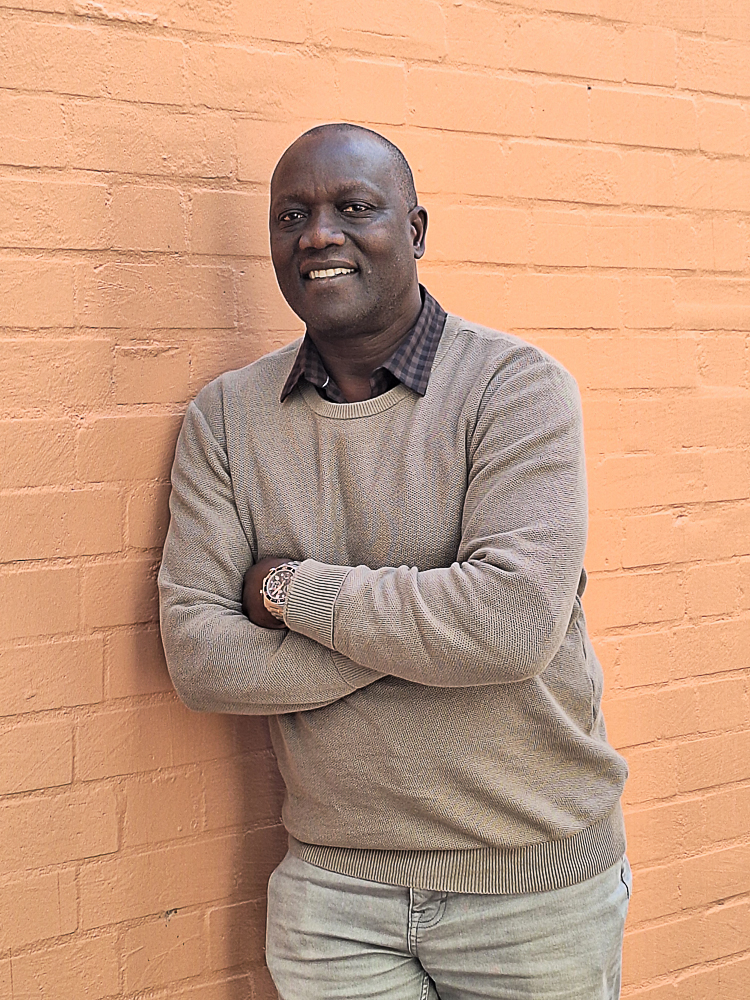
But this is challenge UNE PhD peace graduate and adjunct lecturer in peacebuilding Sam Onapa remains positive about. He has both lived experience being in a conflict zone in Uganda, and in working on peacebuilding initiatives in Sudan and South Sudan, amongst other African nations.
Sam has seen change at the grassroots level in these countries, through creating and mediating positive and community-led dialogue. He first experienced this transformation as a Christian volunteer helping internally displaced people (IDPs) affected by the Lord's Resistance Rebellion in Northern Uganda. Ending violence through dialogue has been his passion ever since.
As well as teaching and research, Sam also still makes a difference on the ground, for example through the non-profit Christ Ambassadors for Peace (CAP), a non-profit Christian organisation he co-founded in South Sudan in March 2023 and supports South Sudan Council Churches (SSCC) community dialogue initiatives.
Now, he’s advocating for a profound policy change in the democratic governance model for countries across Africa that he believes will see more peaceful outcomes.
For a new book project, Sam is planning to sit down with former presidents of a range of African nations for their insights into why the democratic election processes often fail in Africa, reigniting civil and ethnic conflict, instead of offering stability.
Sam has looked closely at this issue. As a researcher and from his lived and professional experience, he believes the liberal democracy model, as implemented in the West, must be redesigned at the policy level to take into account the unique historical and cultural factors of African peoples.
Liberal democratic processes are underpinned by historical and cultural practices that work well in the West. But in Africa, culturally and historically, decisions are made through dialogue and consensus.
“African culture is about sharing and compromise, whereas in liberal democratic processes, it’s a competition where the outcome is that the winner takes all. I think the experiences of the former presidents will support that we can’t keep trying to implement a model that doesn’t suit the cultural environment," he says.
“I think the whole model needs to be redesigned. Why can’t there be a process where the political parties sit down and decide through consensus who is the best to lead in various ways and share power?”
In his work, Sam has often been invited to facilitate dialogue where there has been serious violence. And as the co-ordinator of CAP, and in support of SSCC, he leads the processes of faith dialogue, community dialogue, and political dialogue.
“Dialogue is different to negotiations. With dialogue, everybody is on an equal level and brings to the table what they need and what they want,” he says. “It invites empathy. If a party has been injured through conflict, they expect some kind of reparation for their losses, and this is an important part of the dialogue.
In the West, criminal justice, which puts emphasis on punishment, is a key deterrent to conflict. In most African cultural practices, however, restorative justice takes precedent, and agreements that include reparation are crucial in ending conflicts.
As Sam is preparing to write his new book, he’s hoping it will help begin to write a new story for people in conflicting African nations, and perhaps elsewhere in the world. He plans to promote the book far and wide to those with power who can make a difference – from governments to academic institutions and to multilateral agencies.
Ambitious? Yes. He says the most common response to his plan is, ‘Is this even possible?’ But where it feels like everything else has been tried and failed, and human lives are on the line, Sam says a completely new solution is exactly what is needed.


