
In Australia, around 2000 people are on the waiting list to receive an organ transplant, but thanks to new research being undertaken at the University of New England (UNE), this number could someday be significantly reduced.
PhD student, Michael Foster, is working alongside supervisor Dr Brendan Wilkinson and colleagues from UNE, RMIT University and the University of Ottawa to develop an additive, otherwise known as a cryoprotectant, that could reduce damage when preserving living biological material for the future through freezing.
“If we can develop new molecules and technologies that allow organs to remain viable for much longer periods, this could fundamentally change transplant medicine,” says Michael.
“Better preservation technologies could give clinicians more time to find the right recipient and transport organs over greater distances, and in the longer term could help move towards organ banking.”
Freezing living biological material for storage and later use is called cryopreservation and is almost identical to putting food in the freezer at home, but with a far greater challenge.
Rather than simply preserving quality, the cells or tissues need to remain alive and functional after they are thawed.
To reduce damage, cryoprotectants such as dimethyl sulfoxide (DMSO) are added.
While DMSO is widely used and extremely effective, it can be toxic and incompatible with some cell types, so Michael is looking towards nature to design an alternative.
“Nature provides some remarkable examples of organisms surviving extreme cold and other stresses like dehydration,” says Michael.

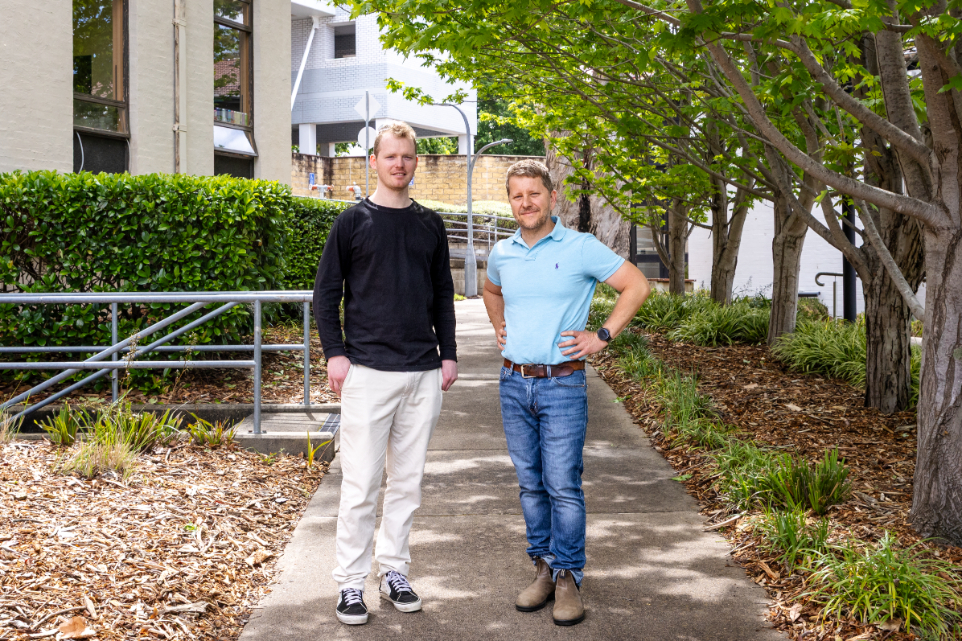
Image: PhD student and lead author, Michael Foster.
“These organisms accumulate molecules like sugars and amino acids that help protect their cells under these conditions. Trehalose is one well-known example, while amino acids such as proline are also associated with natural stress protection.”
While using nature as inspiration for cryopreservation is not new, Michael’s approach is unique in that he is modifying these naturally protective molecules to create a single compound with several complementary cryoprotective properties.
If successful, this new approach could lead to significant applications beyond human health.
“Cryopreservation can be used to store sperm, eggs, embryos, tissues and other genetic material from threatened species,” says Michael.
“These frozen collections can act as genetic banks that may support breeding programs and help preserve genetic diversity.”
While the research is still in the early stages and clinical applications are a long way off, the work will be a critical building block in the long-term effort to improve fertility treatment, organ transplantation and biodiversity conservation.
“Better cryoprotectants are only one part of the challenge,” he says.
“Improvements in freezing and thawing technologies, delivery of cryoprotectants into complex tissues and organs, biological testing, engineering, and eventually clinical or regulatory translation will all be important.
“Whether or not these particular molecules ultimately find direct applications, the work can help identify properties and design strategies that may be useful to pursue.”
Michael’s research has been published and featured on the front cover of the October issue of the Royal Society of Chemistry's Journal of Materials Chemistry B. View it here


