
Key facts
Domestic students course information. This course is currently not available to international students.
Entry is based on a bachelor qualification in a relevant discipline (or overseas equivalent), or the UNE Bachelor of Environmental Science Natural Resources Major.
View full entry requirements- 1 or 1.5 years full-time
- Up to 6 years part-time
| Start Dates and Campus | Trimester 1 – February 2026 | Trimester 2 – June 2026 | Trimester 3 – October 2026 |
|---|---|---|---|
| Online | Offered | Offered | Offered |
| Armidale Campus | Offered | Offered | Not Offered |
| Sydney Campus | Not Offered | Not Offered | Not Offered |
Course information
Download course brochure
In a world facing growing environmental challenges, sustainable management of natural resources has never been more critical. The Master of Natural Resource Management equips you with the knowledge and tools to navigate complex ecological, social, and policy issues in a rapidly changing world.
You’ll explore interdisciplinary approaches to conserving biodiversity, managing land and water, and supporting community resilience. Designed for professionals and aspiring leaders and taught by world leading multi-disciplinary scientists, this course prepares you to influence policy, drive innovation, and create tangible impact in conservation, resource governance, and environmental management.
Why study the Master of Natural Resource Management with UNE?
Effective environmental leadership calls for more than technical know-how – it demands a systems-based understanding of the natural world and the capacity to lead across disciplines. UNE’s Master of Natural Resource Management is designed for professionals who want to deepen their impact in environmental conservation, policy, and sustainable development.
You’ll learn to navigate the social, ecological, and political dimensions of resource use through an interdisciplinary curriculum spanning science, economics, law, and community engagement. With flexible learning options and a strong focus on real-world problem-solving, you’ll graduate equipped to lead meaningful change in government, NGOs, private industry, and research.
Year after year, UNE is awarded five stars by The Good Universities Guide for Overall Experience and Student Support, demonstrating our ongoing commitment to student success.
What makes our course different?
When you choose UNE’s Master of Natural Resource Management, you join a community that is grounded in regional insight and connected to global impact. Whether you want to upskill, pivot into a new role, or contribute to long-term sustainability, this course helps you translate passion into action. Here's what makes our course different:
- Interdisciplinary, systems-based approach. Learn to address environmental challenges through a mix of scientific, policy, legal, and community-based lenses, giving you the full picture required for effective resource management.
- Tailored to your career goals. With options to specialise in vital areas like environmental monitoring, soil science, or environmental policy, you can align your learning to the areas you care about most.
- Applied, real-world learning. Develop practical skills through scenario-based projects, research options, and opportunities to work with industry or community organisations.
- Expert-led teaching grounded in experience. Be taught by leading researchers and professionals with deep experience in ecology, resource economics, environmental governance, and sustainability.
- Flexible study designed for professionals. Delivered both on campus and online, with part-time and full-time options, and three trimesters to study across each year, this course supports your learning without interrupting your career.
Study online
Most of our students choose to study online across three study periods with 24/7 tutor support* and fit study around work and family commitments. Uniquely, our online students are mostly over 30 and bring valuable experience with them. They form a community of adults juggling the same challenges and priorities and who bring their life and work experience together at UNE in order to become future-fit and better respond to a rapidly changing world.
Study on campus
Many of our students choose to take advantage of the on-campus lifestyle in Armidale, in the beautiful New England region, with access to unparalleled support, accommodation and sporting facilities. These students are often starting their first degree and have left school recently. Through access to academic and career support they get a fantastic start to their careers.
* 24/7 tutor support includes: essay feedback (within 24 hours); live chat 24/7 for generic feedback on academic writing; and subject-specific help at a foundation or first-year level for subjects including mathematics, chemistry, biology, physics, business, accounting, microeconomics, macroeconomics and statistics. There are also a wide range of workshops, resources and courses available in academic skills support to assist you and help you to succeed.
Entry requirements
This course is offered under two admission rules, each with its own Course Structure (Program of Study).
Rule A: You have completed a Bachelor qualification (AQF Level 7 or overseas equivalent) in a relevant discipline.*
If you are admitted on this basis, you will be eligible for admission under Rule A. Please see the Rule A Course Structure (Program of Study).
Rule B: You have completed a UNE Bachelor of Environmental Science Natural Resources Major. If you are admitted on this basis, you will be eligible for admission under Rule B. Please see the Rule B Course Structure (Program of Study).
*Relevant disciplines include, but are not limited to, the following:
- Agriculture science
- Botany
- Climate Science
- Ecology
- Environmental Science
- GeoScience
- Natural Resource Management
- Physical Geography
- Rural Science
- Soil Science
Please note: all admissions are subject to UNE’s Admission, Credit and Enrolment Policy. Please read and familiarise yourself with the details of the policy. See our Glossary for help with university terms.
These requirements are in addition to the entry requirements above.
When applying you may be required to show how you satisfy the English Language Requirements for this course.
You must meet the Inherent Requirements in order to complete this course.
Some courses require you to provide documentary evidence, or interviews to support your application. The following documents are required to support your application:
A certified academic transcript of your completed qualification.
Advanced Standing is credit or recognition of your previous study, work and/or life experience. This can reduce the cost and length of your studies.
Course Entry Advanced Standing
Some entry rules come with Advanced Standing or Articulation Programs that are assessed automatically without the need for you to fill in an additional application. Simply apply for your course and we’ll look after the rest.
If you are admitted under Rule B you will be granted 24 credit points of Block Advanced Standing.
Individual Unit Advanced Standing
If you are admitted into this course and believe you have already completed the equivalent of one or more of the units in your Course Structure (Program of Study) within the last ten years, you can apply for Individual Unit Advanced Standing.
- If you are admitted under Rule A you can apply for up to 36 credit points of Advanced Standing. This may include up to 6 credit points of Advanced Standing based on professional experience.
- If you are admitted under Rule B you can apply for up to 12 credit points of Advanced Standing. This may include up to 6 credit points of Advanced Standing based on professional experience.
Please note: Advanced Standing cannot be granted for the following units:
- ERS501 Applied Research Skills in Environmental and Rural Science
- ERS502 Research Synthesis in Environmental and Rural Science
Course structure
To qualify for the award a candidate admitted under Rule (a) must pass units to the value of 72 credit points including not more than 18 credit points at 100-level, not more than 18 credit points at 200-level and at least 36 credit points at 500-level.
To qualify for the award a candidate admitted under Rule (b) must pass units to the value of 72 credit points including 36 credit points at 500-level.
72 credit points
54 credit points
Complete the following units:- Environmental and Natural Resource Economics (ECON429) – 6 credit points
- Environmental Impact Assessment (EM312) – 6 credit points
- Catchment Science and Management (EM402) – 6 credit points
- Communication and Facilitation Skills for Environment Professionals (EM510) – 6 credit points
- Applied Research Skills in Environmental and Rural Science (ERS501) – 6 credit points
- Research Synthesis in Environmental and Rural Science (ERS502) – 6 credit points
- Environmental Planning and Administration (GEPL535) – 6 credit points
- Introduction to GIS and Spatial Thinking (GISC334) – 6 credit points
- Sustainable Land Management (RSNR503) – 6 credit points
18 credit points
Complete 18 credit points from the following with at least 6 credit points at 500-level.- Plant Biosecurity (AGRO514) – 6 credit points
- Integrated Weed Management (AGRO522) – 6 credit points
- Sustainable Agricultural Water Management (AGWT300) – 6 credit points
- Plants and Global Change (BOTY505) – 6 credit points
- Ecological Methods (ECOL204) – 6 credit points
- Ecology of Australian Vegetation (ECOL511) – 6 credit points
- Land Assessment for Sustainable Use (EM311) – 6 credit points
- Wildlife Ecology and Management (EM323) – 6 credit points
- Vegetation Assessment and Management (EM427) – 6 credit points
- Ecosystem Rehabilitation (EM551) – 6 credit points
- Conservation Biology (EM553) – 6 credit points
- Local Environmental Infrastructure (ENGT237) – 6 credit points
- Special Topics and Projects in Environmental and Rural Science (ERS581) – 6 credit points
- Environmental Geology (GEOL313) – 6 credit points
- Rural Planning and Resource Management (GEPL324) – 6 credit points
- Global Climate Change and the Future (GEPL407) – 6 credit points
- Earth Observation (GISC331) – 6 credit points
- Spatial Analysis and Modelling (GISC433) – 6 credit points
- Remote Sensing and Image Analysis (GISC436) – 6 credit points
- Working with Aboriginal People (OORA400) – 6 credit points
- Pollution Management (RSNR301) – 6 credit points
- Soils in Practice (SOIL431) – 6 credit points
- Soils in Landscapes (SOIL500) – 6 credit points
- Soils, Pollution and the Environment (SOIL510) – 6 credit points
72 credit points
24 credit points
24 credit points advanced standing granted on the basis of completion of UNE Bachelor of Environmental Science Natural Resources Major.24 credit points
Complete the following units:- Catchment Science and Management (EM402) – 6 credit points
- Communication and Facilitation Skills for Environment Professionals (EM510) – 6 credit points
- Applied Research Skills in Environmental and Rural Science (ERS501) – 6 credit points
- Research Synthesis in Environmental and Rural Science (ERS502) – 6 credit points
18 credit points
Complete 18 - 24 credit points of the following units:- Plant Biosecurity (AGRO514) – 6 credit points
- Integrated Weed Management (AGRO522) – 6 credit points
- Plants and Global Change (BOTY505) – 6 credit points
- Ecology of Australian Vegetation (ECOL511) – 6 credit points
- Ecosystem Rehabilitation (EM551) – 6 credit points
- Conservation Biology (EM553) – 6 credit points
- Special Topics and Projects in Environmental and Rural Science (ERS581) – 6 credit points
- Sustainable Land Management (RSNR503) – 6 credit points
- Soils in Landscapes (SOIL500) – 6 credit points
- Soils, Pollution and the Environment (SOIL510) – 6 credit points
6 credit points
Complete 0-6 credit points of the following units.- Sustainable Agricultural Water Management (AGWT300) – 6 credit points
- Ecological Methods (ECOL204) – 6 credit points
- Land Assessment for Sustainable Use (EM311) – 6 credit points
- Wildlife Ecology and Management (EM323) – 6 credit points
- Vegetation Assessment and Management (EM427) – 6 credit points
- Local Environmental Infrastructure (ENGT237) – 6 credit points
- Resource Geology and Environmental Issues (GEOL207) – 6 credit points
- Environmental Geology (GEOL313) – 6 credit points
- Rural Planning and Resource Management (GEPL324) – 6 credit points
- Global Climate Change and the Future (GEPL407) – 6 credit points
- Earth Observation (GISC331) – 6 credit points
- Spatial Analysis and Modelling (GISC433) – 6 credit points
- Remote Sensing and Image Analysis (GISC436) – 6 credit points
- Soils in Practice (SOIL431) – 6 credit points
- Pollution Management (RSNR301) – 6 credit points
See UNE Handbook for more details. The Handbook contains detailed course information designed for enrolled students, including course plans, exit awards, intensive schools, and work placement requirements.
Fees and scholarships
Understanding Your Course Fees
Your total course fees are based on the number of units you complete, not the length of time you study. This gives you flexibility to tailor your study journey to suit your circumstances.
Here's how it works:
- Unit-based pricing - Each unit has its own fee. Visit our Fees and Costs section for detailed unit pricing information
- Advanced standing - If you're eligible for credit for previous study, you'll complete fewer units and pay less overall
- Study pace - Choose part-time or full-time study to fit your schedule without affecting unit costs
- Trimester 3 option - Students who choose to accelerate their progress by studying during Trimester 3 can do so without increasing overall costs
The table below shows estimated fees for a typical full-time year of study (48 credit points which typically equates to 8 units)
How much will it cost?
Estimated fees for your first year of study in this course are:
| Fee type | Cost |
|---|---|
| Full Fee (no government subsidy) | Fee information is not available – contact us for further information |
| Commonwealth Supported Place (quotas apply) | $9,888* |
| Estimated amenities fee per year if studying full-time | $373 |
What are the course fee payment options?
Full Fee places are mostly in postgraduate coursework degrees. In a full fee place you pay the tuition fee set for your course, however you may be eligible for a FEE-HELP Loan to defer payment of your fees until you are earning above the threshold.
If you are enrolled in a Full Fee place and there is a direct connection between your work and your study, you may be able to claim your tuition fees as a tax deduction.
A Commonwealth Supported Place (CSP) is a government subsidised place in a university course. The government pays part of your tuition fees, and you pay the remainder.
If you have a CSP in either an undergraduate or postgraduate (coursework) degree, you may be eligible for a HECS-HELP Loan, which allows you to defer payment of your fees until you are earning above the threshold.
UNE scholarships are open for all to apply and offer financial help while you are studying. There are scholarships for students with high academic achievement, from rural areas, studying specific degrees, in disadvantaged groups, experiencing financial hardship, who excel at sport or want to live in a UNE residential college.
Your career
Students of natural resource management, with their transdisciplinary skillset and ability to see the big picture, have diverse avenues for employment. Graduates generally end up in project management roles, amalgamating data and conclusions from subject matter specialists to form recommendations and policy outcomes that consider the environmental, economic, social and political dimensions of management. Potential fields of employment include:
- Agriculture
- Ecotourism
- Forest management
- Indigenous land management
- Land restoration or rehabilitation
- Mining
- Not-for-profit or philanthropic, volunteer and outreach organisations (e.g. Landcare, rivercare, bushcare and dunecare groups, WIRES, RSPCA)
- Private consulting and advisory services
- Renewable energy
- Research (e.g. university labs, DPI, CSIRO)
- State or federal government advisory and regulation services
- Water resource management
An entry pathway from the UNE Bachelor of Environmental Science Natural Resource Management Major will recognise your prior learning enabling you to fast track completion of your Master of Natural Resource Management. Block advanced standing of 24 credit points will be granted for this course.
Successful completion of this course can enhance your career opportunities and lead to further postgraduate study such as the Doctor of Philosophy (PhD).
Course outcomes
- demonstrate the application of advanced and integrated knowledge of diverse and holistic practises in natural resource management, including transdisciplinary and indigenous approaches, to identify the key drivers of environmental change;
- demonstrate high-level analytical skills by gathering, synthesising and critically evaluating information from a range of sources, designing and conducting experiments, selecting and applying practical and/or theoretical techniques and tools in order to conduct an investigation, and collecting, accurately recording, interpreting and drawing conclusions from data;
- use problem-solving skills, creativity, initiative and ability to integrate knowledge from a range of disciplines to formulate and test potential solutions to complex natural resource management issues, underpinned by sound scientific reasoning, and understanding of environmental, social, economic and political contexts;
- demonstrate a high level of personal autonomy and accountability in ethical, professional, public and personal conduct, in a variety of settings, and have capacity to reflect on personal learning experiences and practice in the context of natural resource management;
- work collaboratively and embrace different motivations, interests, values and knowledge of a variety of stakeholders, including Aboriginal and Torres Strait Islanders, to participate constructively in natural resource management decision-making processes; and
- exemplify effective communication by disseminating scientific and management concepts to diverse audiences using a range of traditional and contemporary written, oral and visual communication modes, including contexts of a range of knowledge systems and approaches to natural resource management.
- Knowledge of a Discipline
Knowledge of the transdisciplinary aspects of natural resource management is built through lessons, tutorials, practicals and assessments in all units in this degree. Students will develop an in-depth knowledge of key natural resource management theory and apply knowledge in various industry contexts to solve complex natural resource management problems. Students will also demonstrate an understanding of the range of global environments in which natural resource management is applied. Students will obtain knowledge through unit materials (experience in laboratories, field excursions and interactions with industry professionals), independent research, and interaction with teaching staff and fellow students. Students will be assessed via multiple modes to demonstrate theory and practice of natural resource management.
- Communication Skills
Communication skills are taught, practised and assessed throughout this course. There is emphasis on the ability to provide clear and accurate descriptions of natural resource management issues; technical reports and scientific investigations; and on presenting critical reviews of knowledge. Students will utilise cognitive and communication skills, tools and digital technologies to communicate appropriately and persuasively with a range of stakeholders. Students will develop oral, written and presentation skills relevant to natural resource management contexts through assessments.
- Problem Solving
Problem solving is taught, practiced and assessed in the scientific context of researching the background to a problem, formulating research questions, designing studies, conducting investigations and drawing conclusions from their results. Many practical assignments are based around this approach. Problem solving skills are also developed in field and laboratory settings where students use cognitive and critical thinking skills to identify natural resource management issues, and to analyse and evaluate the relevant theories and concepts to construct solutions. This will prepare students for dealing with and solving real-world problems that arise in natural resource management.
- Information Literacy
Students will be taught how to access the literature (especially online resources), how to evaluate the robustness of literature sources (discrimination skills) and how to critique available information. Students will then practice these skills through the generation of reports and oral presentations in relation to natural resource management.
- Ethical Conduct and Social Responsibility
Students are taught ethical practices in relation to the discipline, including respecting intellectual property rights, ethical behaviour in fieldwork and assessment tasks, and honesty and trust as the basis of the cooperative endeavour of science and stakeholder relationships. Students will be encouraged to act ethically, and be socially and culturally responsible. These are underlying principles of the discipline of natural resource management that support community aspirations at the same time as protecting the environment. Legal obligations and responsibility will also be integrated into the teaching content.
- Lifelong Learning
Students will develop the ability to identify, evaluate and implement personal learning strategies and study skills in pursuit of ongoing personal and professional development. Students will continually develop the ability to be responsive to change, have a high-level of personal autonomy, conduct independent research and develop interpersonal skills that will be useful to them in a professional workplace.
- Independence and Collaboration
Students are encouraged and taught to develop independence of thought and action. Teamwork is used at all levels, especially in practical work in the field and laboratory. Students develop the skills to work cooperatively to define and achieve common goals, to take initiative and to assume responsibility for tasks. Students will learn in a professional forum to use the language, ideas and concepts of the discipline in reasoned argument, sometimes controversial and sometimes from different points of view.
Excellence in experience, equity and employability

Five Stars,
20 Years in a Row
UNE is the only public uni in Australia awarded 20 straight years of five stars for Overall Experience.
Good Universities Guide 2007-2026
Five Stars for
Social Equity
UNE rates among the top 20% of universities nationally and is #1 in NSW for Social Equity.
Good Universities Guide 2026
Five Stars for
Graduate Employment
UNE rates among the top 20% of universities for Graduate Full-Time Employment and Starting Salary.
Good Universities Guide 2026 (Undergraduate)
Diamond-Rated Digital Learning
UNE’s leadership in digital learning earned the highest ‘Diamond’ rating in a peer review.
ASCILITE TELAS 2025
Studying online
At UNE we know it takes more than just being online to be a great online university. It takes time and experience. We pioneered distance education for working adults back in the 1950s, so we’ve been doing this longer than any other Australian university.
We understand the challenges faced by busy adults studying at home. We know that a vital part of online study is your engagement with the learning community. Communication with your classmates, teaching staff and university support staff will enhance your study experience and ensure that your skills extend beyond the subject matter. UNE’s teaching staff are experts in their field which is why UNE consistently receives five stars from students for teaching quality, support and overall experience.*
*The Good Universities Guide
Stay connected
Join our mailing list for updates and helpful tips to support your study plans. You can unsubscribe at any time.
- •Course updates and important changes as they happen
- •Key dates for intakes, deadlines, and enrolment steps
- •Application guidance, including supporting documentation requirements
- •Next steps and what to expect after you apply or enquire
Ready to stay in the loop?
GET IN TOUCH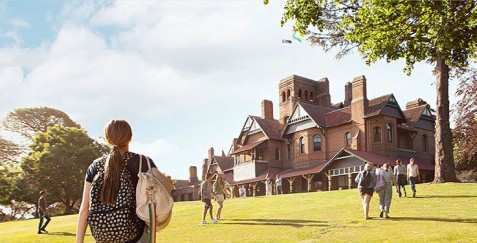
Why study with us?

The most enjoyable part of my studies is the sense of achievement and being part of something bigger than myself.
How to apply
Preparing to apply
You should always provide the details of past or current studies in your application. You may also need to include documents to support your application.
The kind of documents you need will depend on:
- Your preferred course/s
- Your personal circumstances
Important Dates
Different application methods and courses can have different closing dates. To find your correct application method click the Apply Now button below. Please check the appropriate application website for opening and closing dates.
If you are applying online direct to UNE please see below for application dates.
| Intake | Application Closing Date | Trimester Start Date |
|---|---|---|
| Trimester 1 | 24 February 2026 | 23 February 2026 |
| Trimester 2 | 23 June 2026 | 22 June 2026 |
| Trimester 3 | 20 October 2026 | 19 October 2026 |
