
University of New England (UNE) geologist, Associate Professor Luke Milan, has been named Chief Scientist of a $4-million offshore voyage in 2028 that will advance our understanding of the geology within the Tasman Sea off the east coast of Australia.
The study will focus on extending our knowledge of the eastern third of Australia, known by geologists as the Tasmanides, into the offshore environment.
“Few studies have attempted to trace onshore geology, offshore into the Tasman Sea,” Associate Professor Milan said.
“Our lack of knowledge regarding the geology out there remains a stumbling block for advancing our onshore understanding of the Tasmanides and its evolution. It is also an impediment to predictive exploration for critical metals on land.”
The voyage will also provide valuable insight into the geology of ‘Zealandia’, the hidden continent east of Australia that is almost completely submerged by the ocean.
“Zealandia was once part of what we know as Australia when it was the supercontinent of Gondwana,” said A/Prof Milan.
“We are going to sample and track the geology along the break between both continents, which will not only teach us more about the Tasmanides and Zealandia, but also how continents break apart.”
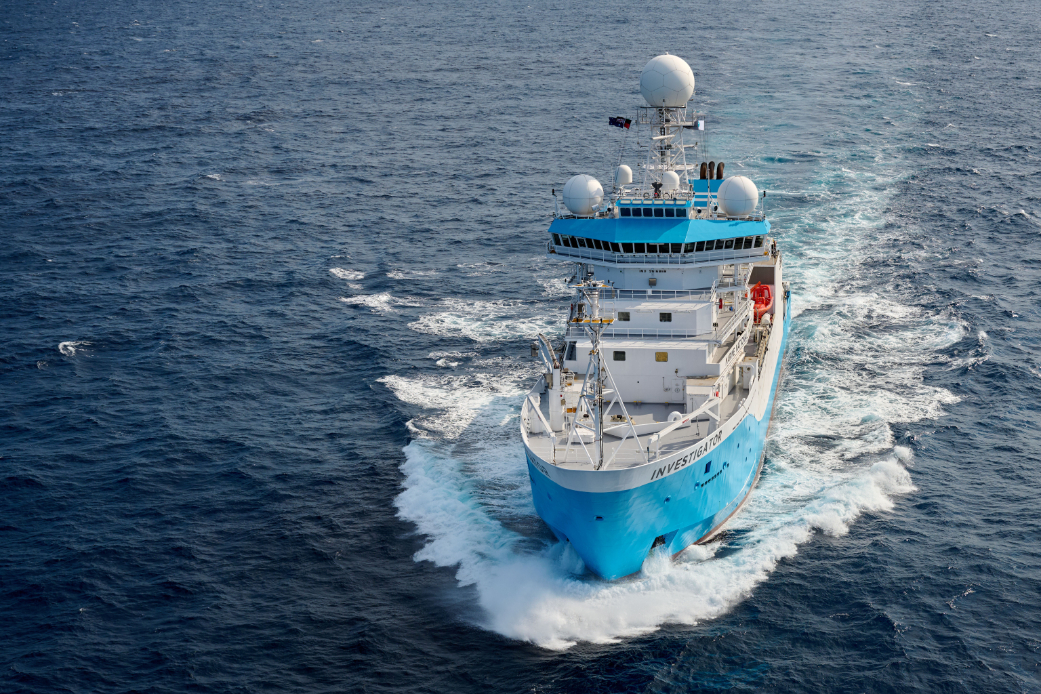
The month-long voyage will set off in March 2028 on CSIRO research vessel (RV) Investigator, Australia’s advanced 94-metre ocean research vessel operated by CSIRO, Australia’s national science agency.
CSIRO Marine National Facility Director Toni Moate said the vessel provides Australia with the vital capability to deliver world-class science and ocean exploration anywhere across Australia’s vast marine estate and beyond.
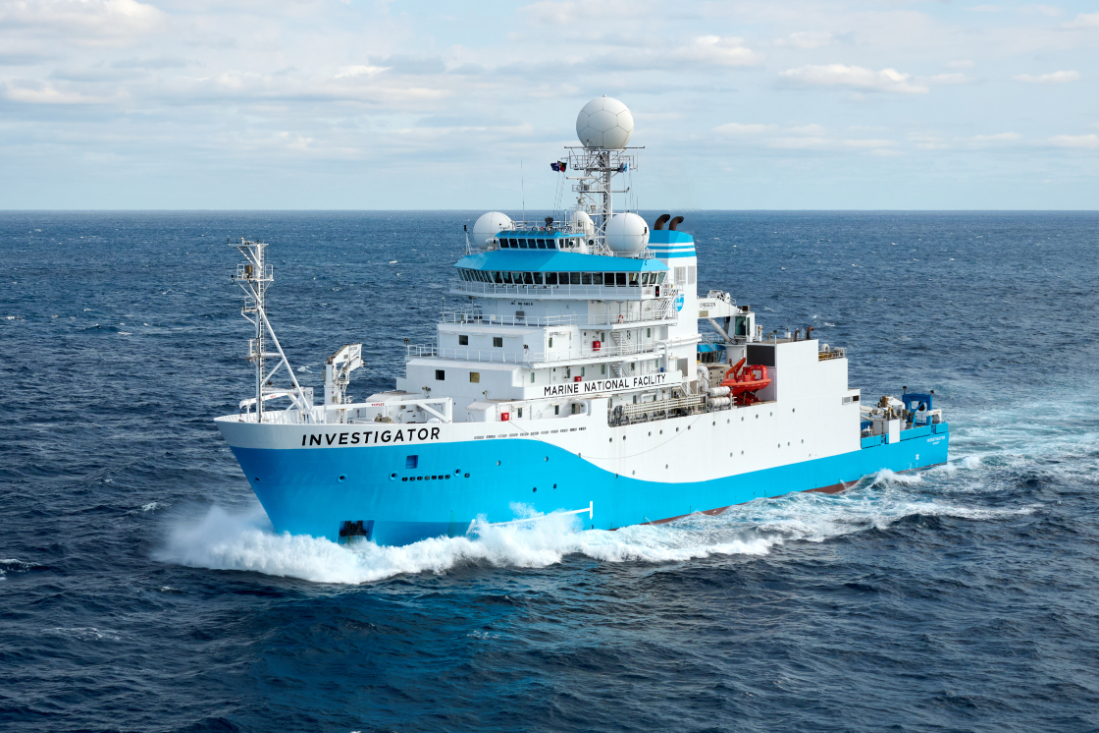
Image: RV Investigator out at sea (Credit: CSIRO)
“Projects awarded sea time on RV Investigator are competitively assessed by independent committees of experts and government representatives against merit-based criteria of research excellence and national benefit,” Ms Moate said.
“The outcomes from this project will greatly increase our understanding of the tectonic history of eastern Australia and how our geology links to the submerged continent of Zealandia.”
Preparations for the voyage have already begun with A/Prof Milan recently attending a planning symposium at the CSIRO Marine Laboratories in Hobart, joining the other Chief Scientists who were awarded sea time on RV Investigator in the 2027–2028 season.
"It was a really useful symposium, where I had the chance to speak face-to-face with everyone involved in supporting and planning our research voyages aboard the remarkable RV Investigator," A/Prof Milan said.
As voyage Chief Scientist, A/Prof Milan will ensure the project’s success, maximise scientific potential, and ensure findings are communicated effectively to end-users and the public. He will also nurture the next generation of geoscientists, training research students who will accompany him on the voyage.
“While it sounds like a long way away, it will come around fast and there is a lot of logistics and planning to do,” he says.
“I won’t be doing it alone; I have a highly experienced team of geologists behind me from UNE (Dr Timothy Chapman and Prof John Paterson) and elsewhere in Australia, (Geoscience Australia, UTAS, UQ) and New Zealand (Otago University and Earth Sciences NZ), as well as the experts at the CSIRO Marine National Facility.
"I have also reserved berths to be taken up by research students who will work with us on these important scientific discoveries."
This research is supported by a grant of sea time on RV Investigator from the CSIRO Marine National Facility.


