
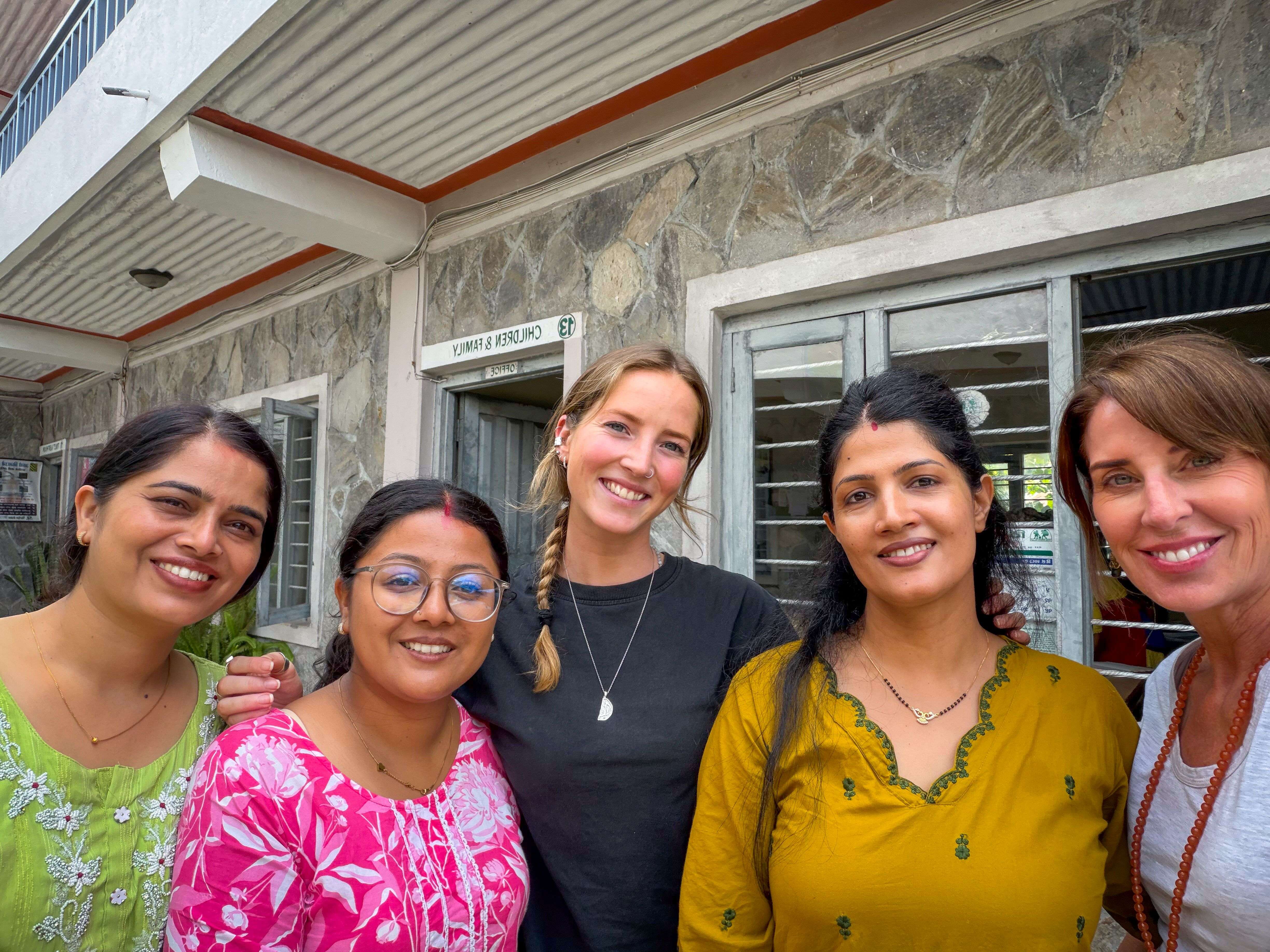
Two UNE social work students are learning about the realities of trauma in real time in a Nepal reeling from the devasting August flash flooding and landslide.
Lucinda Bawden and Bethany Gauci were still undergoing orientation in Pokhara when disaster struck some 100 kilometres to the north-west. The pair are part of a group of nine social work students from UNE, Edith Cowan University and La Trobe University undertaking international field placements with Nepali NGOs for the next three months.
And while the students are unlikely to be directly involved in the disaster response and recovery, their experiences provide an extraordinary learning opportunity.
“Social work students spend considerable time learning about inequality, vulnerability, resilience and social justice in classrooms. Here, those ideas are no longer abstract,” said Annie Townsend, the Social Work International Nepal-SWIN social work supervisor supporting the students. “They are seeing first-hand how the consequences of disaster move far beyond the immediate floodwaters into displacement, poverty, disability, gender, livelihoods, mental health, family relationships and community recovery. Over the coming months, working alongside their NGO colleagues, they will learn what thoughtful, culturally humble social work practice requires.”
Even in these early days of observing and bearing witness, the students are beginning to appreciate the social, economic and cultural ripple effects as people displaced by the disaster move to larger centres like Pokhara in search of treatment, shelter, employment and education. Many of the injured are being treated in Pokhara hospitals and the central Nepalese city houses a morgue for the identification of victims. More than 1,400 people are known to have died, but thousands more remain missing after a glacial collapse caused flash flooding on the Nepal-Tibet border on 26 August.
Master of Social Work student Lucinda is placed with CHILDREN-Nepal, one of the oldest NGOs in Pokhara, which promotes the rights, welfare and development of some of the country’s most disadvantaged children, young people and families.
“I don’t think any of us can believe the scale of what is unfolding,” she said. “We have heard all kinds of harrowing stories of emergency teams getting into the disaster zones and there’s just nobody left. Other areas remain completely inaccessible – and all this is happening to the poorest of the poor.”
“Only days before the disaster we had been speaking about the repercussions of the 2015 earthquake, the generational trauma it has caused and the fact that many people are not yet fully recovered from that event.”
More than 25% of Nepalese live below the national poverty line and women and girls are especially vulnerable. “There is a lot of gender-based violence in Nepal, stigma still surrounds menstruation (leading to social exclusion) and child marriage still commonly occurs, even though it is illegal to marry before the age of 20,” Lucinda said.
CHILDREN-Nepal sponsors the education of some 400 impoverished girls and boys, and runs workshops and vocational training to address barriers to employment. In the past two weeks, Lucinda has begun visiting schools and meeting teaching staff, students and families as part of a placement that aligns perfectly with her capstone assessment on trauma-informed care in a diverse cultural setting.
“I am observing how distress presents and is identified and how care takes place,” Lucinda said. “It’s been challenging being so removed from the day-to-day reality of the disaster. But it’s nice to be standing in solidarity with the Nepalese people, walking alongside them and being part of the solution in some small way. The effects of this disaster will be felt for generations to come, and I feel immensely privileged to be here.”
Annie is encouraging all students to take a slow and considered approach, supported by one-on-one mentoring, group supervision and plenty of opportunities for personal reflection. “Building relationships is the cornerstone of social work, but taking the time to pause, debrief and reflect is equally important,” she said.
We will share more of Lucinda’s experiences in coming months.
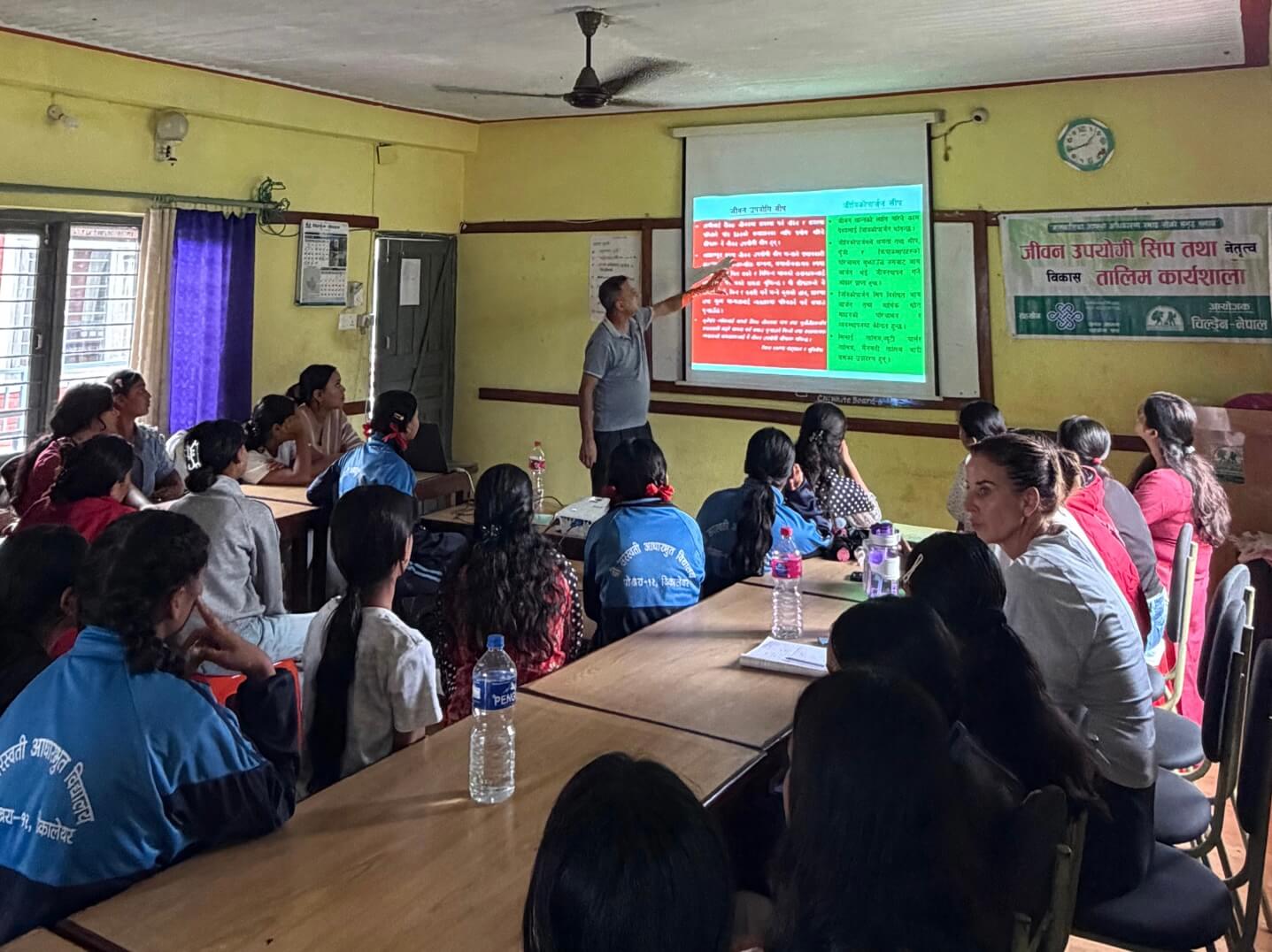
Image: Lucinda takes part in a CHILDREN-Nepal life skills training class.

