
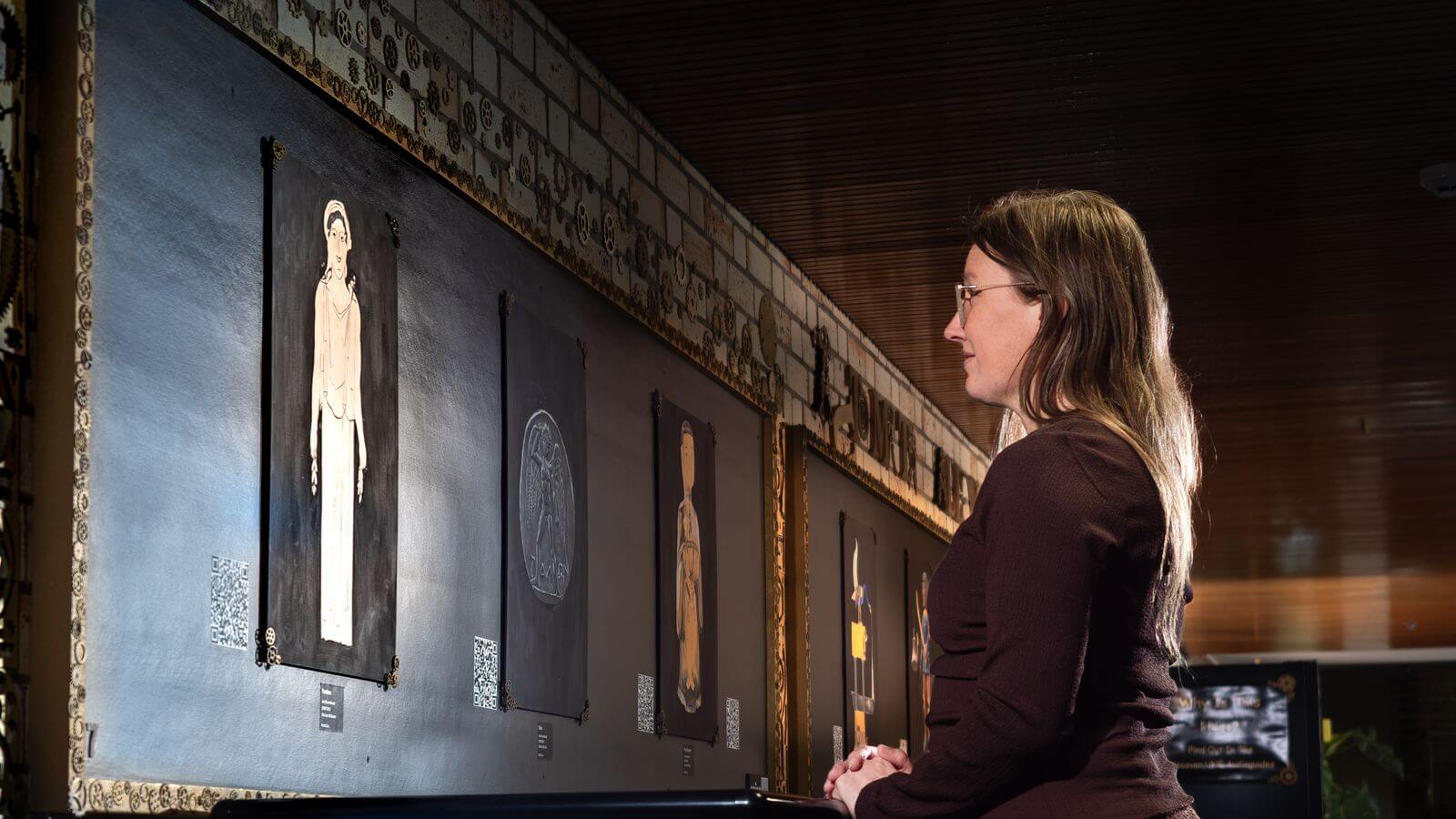
Jo Liet
Developer of the escape-room experience at UNE’s Museum of Antiquities (UNEMA).
Bachelor of Arts (Theatre Studies) studentJo Liet earned the2025 UNEMA Charles Ede Prize for a project that’s set to become a fun and funds-raising educational outreach activity.
How did you come to be developing an escape room at UNEMA?
I did majors in ancient history and religion as part of my earlier Education studies at UNE and I’ve been a volunteer at the museum for 3.5 years. I had this idea to engage more high school students in our outreach programs, to create something that would be fun, encourage them to interact with the museum’s collection and learn. And UNEMA’s program of Research Projects provided the perfect opportunity to pursue the idea. The gamification of learning is very popular, and the escape room is linked to the NSW school syllabus.
So, you’re into escape rooms yourself?
Absolutely. I love visiting them, I run them at home for my son and niece during the school holidays as a boredom buster, and I’ve done heaps as a scout leader. They rely on logical thinking to solve clues and you’ve got an hour to escape. It’s like a little treasure or scavenger hunt. I always enjoyed the movie Night at the Museum – that idea of getting lost in a museum is fun.
As a kid, I loved to solve puzzles and riddles, and jigsaw puzzles are still my pastime when I’m not studying. I’m not sporty and I love the mental challenge, as well as the adrenaline surge that comes with the time pressure. It’s my own personal competition and I love the sense of achievement.
How did you go about developing the UNEMA escape-room experience?
I spent a lot of time looking at the museum’s artefacts to work out a theme and came up with the Pandora’s Box myth. The clues reference an artefact in every cabinet in the museum, so it took time to pick the right ones. Then I created the clues – and I didn’t want them to be too easy.
We’ve had a few test runs with small groups of people. Two groups made it through and completed it in the hour, but others didn’t.
The time it takes depends on the way people think. Some of the puzzles are visual, while others are word and numerical puzzles. Having a group of people who think differently to one another is useful.
What now for escape room?
The escape room will be offered as part of UNEMA’s educational outreach activities, and we’re working to make it available as both a physical and digital escape room. As we digitally scan everything in the museum, we’ll be able to create a digital version, so that students from outside the New England can log in and explore the museum’s collections online.
What is your favourite artefact in UNEMA?
I like the commedia dell’arte puppets [an early form of professional theatre originating in Italy from the 16th century], partly because I helped set up that display and write their story. But my favourite artefact in the entire museum is a little replica Inca doll in the South Americas cabinet. The doll itself isn’t very old but it is made from fabric from an Incan grave that was pillaged in a horrible desecration. Locals took remnants from grave sites and fashioned them into dolls that they sell to tourists.
What’s next for you?
My original ambition was to work in schools with children in history education, but volunteering at UNEMA with the school outreach program has already given me that opportunity. Theatre is now my interest, and I’d like to do children’s community theatre.

