
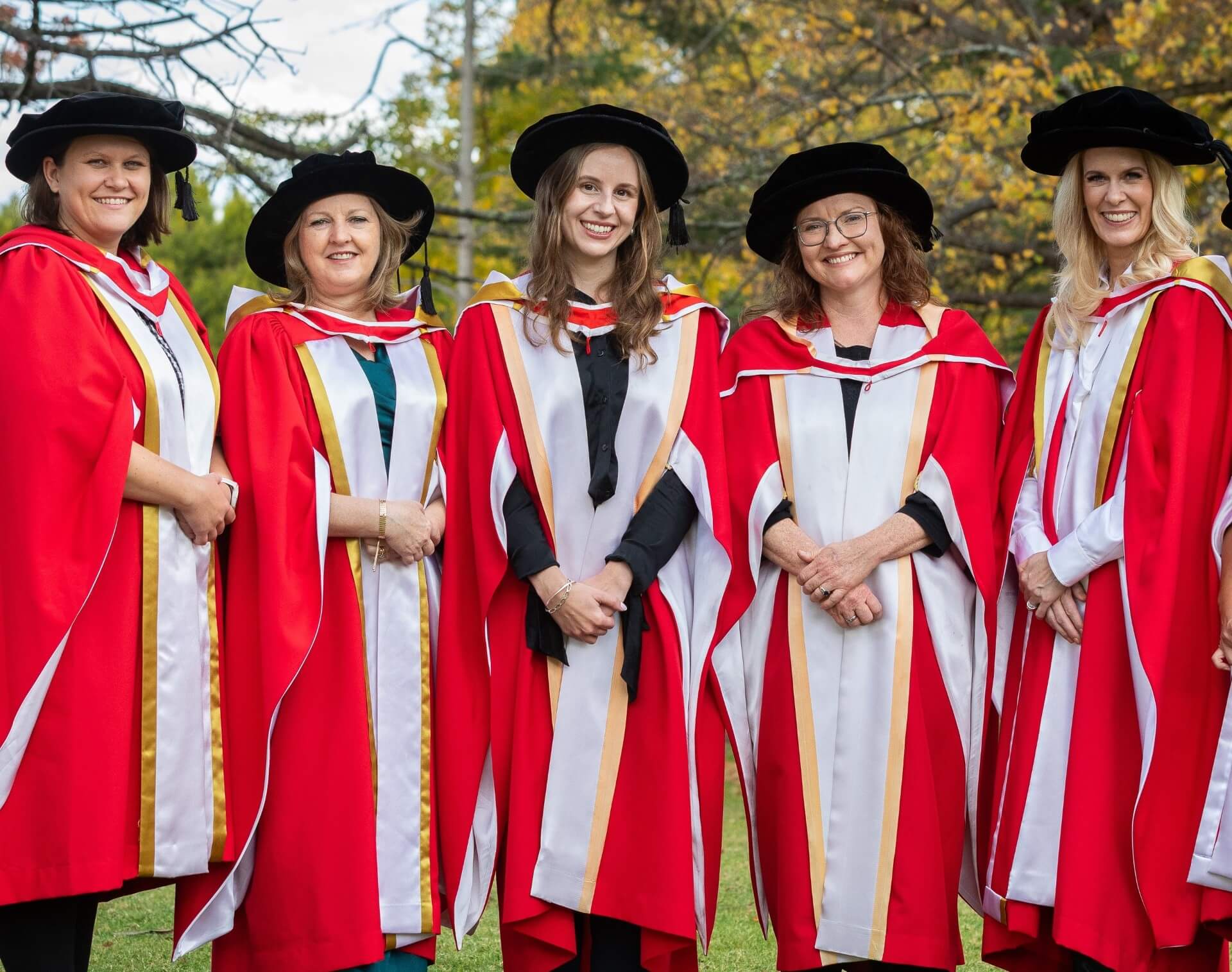
Newly minted, UNE-trained clinical psychology graduates are already delivering much-needed support to rural and regional communities.
Doctors Stephanie Banner, Alex McCord and Jaeva Shelley have joined the ranks of health professionals committed to addressing critical shortages beyond our major capital cities – Stephanie and Jaeva in Coffs Harbour and Alex in Northern NSW. Colleague Dr Louise Ferraz De Camargo is in practice in Melbourne.
The Australian Clinical Psychology Association has described the scarcity of psychologists as a “national crisis”, estimating that a shortfall of 35% contributes to lengthy patient wait times, particularly in rural and regional areas.
Primary supervisor of all four doctoral students – Associate Dean of Research in UNE’s Faculty of Medicine and Health, Associate Professor Kylie Rice – said their successful completion demonstrates the outstanding research pathways available at UNE and its dedication to growing the rural health workforce.
“All four completed a PhD and training in clinical psychology, which are difficult qualifications comprising research, placements and coursework,” Associate Professor Rice said. “The fantastic news is that all four are now clinical psychology trained and have PhDs, enabling them to become leaders in both practice and research. Three are also practicing rurally in NSW, within their communities. Their skillsets and qualifications will bring the highest level of mental health service delivery to communities where demand is high, and they will also be able to support other rural clinicians to upskill and develop professionally.”
Jaeva grew up in Lismore, in northern NSW, and it was always her ambition to work in rural and regional Australia.
“The difference that these communities experience, in terms of access to and availability of health professionals like psychologists is so obvious,” she said. “I chose to do my Master of Professional Psychology at UNE because it was the only university that enabled me to stay regional and continue living in my regional town.
“Providing psychological care to such regions is incredibly important to me. And the more practitioners we have in rural and regional Australia, the shorter the wait times for patients and the more opportunities we can provide for internships and placements for those psychologists coming through.”
Alex said, as an expat new to both Australia and psychology studies, she researched every Australian post-graduate psychology program.
“At the time, UNE was the only uni that offered the ability to choose clinical placements close to home, which allowed me to balance work, life and parenting,” she said. “This flexibility also helped me make local connections early, to then move from placement to clinical practice while remaining regional.”
Pleasingly, in addition to their clinical practice, three of the four psychology graduates are investing in the next generation of psychology students by contributing to teaching and learning at UNE as part-time academics.
“Their willingness to stay connected to UNE and share their knowledge and skills will assist future clinical psychologists and inform the profession through guest lectures, seminars and ongoing research,” said Associate Professor Rice. “These graduates are a credit to UNE and it has been a privilege to be part of their journey. Their success showcases UNE’s leadership in clinical psychology training and preparation of graduates to practice in the bush.”

