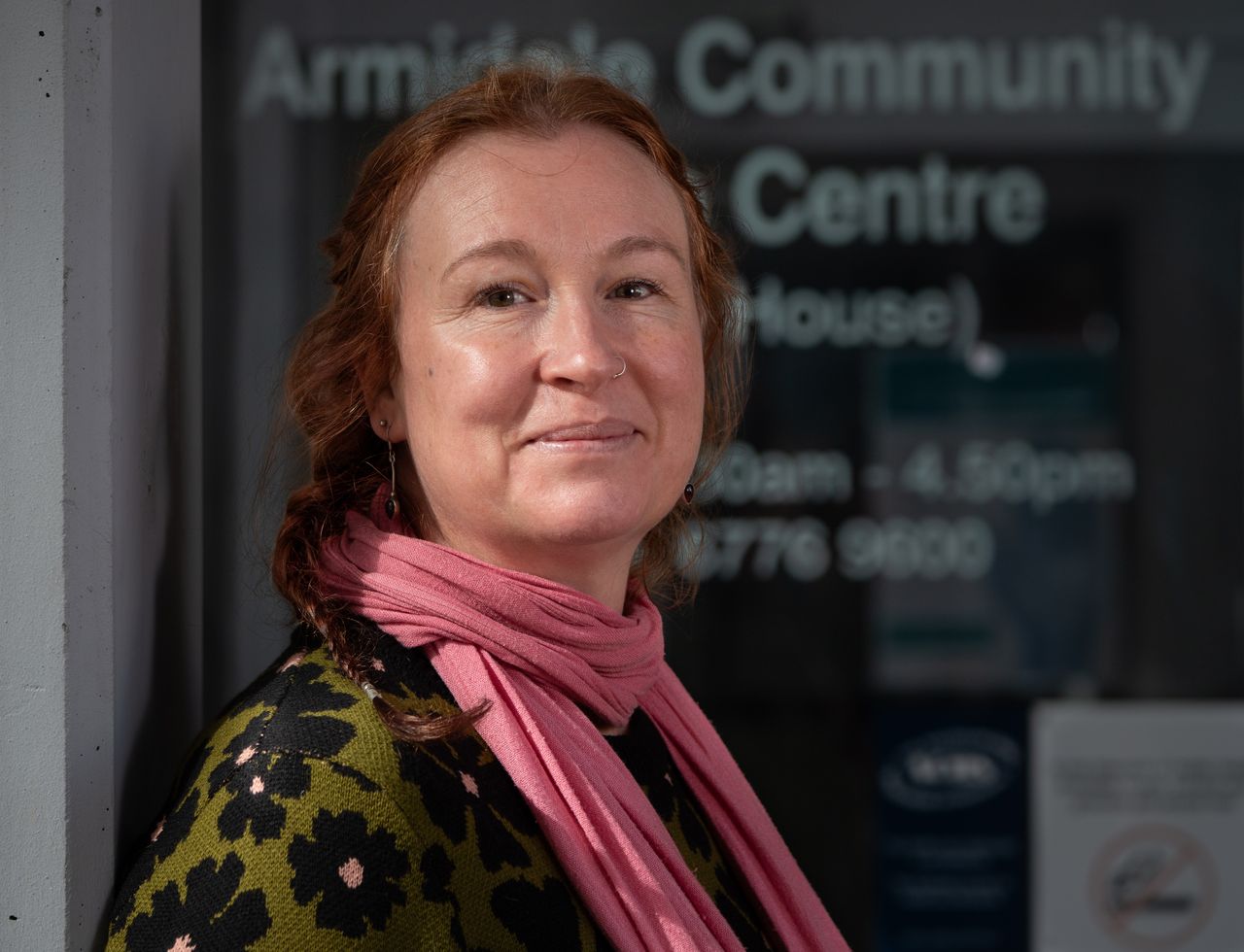
During the seven years that social worker Eaowyn Vaughan-Johnson has been working with members of Armidale’s Ezidi community there have been many milestones. New homes, new jobs, new schools, new businesses as lives are rebuilt safe from persecution.
Each one is significant for a displaced person escaping trauma and starting over in a foreign land.
But it’s the smaller accomplishments that tend to stay with Eaowyn. The moments when a client is brave enough to leave their house to do some shopping or gather with new friends, share a long-buried memory or last a day without presenting to the emergency department in distress.
“It is genuinely a privilege to gain the trust of someone at what could be one of the worst times of their life; to be engaging as two humans,” Eowyn says. “I feel blessed to be bearing witness to their experiences and hearing their stories – and to help them get onto the path to who they wish to become. The small steps are huge steps in terms of recovery.”
The Rehabilitation Coordinator with the New England Community Mental Health Service has been on the frontline of providing acute mental health services to Ezidi refugees since they first began arriving in Armidale under Australia’s Humanitarian Settlement Program in 2018. Fleeing targeted attacks by Islamic State, many had experienced unspeakable horrors and lost loved ones.
The complex history and health needs of the Ezidi population – which now numbers about 650 people – has demanded a thoughtful and targeted response.
By strengthening partnerships between local agencies and services, Eaowyn has sought to improve referral pathways and access to support. She has also championed culturally sensitive training for her fellow health professionals. And this collaborative, compassionate effort recently earned the UNE alumna a 2026 NSW Humanitarian Award*.
“There is a clinical component to my role, helping clients address acute mental health issues, but I also serve as a community connector, to help Ezidi people overcome the institutional barriers they face and to help them to navigate our systems,” Eaowyn says. “Many have a background of extreme trauma and that trauma impacts everything they do.”
This vulnerability is commonly compounded by a lack of English, initial unemployment and sometimes homelessness, as well as unfamiliarity with the health, education and legal systems they are now a part of.
“This requires a holistic community approach and I now see my social worker role as much more multidimensional,” Eaowyn says. “My advocacy needs to go much further, to empower my Ezidi clients with information and knowledge, to ensure they receive the help they need. It’s around access but also developing cultural understanding within the community and ensuring what we do is trauma-informed.”
It also takes time.
“It is only now, years after the first Ezidis arrived, that Armidale residents are coming to understand their culture,” Eaowyn says. “At first we didn’t understand the genocide or have the cultural competency to appreciate the complexities of resettlement.”
She had already completed a Bachelor of Social Science at UNE when Eaowyn amassed a rich range of professional experiences while travelling internationally. Returning to Australia, and working with Aboriginal and Torres Strait Islander peoples and women and young people in refuges, confirmed her future career path.
“I had always wanted to be in a role where I could help people and advocate for them. Undertaking my Master of Social Work at UNE not only gave me the social work theories and approaches but also grounded me in the need to see people in their environment and take a holistic view of a person. Sometimes they need more support than they can say.
“I remember being at one of my first UNE intensive schools and reading the social worker’s code of ethics and thinking ‘these are my ethics’. It was perfectly aligned with my personal values and the kind of practitioner I wanted to become.”
And while some days are, unsurprisingly, darker than others, often the light streams in.
“I feel very lucky to do what I do,” Eaowyn says.
“My Ezidi clients demonstrate such resilience, strength and hope for the future. Despite everything they have been through, they are living life and working and studying and playing in community sporting teams and contributing to their community. They are absolutely amazing.
“Anyone who has been lucky enough to have had Ezidi neighbours – and received gifts of their amazing flatbreads – will know just what generous, kind and trusting people they are.
“They have taught me a lot about appreciating what you have and not taking anything for granted, including the freedom to be who we are in this country. There are many people who don’t have that in the world.”
*The NSW Humanitarian Awards are given by the Refugee Council of Australia and STARTTS – the NSW Service for the Treatment and Rehabilitation of Torture and Trauma Survivors – to celebrate those who help build a more inclusive, compassionate and resilient society through their commitment to the wellbeing of some of our most vulnerable populations. Eaowyn was the winner in the Government and Legal category for 2026.


