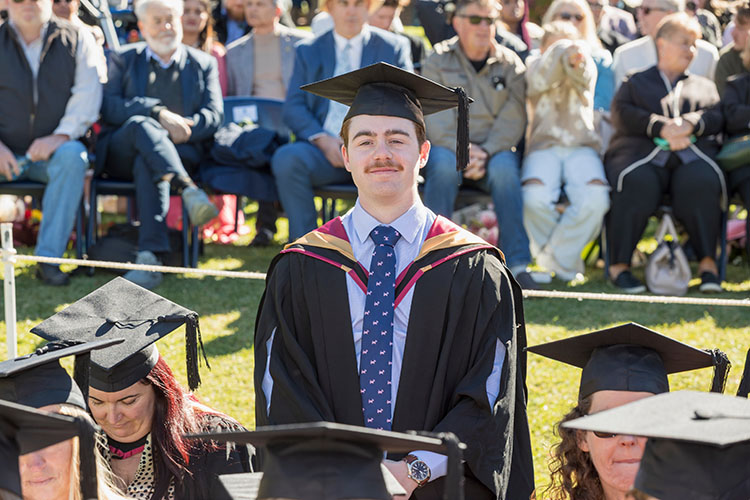
The four years that UNE nursing graduate Lachlan Robinson spent living at Duval College shaped him profoundly.
The first-in-family university student from the small rural NSW town of Scone spent the duration of his Bachelor of Nursing living at our college and says he grew “massively” throughout the experience.
“I could not have imagined the personal growth and the person I would become as a result of living in college,” Lachlan says. “I not only learnt how to live with other people, but how they grew up and operate. It prepared me very well for my studies, for living in a share house today, and for how to socialise with a diverse group of people. It was like getting another degree in itself, and I think it has made me a much more rounded individual.”
While Lachlan credits the head of college, Duval leaders and fellow students with helping him to adapt to the requirements of university, the leadership team recognised his outstanding contributions to college life with the Sally Stratton Award at his May graduation.
“I guess I was always putting my hand up to help out and join in,” Lachlan says. “I became a member of the JCR in my second year and always volunteered for college events and things like college tours and university open days in addition to being a member of the Gaming Society. I became a Resident Leader in my third year, played volleyball for Duval and was part of the UNE team that competed in the national futsal championships in my final year.”
Now, as a registered nurse completing a two-year graduation program with the Central Australian Aboriginal Congress in Alice Springs, NT, Lachlan is conducting primary health assessments and supporting medical staff to help close the gap for Indigenous Australians via the Gap Clinic.
“I’m glad to be working at the coalface and able to make a difference in the lives of individuals. Closing the gap is a big thing for me.
“The numbers and presentations are not like anything I saw during my placements or discussed in class. There are a lot of chronic conditions like diabetes, and lung and heart issues that you tend to find in remote Aboriginal communities.”
Lachlan will undertake four six-month rotations as part of the remote area nurse program – in the Gap Clinic, Alice Springs Hospital and in remote NT communities. He’s not sure yet where it will take him professionally but doesn’t discount doing a medical degree in the future, to become a rural GP.
“I’m only three months into the program and tackling some challenging situations, but I’m pretty happy with how it’s all worked out. Learning more about Indigenous culture will help me to provide more holistic care.”


