
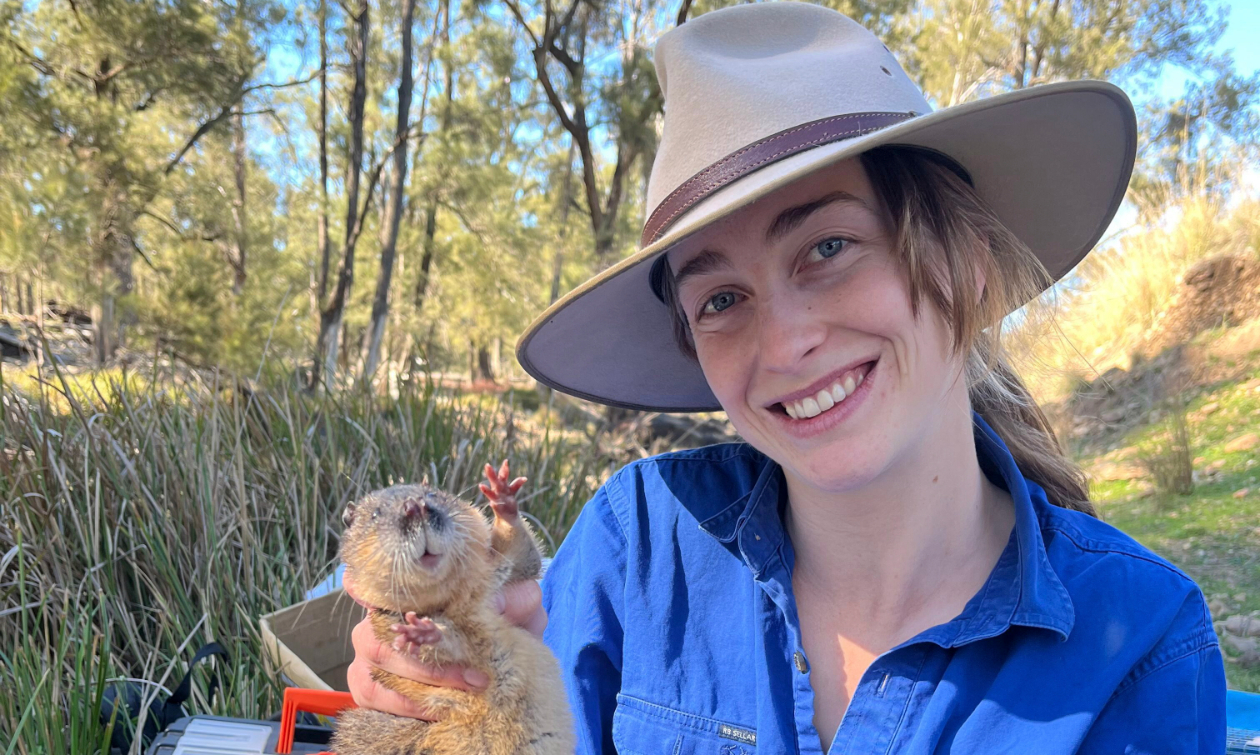
Maggie Reinke has always loved wildlife and spending time outdoors, so when deciding a career path, she knew studying a Bachelor of Science with Honours at UNE was a chance to build skills while putting her passions into practice.
“I’m very inspired by the natural world, so found myself drawn to the idea of exploring, studying, working with, conserving and managing the biological environment,” says Maggie.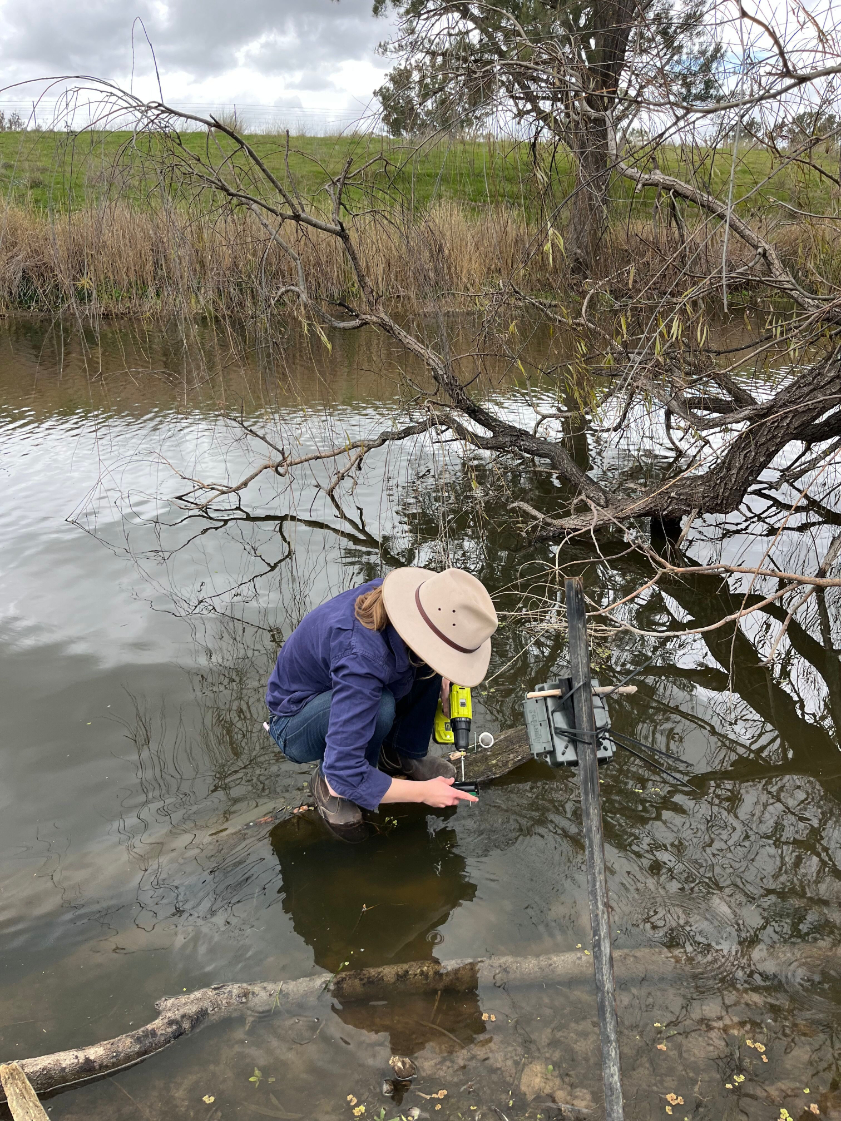
A hands-on opportunity
Maggie’s research project focuses on the ecology of the rakali (the Australian water rat) living in the cold-climate country of the Northern Tablelands.
The project is investigating their movement, density and behaviour using camera trapping, cage trapping and glue-on radio tag telemetry (VHF radio tracking).
“I’m currently analysing hundreds of rakali camera trap photos collected over several months to identify individuals, their movement between cameras, activity patterns, attraction to bait, diet and density.
"Along with VHF tracking results, these estimations will be compared to environment variables that can reveal more about the habitat conditions that the species prefers in this unique area."
Preparing for the workforce
This practical element of her Honours degree is one of Maggie’s highlights.
She says it’s given her valuable hands-on experience that’s allowed her to do what she loves and equip her for life beyond university.
“My favourite part of the experience is the opportunity to work with animals,” she says.
Honours has shown me that I can work as an applied environmental scientist and will help me stand out when applying for jobs in the industry.
“I’ve been supported by supervisors to explore my ideas and work with a range of people to complete practical field work, collect and analyse my own data, research and write it all up. I see it as a chance to test my scientific capabilities.”
Next steps
As for what’s next, Maggie is keeping her options open.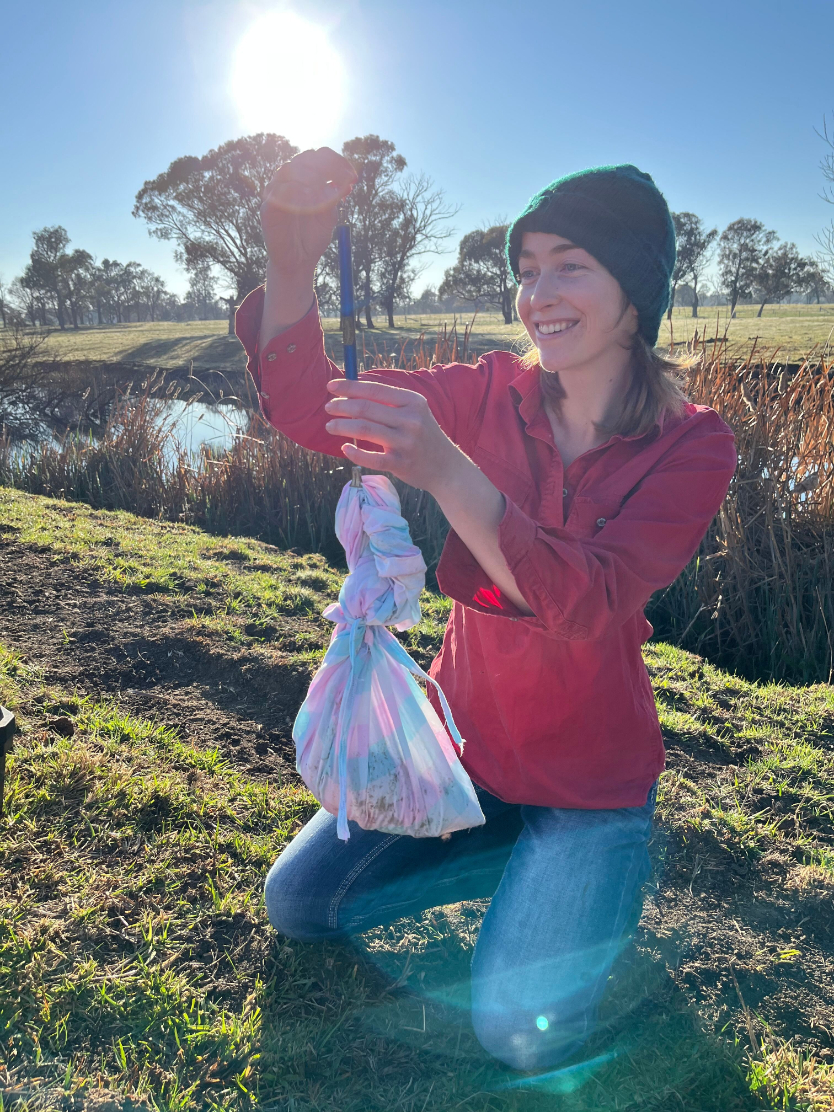
“Honours has shown me that I can work as an applied environmental scientist and will help me stand out when applying for jobs in the industry.
“I feel the wildlife and natural resource management sector is an extremely important and relevant area in today’s changing anthropogenic world, managing ecological services and working towards curbing climate change.”
Advice to others
For others interested in studying Honours, Maggie has one piece of advice:
“Decide early in your final undergraduate year if you’re on board for Honours and begin the process,” she says.
“Back yourself and have meetings and discussions with supervisors early about project ideas and realistic trajectories so you can apply for relevant ethics and scientific permits before time slips away”.
Want to learn more?
Find out more about studying a Bachelor of Science with Honours here


