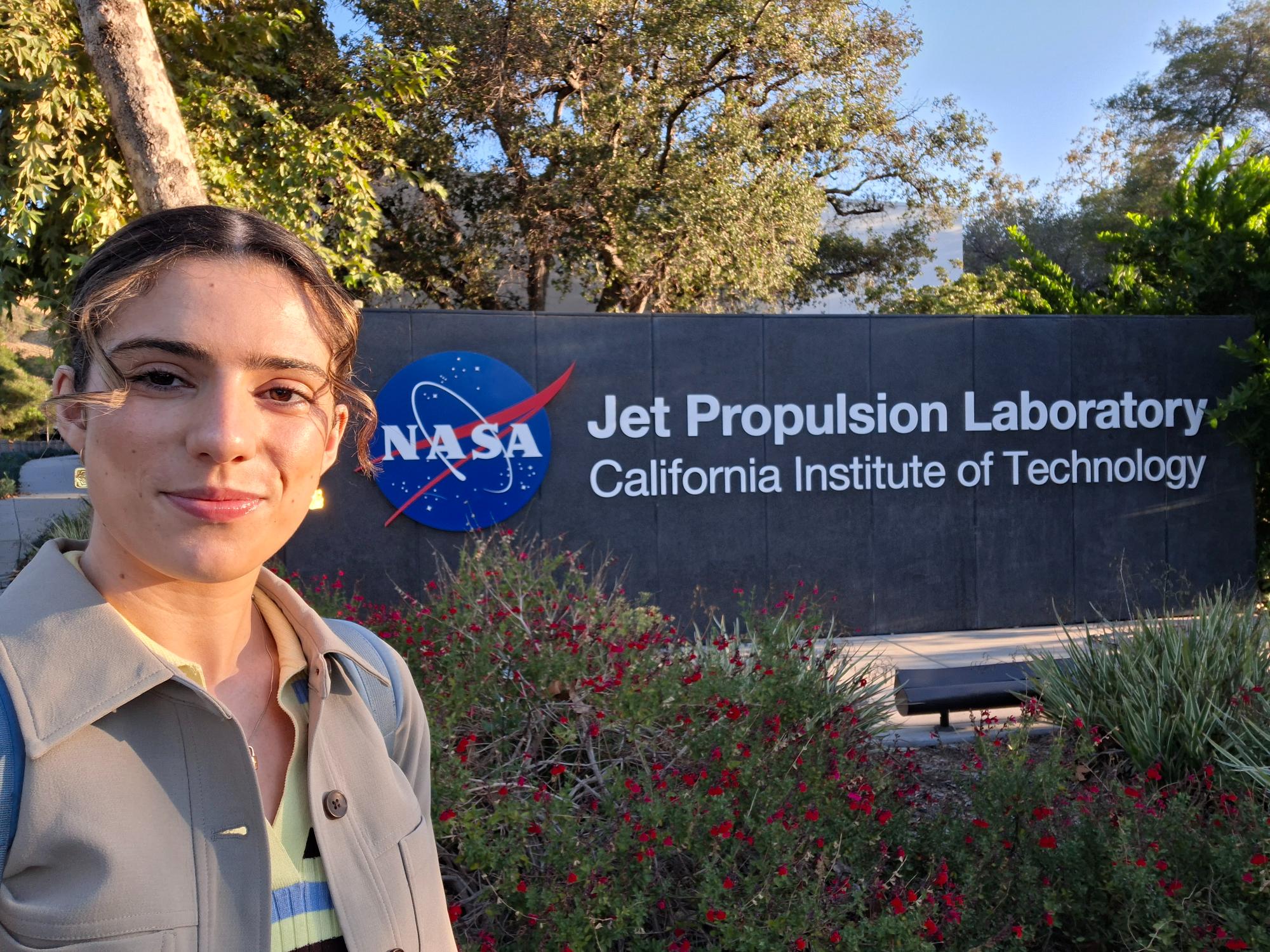
The University of New England’s (UNE) Jaimie Duffy has taken her passion for science to one of the world’s leading space research facilities, after being selected as one of just six students from across Australia to participate in a 10-week placement at NASA’s Jet Propulsion Laboratory (JPL) in the United States.
Kicking off this week, the program is part of Monash University’s pioneering National Indigenous Space Academy (NISA), which aims to build Indigenous participation in Australia’s growing space sector.
While at NASA JPL, Jaimie will be paired with a mentor to work on projects and contribute to current research and missions, including work involving ocean exploration vehicles and research into microorganisms aboard the International Space Station.
This will build on skills learnt at a Space Boot Camp at Monash University, covering areas including aerodynamics, robotics, rovers, astrophysics, planetary science, engineering, computer science and earth sciences, as well as past and current NASA missions.
“I never imagined studying science would take me from an online degree in Australia to researching at JPL,” Jaimie said.
“I’m most excited to be surrounded by people working on questions that sound almost impossible. I’m here to learn from the best, challenge myself and see just how far science can take me.”
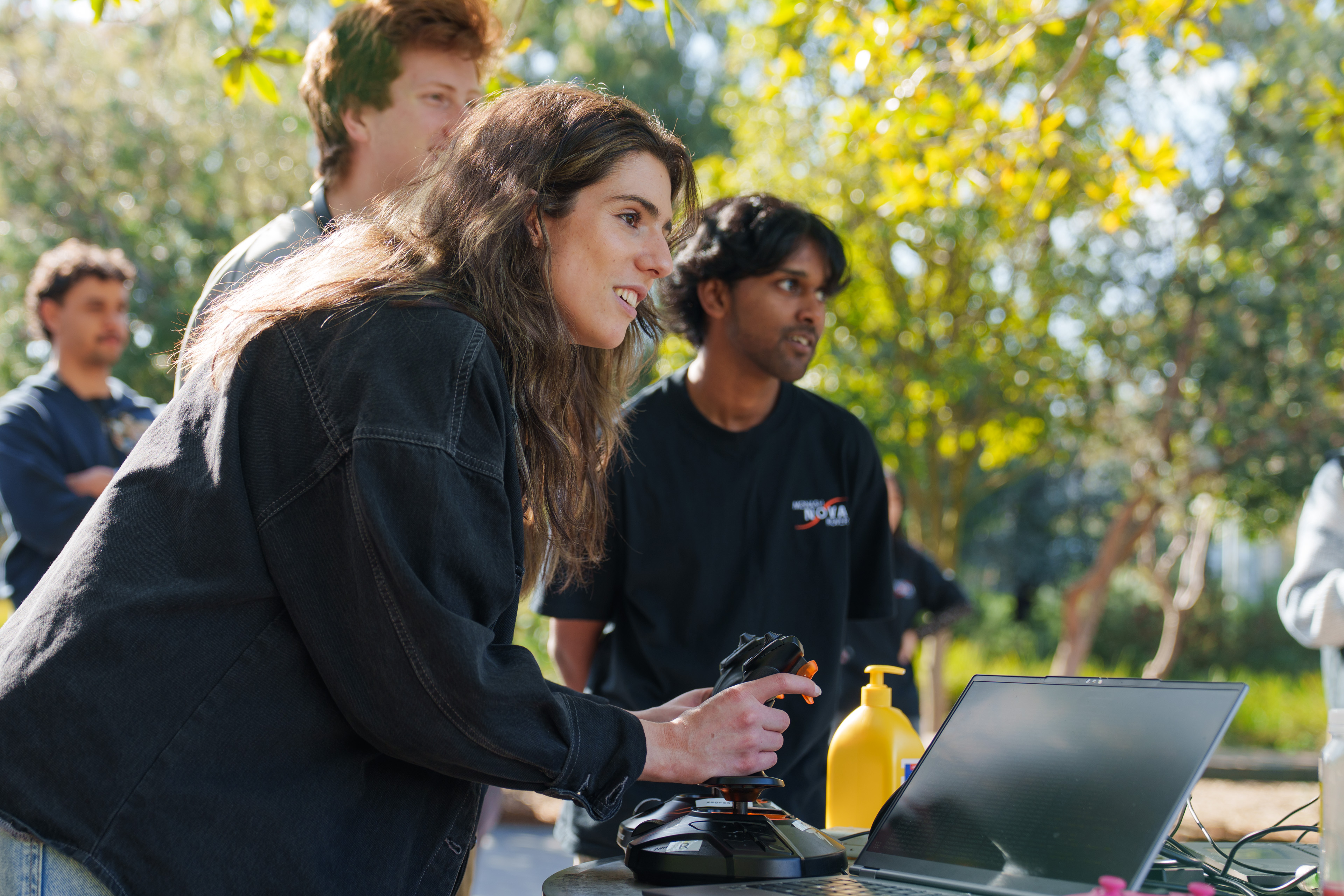
Image: Jaimie at NISA's Space Bootcamp at Monash University. (Source: Monash University)
Jaimie is a proud Wiradjuri woman studying a Bachelor of Science at UNE, majoring in Biochemistry and Medicinal Chemistry.
Alongside her studies, she has spent more than three years working in community pharmacy, developing an interest in the ways science can be translated into real-world improvements in health.
At JPL, Jaimie will bring those interests into an entirely new environment, undertaking research in astrovirology and exploring how microorganisms behave under conditions relevant to space exploration.
For Jaimie, the opportunity also carries significance as a young Indigenous scientist.
“Being selected as a Wiradjuri woman is something I’m incredibly proud of,” she said.
“Selected on merit, programs like NISA represent the capabilities of Indigenous students within the space industry. I hope sharing opportunities like this encourages other students to be curious and to put themselves forward for things they might never have imagined were possible.”
I hope sharing opportunities like this encourages other students to be curious and to put themselves forward for things they might never have imagined were possible.
Professor Chris Lawrence, Director of the National Indigenous Space Academy and Professor of Practice in Space Innovation and Security Capabilities in the Faculty of Engineering at Monash University, said the scholarship would have a transformative impact.
“NISA provides Indigenous STEM university students the unique opportunity to study and learn at two of the world’s leading space research facilities, RAL Space in the UK and NASA/JPL in the US,” Professor Lawrence said.
“Students work in teams on real life space missions and contribute to space exploration and search for other planets, solar systems and the ultimate search for other life existence in the galaxies. NISA is a life changing program for the next generation of space explorers.”
You can find out more about the NISA program here.
The National Indigenous Space Academy has been proudly supported by the Australian Space Agency since its inception and extends its best wishes to this year’s cohort.
Applications for NISA’s 2027 program will open soon. Students can apply via the NISA website.
NISA is proudly supported and sponsored by:


