For thousands of years, Anēwan (also Anaiwan) was the language of the lands now occupied by the University of New England in Armidale.
That was before waves of European pastoralists and their livestock, horrific frontier conflict, and the displacement and dispossession of Aboriginal people. And the process of forced assimilation that forbade and punished the speaking of traditional language and pushed “ancestral tongues” rich in heritage and culture into dormancy.
When a new millennium dawned, those in the New England eager to re-awaken their language had little to rely on – 10 minutes of audio from 1963 and a handful of written records made by pastoralists, amateur anthropologists and linguists left to gather dust in archives and on library shelves.
“People often ask why we have so little to work with,” said Anēwan/Ambēyang linguist, historian and UNE alumnus Dr Callum Clayton-Dixon. “Understanding that process of colonisation provides some of the answers. It was not that our people didn’t cherish their language; its dormancy was a product of the intense and severe impacts of colonisation. But the language was never lost.”
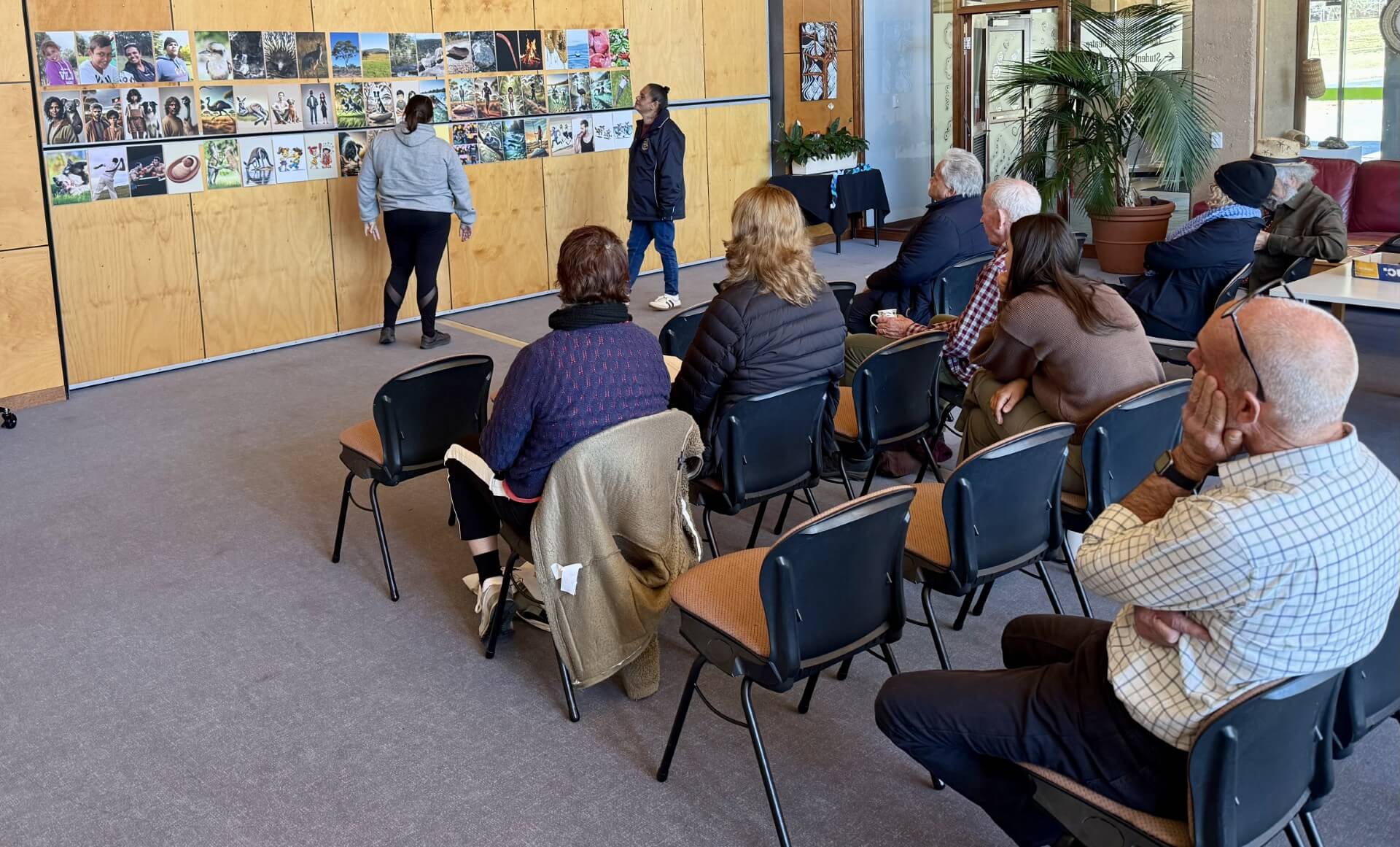
Now, every Thursday morning, Anēwan is being spoken and learnt again by Aboriginal staff, students and local community members, along with interested non-Aboriginal staff and students, at UNE’s Oorala Aboriginal Centre. Classes led by the Armidale Aboriginal Cultural Centre and Keeping Place’s Senior Language Apprentice John Roberts, UNE’s Cultural Engagement Officer Larissa Ahoy and Dr Clayton-Dixon are helping to re-awaken Anēwan.
For Anēwan Elder Uncle Steve Widders, UNE’s Aboriginal Employment Consultant and the driving force behind the classes, learning his language for the first time is a liberating experience.
“I was never taught Anēwan because my parents and grandparents were not allowed to pass the language on. Learning it now is helping to fill in the gaps of who I am, in my heart and my mind.
“As a place of learning, the university is the ideal venue for learning the language of the original inhabitants. It is just as important as Greek or French or Indonesian, and part of all of our history.”
Larissa is “very excited” to be sharing her people’s words and the traditions they embody.
“Language connects us to our Country and makes us stand tall and proud,” she said. “One of the best ways to learn about a culture is by speaking its language.
“This is a big step forward in recognising Aboriginal custodians and putting us front and centre as UNE implements its Strategic Plan. One Aboriginal and Torres Strait Islander student from another nation told me that she is attending the classes to pay her respects to Anēwan people while working on their Country.”
The classes use the Accelerated Second Language Acquisition (ASLA) technique developed by Arapaho linguist and Professor of Anthropology and Native American Studies Dr Neyooxet Greymorning, who delivered a workshop at UNE back in 2017. Drawing on how children acquire their first language, the ASLA method uses visual representations of actions and situations to build comprehension and speaking skills without translation or rote memorisation.
Dr Clayton-Dixon, who co-founded the local language revival program in Armidale in 2016 alongside Uncle Steve Widders and other community members, completed a Master of Applied Linguistics at UNE before undertaking a PhD at the University of Technology Sydney, which produced the first comprehensive analysis and description of his ancestral language. Now a postdoctoral research fellow at UTS’s Jumbunna Institute, he is developing a growing collection of language resources, including a series of thematic dictionaries or language knowledge books. Two have been published – covering plants and trees, and animals and other creatures – and a third on traditional tools and weapons will be out soon.
“These classes have grown out of more than a decade of language research and reclamation work,” he said. “It’s great to be part of this initiative at UNE, complementing the language classes and camps being offered at the Armidale Aboriginal Cultural Centre and Keeping Place.”
About 15-20 people, including Elders, other local language workers and educators, have been attending the Oorala language classes for the past month to learn and strengthen their language skills. Dr Clayton-Dixon said the classes are much more than learning words.
“Language carries our ancestors’ ways of understanding the world and relating to each other and to Country,” he said. “Relearning it reconnects us with Country, our Old People, and our stories and traditions.”
UNE Pro Vice-Chancellor Indigenous Professor Peter Anderson said he is “extraordinarily proud that UNE can play a role in facilitating this initiative”.
“When a language returns to Country, it does not simply fill a silence – it restores and breathes life into sovereignty,” he said.
Aunty Cathy Trindall, chair of the NSW Aboriginal Languages Trust (ALT) – which supports Aboriginal communities to re-awaken, nurture and revitalise First Languages – attended the first Anēwan language class at Oorala.
“NSW ALT has two key principles: Language belongs to Country and, as custodians, communities determine their language needs and priorities,” she said. “The second is that language thrives when we share knowledge and learnings.
“These principles were in evidence when I was privileged to join the class. The importance lies with the community, the teachers and the students for their language to grow, thrive and to be reclaimed and spoken freely.”
That’s certainly the intention of Uncle Steve, who said Anēwan language is beginning to flow into everyday speech.
“If we learn it and share it, others will learn our language, too. If we talk it every day, it is revived and will survive.”
All are welcome to attend the language class at Oorala on Thursdays from 11am-12pm. The Armidale Aboriginal Cultural Centre and Keeping Place and Kyūna Wangana Aboriginal Corporation also co-host a weekly Thursday night online class for Aboriginal people who cannot attend face-to-face lessons.
For more information on the classes at Oorala, contact Larissa Ahoy at lahoy4@une.edu.au
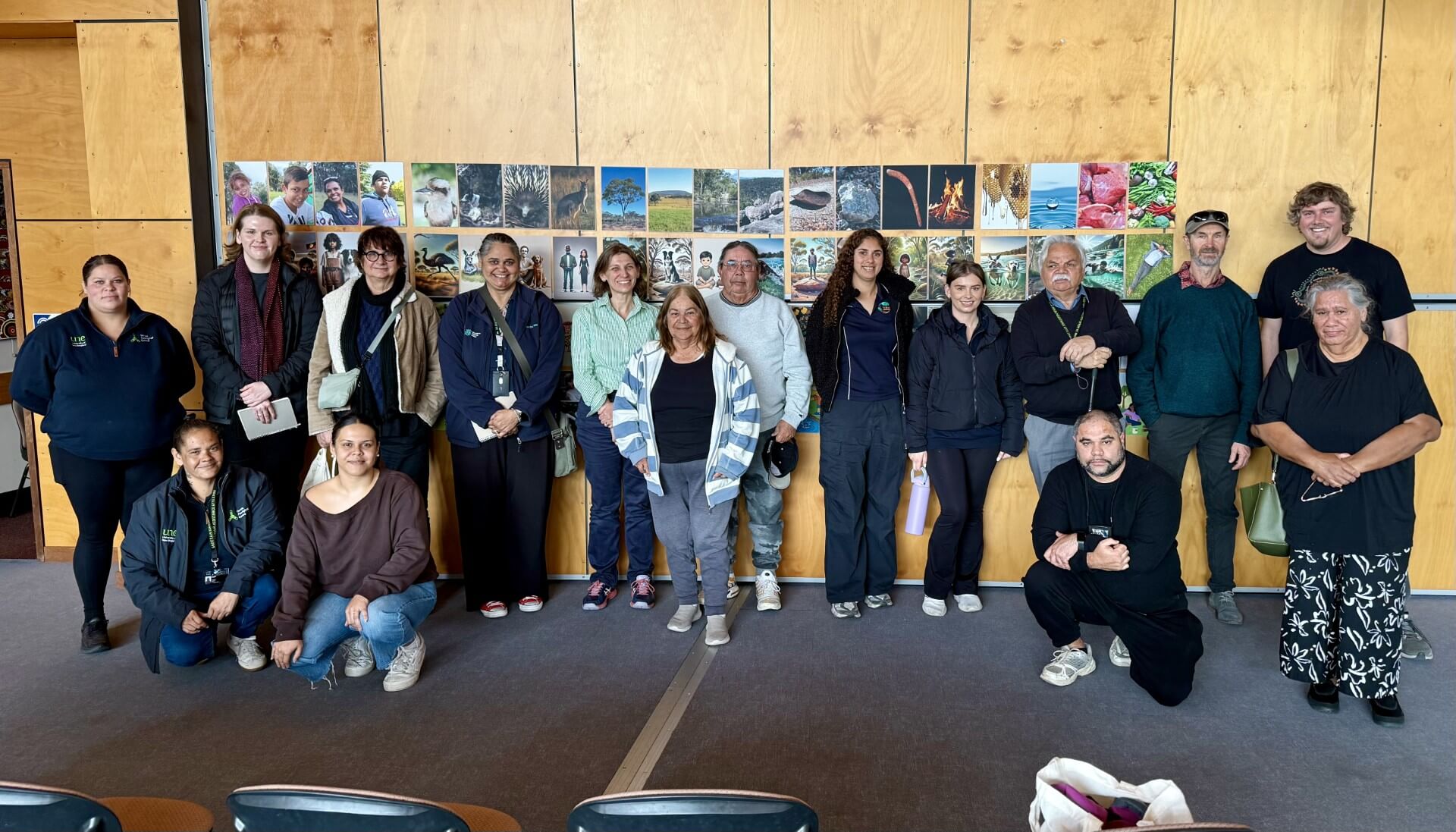
Image: Participants and teachers taking part in the Anēwan language lessons.


