
Tickets to AGBU's three-day 50th birthday celebration and symposium are available until October 5. Book now!
Many things have shaped Australia's beef cattle, sheep and pig industries over the past half-century. Arguably the most influential factor of them all has been the least visible.
The Animal Genetics and Breeding Unit (AGBU), founded by Dr Keith Hammond in 1976, has become essential hidden infrastructure in the high-stakes business of Australian livestock breeding.
From the Unit’s offices on the University of New England campus in Armidale, generations of AGBU researchers have engaged with the science of genetic evaluation and genetic improvement, with profound results.
In the 21st Century, the Unit has contributed to productivity gains in Australian beef cattle and sheep estimated to have returned more than $17 billion to these industries.
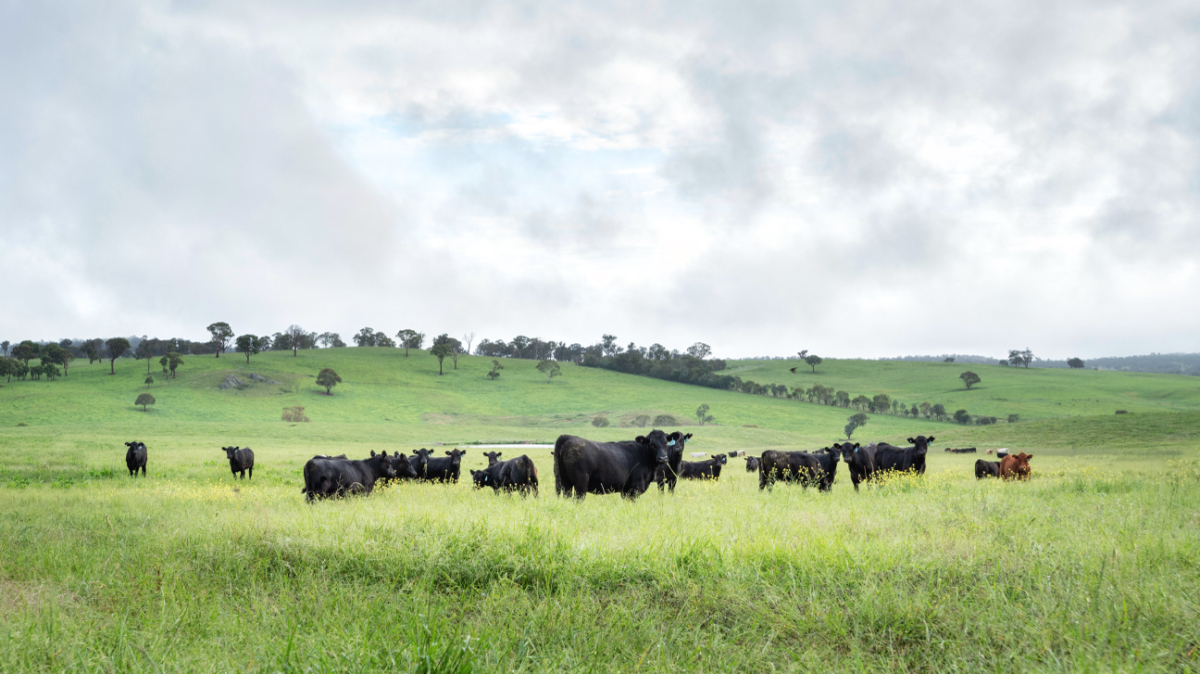
BREEDPLAN, the genetic evaluation software built on AGBU research, has underpinned the breeding of more than 2.28 million seedstock calves in the Southern Hemisphere. On average, each cow mated is now worth around $170 more thanks to cumulative improvements in fertility, growth and carcase traits.
LAMBPLAN and MERINOSELECT, similarly powered by AGBU work, carry records on more than four million sheep between them. Genetic gain in these sectors is now 1.7 times more than it was from 2000-2010.
Close to half the pigs farmed in Australia are bred using PIGBLUP, and half the country's commercial timber traces back to TREEPLAN.
"AGBU was set up to research genetic improvement on behalf of the Australian livestock industries, and that's still what we do,” said Dr Steve Miller, AGBU Director.
“But a lot has changed over 50 years, and those changes mostly relate to scale. We have shifted from working with a handful of traits to hundreds; from analysing tens of thousands of data points to trillions; and from using megabytes of data to terabytes.”
“That’s meant a lot of additional complexity, but also enormously enhanced our capability.”
That evolution continues.
AGBU's work with Meat and Livestock Australia (MLA) on single-step genetic analysis — combining genomic, pedigree and performance data into one process — has sharpened the accuracy of estimated breeding values (EBVs), particularly for genotyped animals.
For sheep producers, the recently released Combined LAMBPLAN analysis brings maternal and terminal evaluations together for the first time at the request of breeders. Flystrike genomics research with Australian Wool Innovation has produced the first within-flock and across-flock breeding values for breech and body strike. And the decade-long Merino Lifetime Productivity project, wrapped up last year, generated improved reproduction data now feeding into genetic performance estimates for Merino sires across the country.
The Unit's work now also extends to poultry, aquaculture, forestry, field crops and honeybee genetics. The scale of these projects is small compared to the red meat industries, but share with the larger livestock industry projects a focus on science that produces practical outcomes.
AGBU's strength has always been practical impact. Great science that no one uses is of little interest to us.
- Dr Steve Miller
Partnerships have driven AGBU's focus on practical outcomes, and its impact.
AGBU was founded in a joint venture between the University of New England and the NSW Department of Agriculture. Meat and Livestock Australia has for decades provided anchor funding for the Unit, in return for tools capable of building more profitable and sustainable red meat industries. And AGBU’s research has been commercialised by ABRI and Sheep Genetics, ensuring the Unit’s work has been provided in an accessible form to sheep and cattle breeders.
“The other partner across our 50 years has been of course the breeders themselves, who have looked to AGBU for assurance that the genetic tools made available to them work, and sought help on how to apply them. This direct relationship has provided both ends of the development pipeline with the confidence to sustain and expand the work of genetic evaluation.”
AGBU will mark its 50th anniversary with a symposium in Armidale on 13 October, bringing together Australian and international researchers to discuss hot topics like feeding the world in a sustainable way with finite resources,multi-breed evaluation and how AI is accelerating innovation.
The celebration will also mark the official launch of Project Cygnet, a new initiative continuing the work of the late Dr Andrew Swan, AGBU's former Chief Scientist.