
While emissions from larger livestock are attracting increasing scrutiny, what about the millions of hens helping to meet Australia’s growing appetite for eggs?
In 2024-25, Australians consumed an average of 259 eggs per person. Meeting this demand for nutritious, protein-packed food while protecting the environment is one of the major challenges facing the poultry industry, alongside the ongoing threat of bird flu.
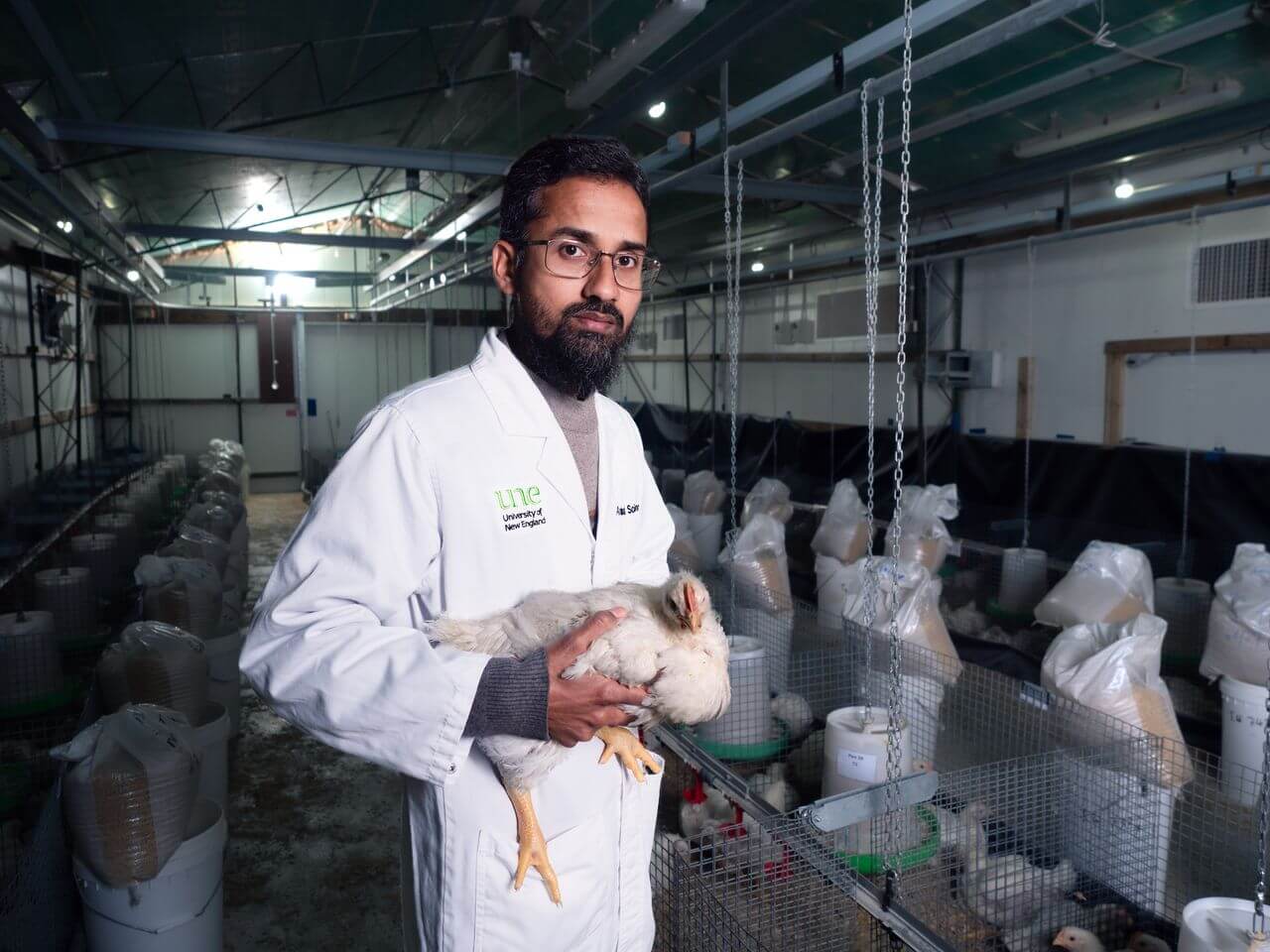
Thankfully, UNE doctoral researcher Aamir Nawab is on the case, investigating how “smart” diets can deliver important environmental, economic and animal welfare benefits without compromising egg production and quality.
By reducing the high-protein diet of layer hens and supplementing it with feed enzymes and synthetic amino acids, Aamir believes birds can process their food more efficiently and produce less waste, especially ammonia.
“Livestock production, including poultry, is responsible for around 81% of global ammonia emissions,” he says. “On poultry farms, when birds cannot effectively use the nitrogen in their feed, some of it is released as ammonia in their manure.
“High ammonia levels can affect both the environment and bird welfare. They can cause respiratory problems, eye irritations, weakened immune responses, reduced productivity and economic losses. Beyond poultry farms, agricultural ammonia also contributes to air pollution that can have serious consequences for human health. Children exposed to higher levels of ammonia are 1.7 times more likely to develop asthma, while fine particulate matter associated with agricultural emissions contributes to an estimated 3.3 million premature deaths worldwide each year.”
Across three research trials, Aamir found that reducing the use of soybean meal – a common, expensive and largely imported protein source – by around half could lower nitrogen excretion by up to 30%. Adding readily available and less expensive feed additives improved protein digestibility by up to 17%, helping hens use nutrients more efficiently and produce eggs more effectively.
His research also found that improved nutrition could benefit bird health. Hens receiving more efficiently formulated diets produced drier manure, which helped reduce wet bedding and was associated with stronger bones.
“These practical feeding strategies can help farmers reduce their reliance on costly protein feed ingredients and decrease their environmental impact while maintaining high standards of productivity and animal welfare,” says Aamir, who is now seeking funding to test his findings on a larger scale.
“This is a very hot topic for the poultry industry right now. Smarter approaches to animal nutrition can provide solutions to some of agriculture’s biggest challenges. I hope my findings will contribute to future innovations in sustainable poultry production and help build healthier food production systems for birds and people for generations to come.”
Raised in a farming community in Pakistan, Aamir trained and worked as a veterinarian before pursuing a career in animal nutrition research. In addition to publishing more than 25 peer-reviewed research papers, he has authored A Pictorial Guidebook on Poultry Diseases: Diagnostic Techniques and Their Effective Treatment, a resource for the global poultry community.
Aamir’s research into precision nutrition for poultry was recognised by UNE in July with a Chancellor’s Doctoral Research Medal for outstanding doctoral research.


