
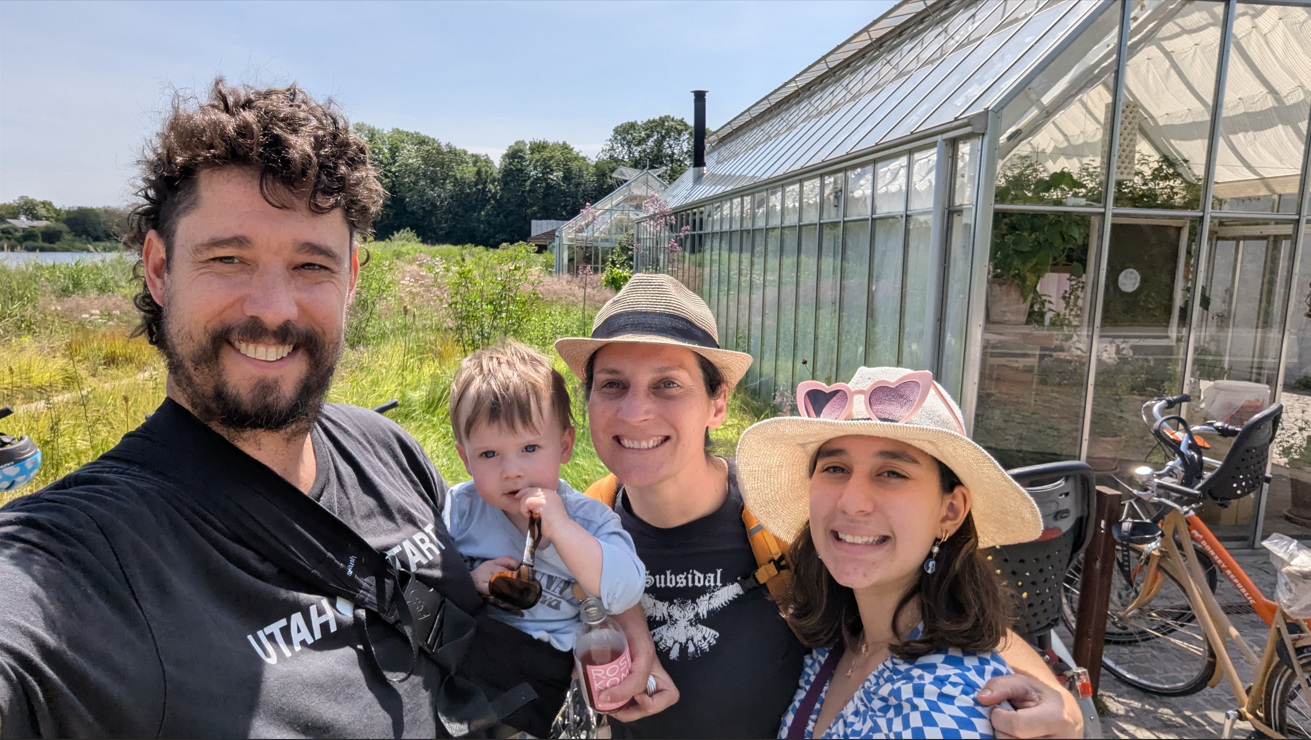
Where some only see problems with public spaces, Jac Torres Gomez is intent on finding solutions.
Jac, a UNE planning student, first encountered the idea of ‘equity mobility’ through a tragic accident. In her 20s, she learned her grandfather had been driving his car when he struck and killed a young boy on his bike.
“Some of the comments I heard around the tragedy were that with a child riding out alone on the road, it was only a matter of time before something like this happened. And that sat really uncomfortably with me,” she says.
Previously, halfway across the world, Jac had also experienced a kind of paradise for bike riders of all ages.
“I lived in Denmark for a while as a teen, and rode my bike everywhere. It was so different from my experience in regional Victoria where I had to be driven everywhere. I later travelled to places like the Netherlands and Japan, with a similar experience. I was able to see there were lots of places where you could ride a bike quite safely and independently.”
Later, in regional Victoria as a single mum, a bicycle became the way Jac found she could balance studies with exercise, leisure and quality time with her daughter.
“I bought a Dutch cargo bike when my daughter, Bella, was a toddler, and for years after that we went on riding adventures, with my daughter reading a Harry Potter book with a blanket over her legs, or just talking. It was a very different experience to being in a car.”
These experiences helped focus Jac’s general interest in social justice into urban planning and design issues.
I had initially studied education as a way to help people. I then studied a master’s degree in international and community development when Bella was a toddler. That fuelled my interest in studying spaces and how people use the built environment, and how policy drives that.
After 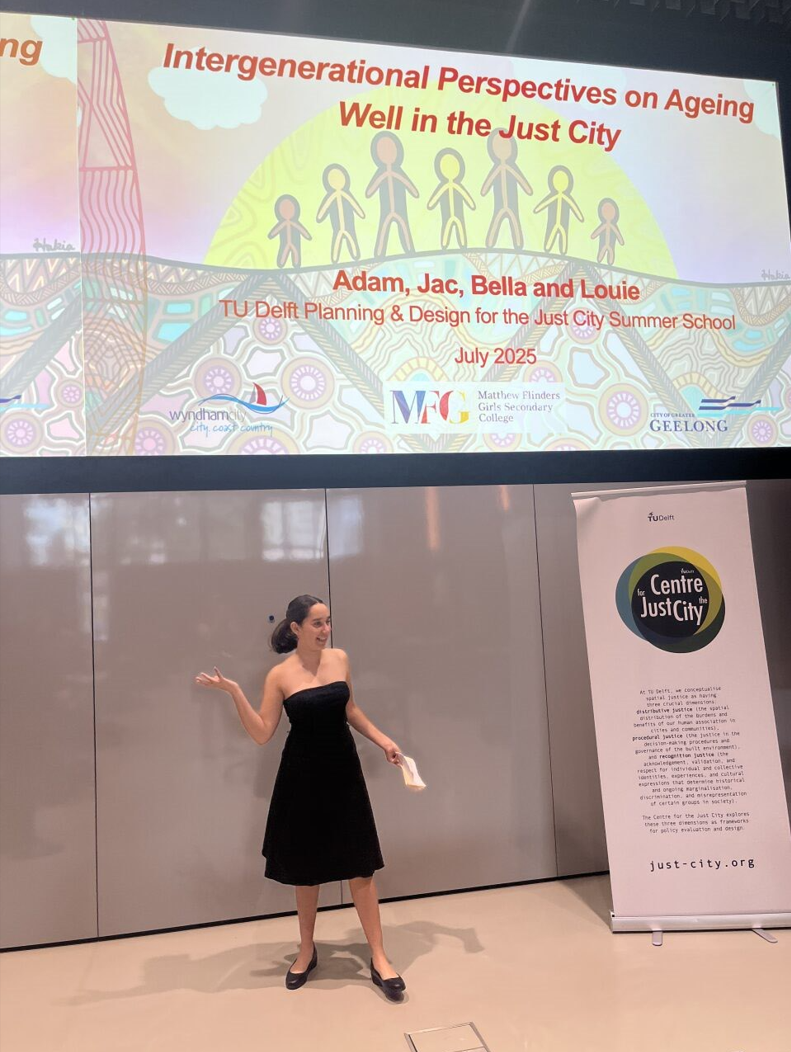 some desktop research, she's currently completing a UNE Master of Urban and Regional Planning, which has helped shape discussions with Bella, now 14. As a teenager, Bella echoes many of the fears and frustrations Jac had experienced at her age, and her fears for all children out on their bikes.
Not one to just sit by, with Bella’s help, Jac put together a conference presentation proposal for the Australian Walking and Cycling Conference 2026 in Adelaide this October—one of Australia's leading conferences focused on active transport, urban planning and community mobility. It has been accepted.
Led by Bella, the presentation will be about applying what they’ve termed the “14-year-old girl test” – to see where the sticking points are for walking or riding around an urban space as an adolescent.
“It’s very much about being able to see through the eyes of a 14-year-old girl as a planner, a policy maker, or designer of our streets,” Jac says.
“The rules of the built environment in regional Victoria, where we are, are just not designed for children to be independent.”
That includes, she says, for children just trying to get to school. As part of her studies, she investigated a local intersection outside her daughter’s school, which has led to ongoing conversations with the school, the City of Greater Geelong and the Victorian Department of Transport and Planning about improving safety and inclusion.
She says the lack of safe areas for walking and riding also impact the way children and youth can spend their time.
As parents, we’re trying to say no to screen time and social media, but what are we expecting our children to be doing instead, when by law they can’t ride on the footpath, and there is no separated bike lane infrastructure?
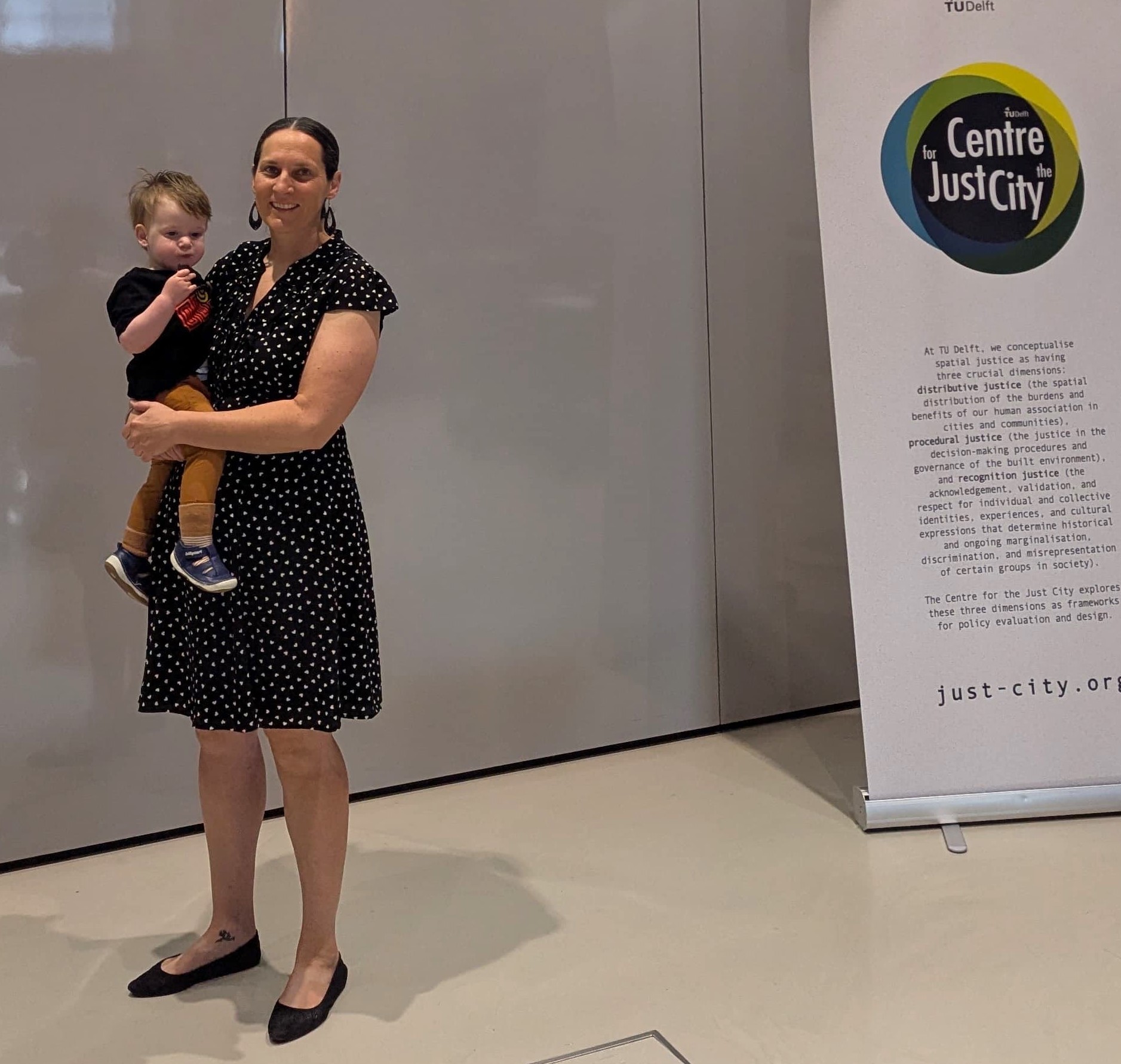 These days as a mother of a little person as well – two-year-old Louie – Jac is also very cognisant of the limitations of public spaces for infants and prams too.
“Seeing the world from his perspective I can see how the environment is not made for him either. I can’t just go out for a walk and let him run around because the environment’s really built mostly for cars, even in areas meant for other uses.”
No stranger to putting her views forward, Jac was invited to present at a summer school for planning a 'just city' in Delft, The Netherlands, in 2025, where she took her whole family to each present about inclusive spaces from their unique perspectives (though Jac spoke on behalf of Louie, being a little too young to do so himself!)
“I’m trying to teach my kids they have a pretty powerful tool in their voice. When they see something unjust or unfair, they can speak up,” Jac says.
Jac hopes to go back to the Netherlands in 2027, this time as a more experienced planner.
“I’d love to just live and breathe policy and planning and mobility and different perspectives and bring them back to Australia to help shape a different kind of reality for young people.”


