
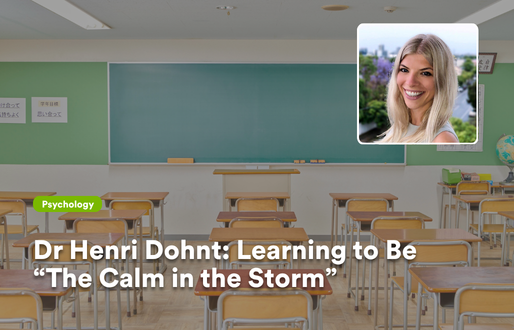
When Henri Dohnt started her first role in primary and high schools in regional New South Wales, she expected to feel challenged. She did not expect to feel quite so overwhelmed.
The phone calls came from worried parents, teachers flagged complex behaviour, and students brought a mix of learning and mental health needs to her door. Henri knew the theory. She had trained well. But now she was trying to work out, in real time, what her responsibilities were, which assessments to choose and how to turn that information into something schools could actually use.
“I remember feeling really overwhelmed by the role and the complexity,” she says. “I had to rethink how I was assessing students and the kinds of interventions I could provide. Thankfully I had a great supervisor to help me along the way.”
That early experience sits at the heart of Henri’s work now as a clinical psychologist, supervisor and lecturer in psychology at UNE. She is part of the teaching team behind the Graduate Certificate in School Psychology (GCSPSY), a specialist program designed precisely for psychologists stepping into schools and wanting to feel confident rather than out of their depth.
Henri has worked across primary, secondary and K–12 schools, and has seen that school psychologists are often the first point of contact for students and families. They are usually the ones who conduct initial assessments, make sense of what is going on and then refer on to more specialised services if needed. She describes this early intervention as potentially life‑saving, not only for the young person involved but for families who might otherwise struggle for years without clear guidance.
“The primary need is for highly trained, skilled and adaptable psychologists in schools,” she explains. “That understanding shaped the whole course.”
The Graduate Certificate builds on key Master’s‑level units such as clinical assessment and child and adolescent psychology. From there, students complete two specialised units that bring the school context into focus.
In PSYC427 Psychological Practice in an Educational Context, students learn how schools actually work. They explore how to collaborate with teachers, principals and parents, how to design group programs and how to think systemically about whole‑school wellbeing rather than only individual therapy.
In PSYC537 Assessment and Intervention in School Psychology, which Henri co‑developed, the focus shifts to very practical skills. Students practise:
- Planning assessment batteries for common school referrals
- Interpreting cognitive, learning, behavioural and emotional data
- Writing reports that teachers and families can genuinely use
- Recommending in‑class supports and services that fit real school constraints
They also work through case studies that involve brief solution focused approaches, DBT‑informed emotion regulation strategies, positive psychology, anti‑bullying programs and school refusal. Assessment tasks mirror the actual documents psychologists produce in schools, such as integrated reports and intervention plans.
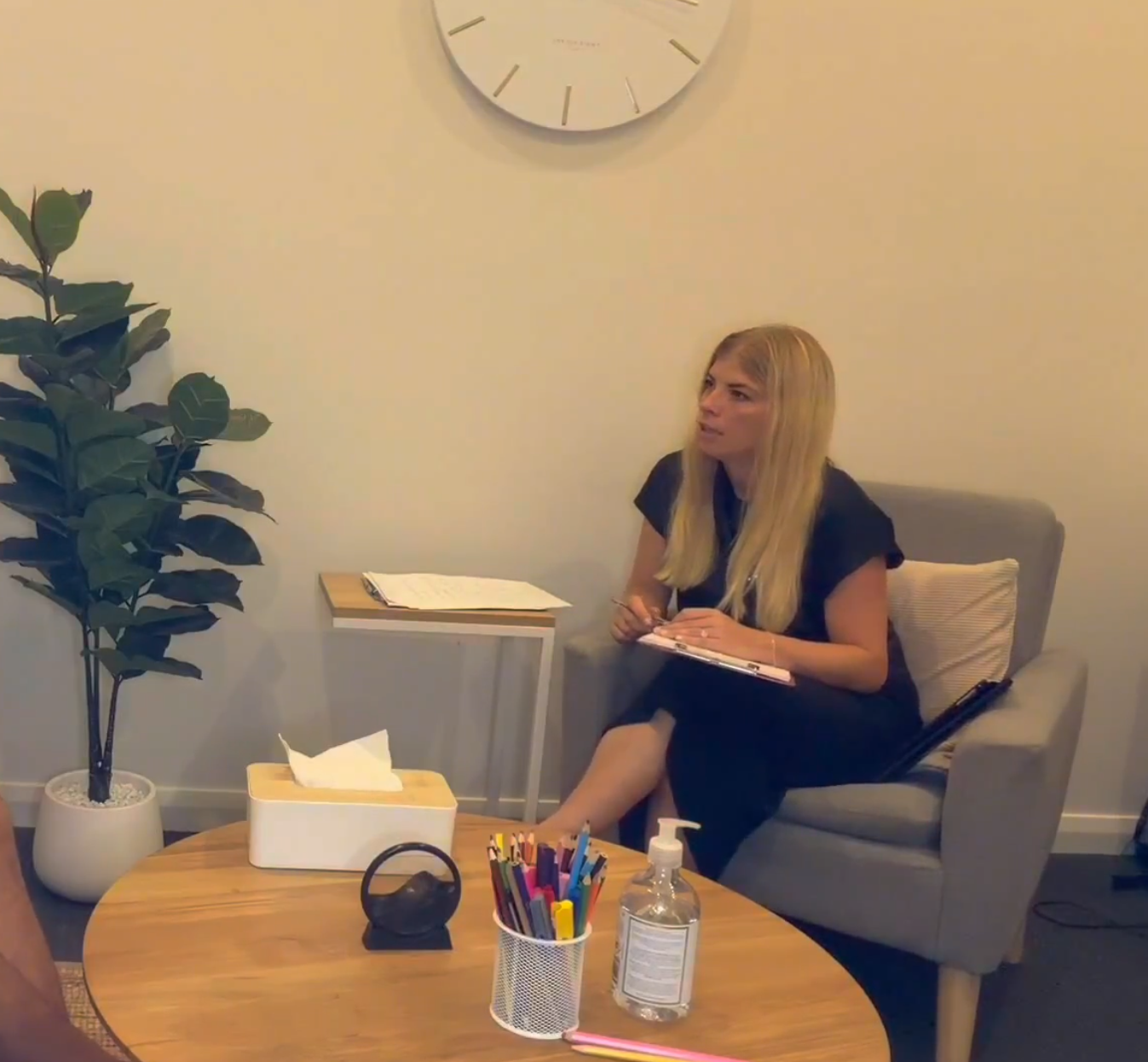
Image: Henri Dohnt creates a calm, supportive space where students feel heard, understood, and equipped with practical strategies to navigate life’s storms.
Henri is clear that the Graduate Certificate in School Psychology is not about repeating what students have already learned in their fifth year.
“The Professional or Clinical Master’s provides the foundational, broadly applicable clinical skills,” she says. “The Graduate Certificate provides the ‘how’ and ‘where’ of being a psychologist in a school. It is about taking what you already know and learning how to apply it within the unique and complex ecosystem of a school.”
The course is delivered fully online, which allows students from across Australia, including very remote areas, to take part. Many are already working in schools and can immediately test ideas in their own context.
Henri understands exactly how steep the learning curve can feel for provisional and early career psychologists walking into schools for the first time. That is why her message to them is so direct.
“If you want to walk into a school setting feeling confident, competent and truly prepared, this course is for you,” she says. “It is designed to flatten that curve and help you make a tangible, positive impact in school communities from day one.”
Away from her work with students, Henri spends her time with her young family, cooking, enjoying music and exploring nature. She is also completing a PhD focused on improving training for provisional psychologists. For her, the Graduate Certificate in School Psychology is one important way to ensure that the next generation of school psychologists can become the calm in the storm that students, staff and families need.
Find out how the Graduate Certificate in School Psychology can support your transition into schools:

