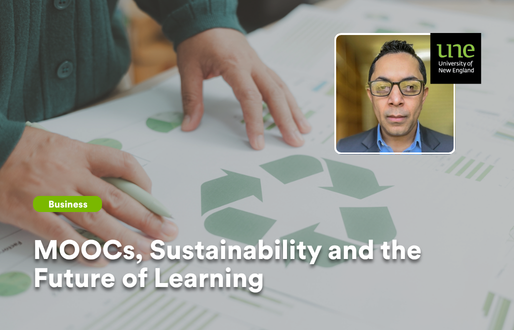
Associate Professor Subas P. Dhakal from the UNE Business School is at the forefront of thinking about how universities can use online learning to advance sustainability and the United Nations Sustainable Development Goals (SDGs). His recent article, “MOOCs and Universities for Sustainable Development: A Fading Nexus?” asks whether universities are seizing, or missing, a major opportunity.
What are MOOCs and why do they matter?
Massive Open Online Courses (MOOCs) are online courses that anyone with internet access can join, usually for free. Many use a “freemium” model where the basic content is free and learners pay for advanced options or certificates.
For Subas, MOOCs are a powerful tool for Education for Sustainable Development, because they can reach large numbers of people with content aligned to the SDGs. He argues that universities like UNE can:
- Offer MOOCs as standalone learning experiences
- Embed them in microcredentials that help people quickly upskill in sustainability related areas
- Use them to serve both traditional students and busy adults who need flexible study options
A paradox in sustainability education
Subas’ research uncovered a clear paradox. Only a small share of the world’s universities offer MOOCs, and sustainability MOOCs are a minority within that group. Yet the number of sustainability related MOOCs has increased more than twelve times over the past decade.
On the learner side, demand is strong. People are looking for:
- Short, focused courses that build skills linked to green jobs and the 2030 Agenda
- Practical knowledge about specific SDGs
- Study options that fit into months, not years
On the institutional side, universities are still largely built around multi-year degree programs and long-term enrolments. This creates tension between what learners want and how universities are funded and organised, especially in periods of financial pressure.
What his study found
To understand this landscape, Subas combined three perspectives: a global scan of sustainability MOOCs, an analysis of research publications, and a case study of a MOOC he led at Curtin University called “Globalisation and Sustainable Development”.
Together, these showed that:
- Sustainability MOOCs are growing in number, but universities’ overall contribution to the SDGs through MOOCs remains modest
- Business models, resourcing and governance remain major obstacles to sustained MOOC offerings
- When MOOCs are well designed and taught with passion and clear real-world relevance, they can effectively deepen learners’ understanding of sustainability
He believes this opens a strategic opportunity for UNE, especially around SDG 7, which focuses on affordable and sustainable energy. With UNE’s location in the New England Renewable Energy Zone and its existing research strengths, he sees scope for MOOCs that teach renewable energy policy and practice, build green skills and attract both local and global learners.
Designing learning that works for adults
Based on more than a decade of teaching experience, Subas highlights four ingredients for effective online learning:
- Passion and expertise from the educator
- Learner centred design that recognises diverse backgrounds and constraints
- Clear real-world relevance of learning outcomes
- Willingness to use evidence based, innovative teaching approaches
At UNE, he often blends constructivist pedagogy, where learners actively build knowledge, and production pedagogy, where assessments mirror real outputs valued by employers. For example, in his Strategic Planning and Sustainability unit, students develop and pitch a sustainable business strategy as if presenting to executives. This kind of authentic assessment is central to how he thinks about future MOOCs and microcredentials.
Generative AI and the future of assessment
As Chair of the School Education Committee, Subas has spent considerable time navigating questions about academic integrity and generative AI. He expects assessment design to evolve as regulations change and as some skills become less important while others, especially critical thinking and ethical reasoning, grow in importance.
He does not see generative AI as a problem in itself. Instead, he argues that its impact depends on how educators frame and use it.
When students see the value of critical thinking and careful analysis for their own careers and ideas, AI becomes a tool they use thoughtfully rather than a shortcut they rely on.
For him, the real task is to design learning experiences, including MOOCs, that reward depth of thinking, reflection and genuine engagement.
A creative eye on the world
Subas Dhakal - Photographer.
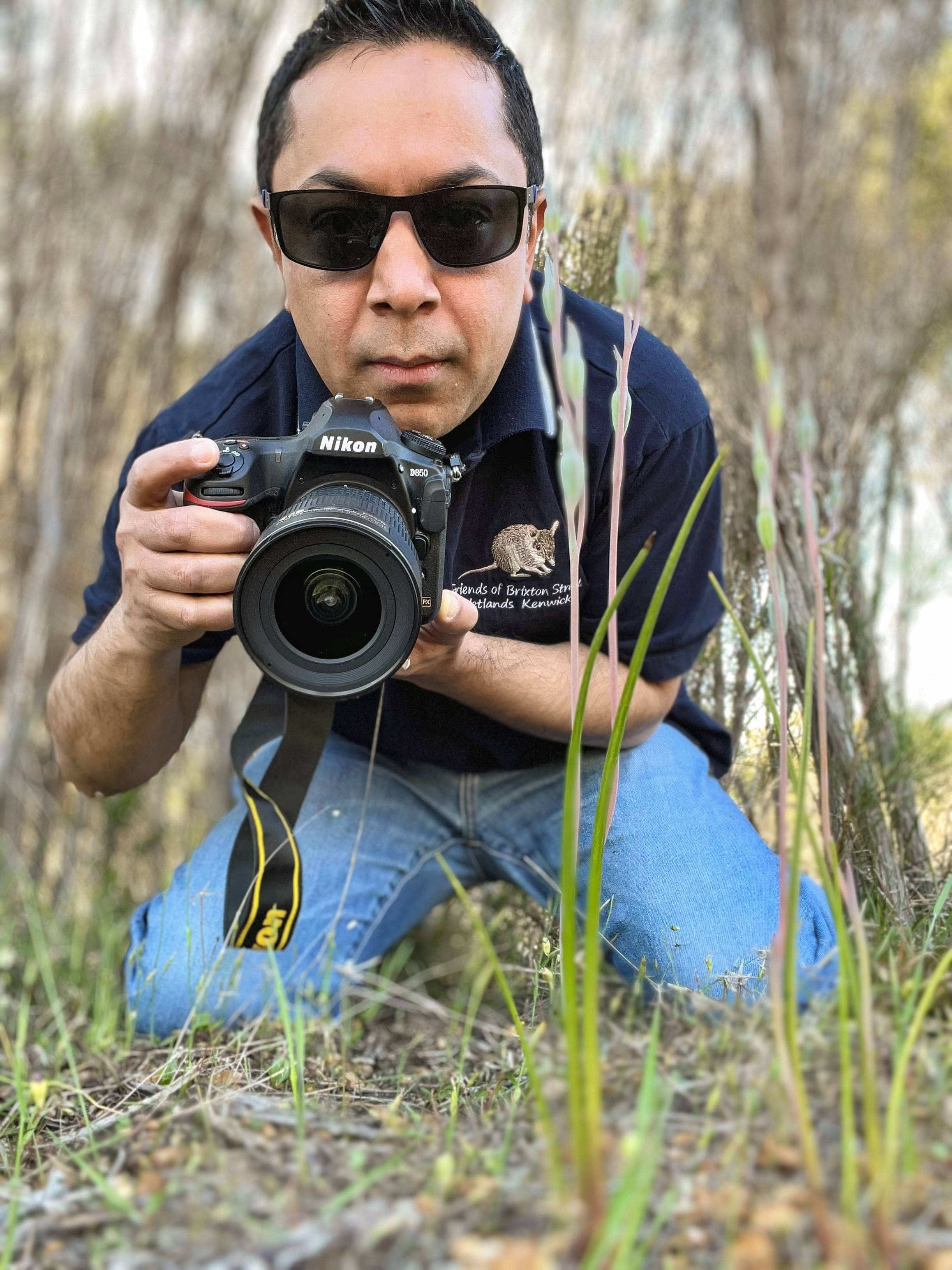 Outside his academic work, Subas is a hiking and nature photography enthusiast. He has published several books and articles as a professional photographer. He says this creative practice shapes his teaching philosophy, especially his attention to detail, sense of place and storytelling.
His photography can be seen on Instagram at @subasdhakal_photography
As debates continue about MOOCs, microcredentials and AI, Subas’ work offers a clear message: with the right strategy and pedagogy, universities like UNE can use online learning not only to respond to global change, but to lead in educating the next generation of sustainability minded professionals.


