

UNE Business School academic, Dr Tasmiha Tarafder Tina, is leading new research into the business challenges facing women entrepreneurs in Armidale, with a particular focus on micro and small enterprises across the region.
Dr (Tina) Tasmiha Tarafder
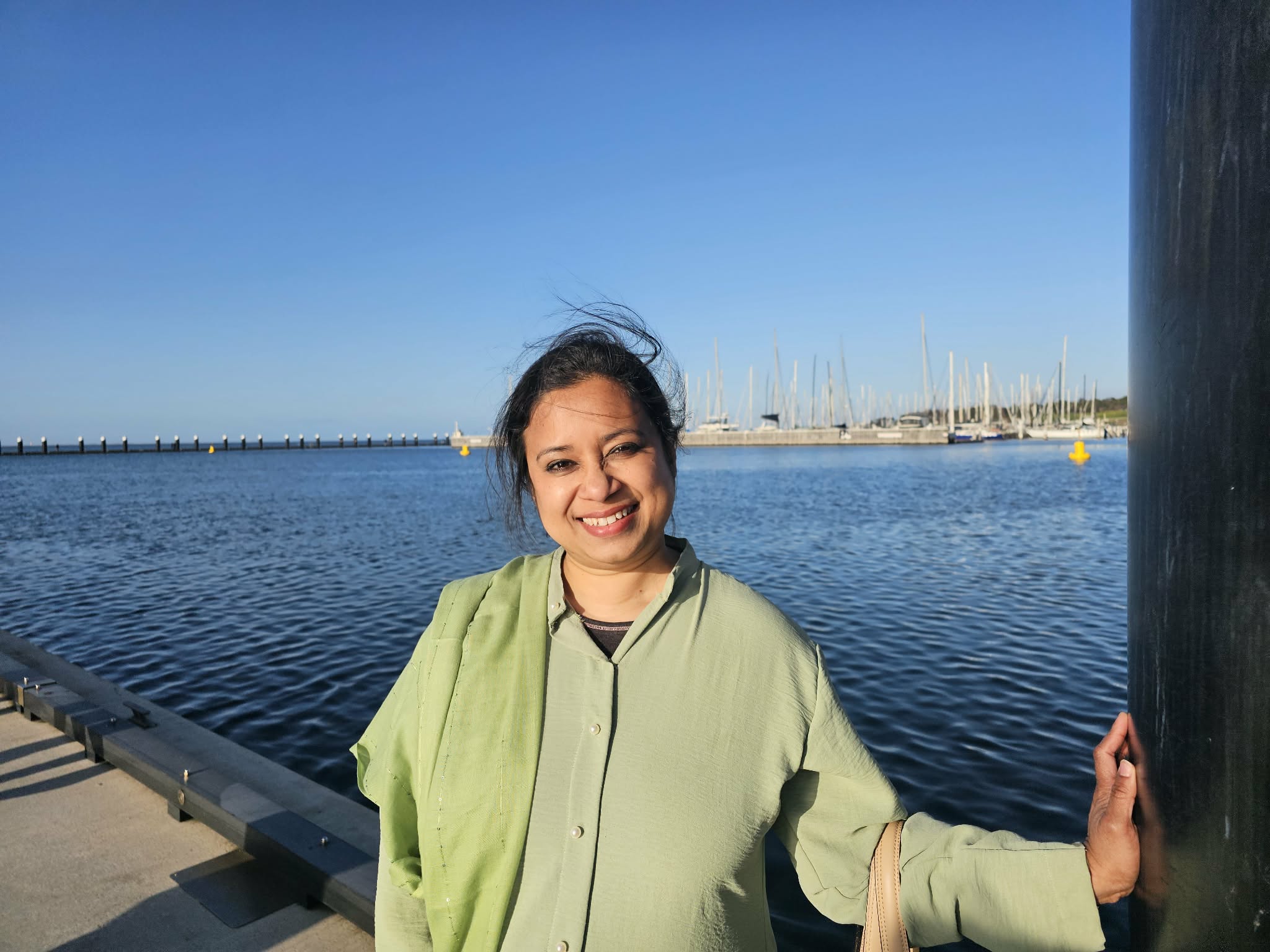 Funded through UNE’s Internal Funding Scheme, the project, titled “Business Challenges of startups in Armidale: A study in female entrepreneurs in Armidale”, will explore the most compelling startup and growth limitations experienced by women who operate or intend to operate micro and small businesses in the Armidale Local Government Area.
“Armidale has a long story of women in small business, yet the regional context determines the opportunities and constraints for women entrepreneurs,” Dr Tarafder said. “The potential of this study is that it will focus on females and will also collect data from Indigenous females who have their own startups as well.”
Armidale has a long story of women in small business, yet the regional context determines the opportunities and constraints for women entrepreneurs.
“I am firstly very passionate about understanding the entrepreneurship journey, especially of women in regional areas in Australia,” she said. “I'd like to contribute to the lives of women and also Indigenous and migrant women’s startup innovation, their contribution to the economy, and eventually their journey towards empowerment.”
While there has been some work examining business conditions in the Armidale region, Dr Tarafder said women-specific evidence is still limited. “There has been some research done in the area of understanding the business challenges in Armidale, but this project will focus on the business challenges faced by women,” she said.
The study will use a mixed method design, combining qualitative and quantitative data.
Dr Tarafder plans to recruit local female entrepreneurs as research participants, including Indigenous women and those operating home based or digitally enabled businesses. “We are in the very initial stage of the research,” she said. “Through snowball and purposive sampling, I hope to reach out to the local female entrepreneurs as research participants and learn their business challenges. I will also reach out to UNE SMART Region Incubator and the Armidale Regional Council to gather my research participants.”
She is clear that the project is designed to translate lived experience into action. “I hope the findings from this research will support local entrepreneurs by turning their lived experiences into practical, locally relevant solutions rather than one-size-fits-all recommendations,” Dr Tarafder said.
I hope the findings from this research will support local entrepreneurs.
“By documenting the specific barriers faced by women-led micro and small businesses in Armidale such as access to finance, limited networking and mentoring opportunities, digital capability gaps, and care responsibilities the study aims to make these challenges visible to decision makers in a concrete and evidence-based way.”
The research will also highlight the need for flexible childcare and shared workspace solutions that could directly enable more women to start or scale businesses in Armidale. From a policy and partnership perspective, Dr Tarafder sees strong potential for collaboration across the region’s innovation and business ecosystem.
“I would like to see this research contribute to stronger collaboration between the Armidale Regional Council, the UNE SMART Region Incubator, Indigenous resource centres and local business networks,” she said. “Ideally, the findings would support co-designed programs that reflect the diversity of women entrepreneurs, including Indigenous women and those operating home based or digitally enabled businesses.”
Over time, she hopes the evidence base created through the project can be used to strengthen bids for external funding. “The research could also be used to strengthen external funding bids to state and national women in business and regional resilience programs, ensuring that Armidale’s entrepreneurs benefit from policies that are informed by local evidence and community voice rather than assumptions,” she said.
For Dr Tarafder, UNE is an ideal home for this work, “UNE is a strong fit for this research because of its deep regional focus, existing infrastructure for entrepreneurship support, and clear alignment between the project’s goals and the university’s mission,” she said.
“The University of New England has a long-standing commitment to regional development and social inclusion. This project directly supports that mission by focusing on women-led micro and small businesses in Armidale, a regional setting where local context strongly shapes entrepreneurial opportunities and constraints.”
The University of New England has a long-standing commitment to regional development and social inclusion.
She highlights the UNE Business School and UNE SMART Region Incubator as key enablers that connect applied research with community impact. “UNE brings together the right mix of research capability and practical delivery,” she said. “The UNE Business School and the UNE SMART Region Incubator already work at the intersection of applied research, entrepreneurship and community engagement. This makes it possible not only to study barriers such as finance, digital capacity, networks and care responsibilities, but also to translate findings into training modules, mentoring circles and pilot support programs for women entrepreneurs.”


