
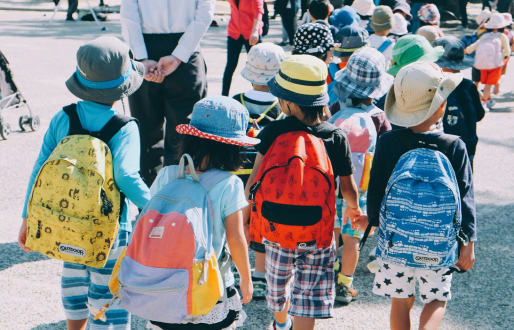
Inclusive education is a commitment to ensuring that all students, including those with disability, are not only supported but welcomed at their school but can reach their full potential. Australia’s ability to train staff who excel in special and inclusive education is more important than ever, with the number of students identifying with disabilities increasing each year. Inclusive education is every teacher's responsibility, but supporting learners doesn't require complicated solutions or big budgets- just creativity and care.
What is inclusive education?
Inclusive education does not and should not have one singular definition. In defining the concept, it becomes limited. In the past, the concept of inclusive education has been inherently linked to special education, though we have seen a shift away from this. Currently many agree that inclusive education is allowing all students, regardless of ability, socio-economic status, ethnicity, language, or gender to equitably access and fully participate in learning. Globally, teachers are grappling with how this translates to their teaching practice. Moreover, the creation of sustainable inclusive education policy has not been able to happen, furthering the challenges teachers face of implementation.
What does inclusive education look like in Australia?
Inclusive education has been an important principle in Australian education for decades. We were one of the first countries to ratify the Salamanca Statement, a landmark policy that established the principle of inclusive education worldwide. Today. More than one in four students need disability support in their school and we have developed many approaches to support these students. From special schools that offer intensive support for learning, to the full inclusion of students within regular classrooms, there are many ways educators can be inclusive in the classroom. However, while these systems exist, communities in regional, rural, and remote areas can struggle to access the breadth of support available in metropolitan areas. There is a clear need though, for beginning teachers to be able to address the diverse and complex needs of students in modern inclusive classrooms.
How can you become an inclusive educator?
While professional standards for teachers require that all teachers teach inclusively and differentiate their teaching, UNE offers a range of courses that specifically support teachers to incorporate inclusive education in the classroom:
- Bachelor of Special and Inclusive Education (Primary): You will gain the knowledge and skills to give your teaching career the extra edge in special and inclusive education, with the option to learn online or on campus.
- Bachelor of Education (Secondary Arts): Option 3 of this course allows you to study 48 credit points in Special Education in conjunction with another First Teaching Area in one of the following: Drama, English, Ancient History, Business Studies, Economics, Geography, or Modern History.
- Bachelor of Education (In-Service Conversion): this course offers a fourth-year upgrade for three-year accredited teachers to undertake. This schedule has a strong focus on Aboriginal education and educating in inclusive environments.
- Master of Education: This course allows professional educators to engage in a Digital Learning, Indigenous Australian Education, Special and Inclusive Education, and Teaching English to Speakers of Other Languages (also known as Teaching English as an Additional Language or Dialect (EAL/D)) specialty.
- Master of Neuroscience and Education: a one-and-a-half year course that connects the human brain with how we learn. This course is also available in a one-year Graduate Diploma and six-month Graduate Certificate.
Top tips for implementing inclusive education in the classroom
We spoke to UNE’s Dr Rose Mutuota who is a passionate advocate for inclusive education for her top tips for how teachers can become more inclusive in the classroom:
- Create consistent routines in the classroom and let students know if routines will change.
- For example, students with autism often struggle with unexpected changes, so it is beneficial to inform them of any modifications to the daily programme before they occur. This could be informing students if a casual teacher will be coming to teach or if they will have Maths instead of English at a certain time.
- Provide visual cues and schedules
- Teachers could post timetables, or other teaching materials like graphs and vocabulary lists to the wall or whiteboard. For students with ADHD or Autism, you could post these on their desks too to enhance accessibility and focus.
- Consider how you could tailor activities or materials to student strengths and abilities
- Use various formats for materials like providing large print for students with sight difficulties
- Provide examples of work, use visual supports or help students break tasks into smaller components.
- Utilise their interest to personalise teaching. For example, if a young student like toy cars, provide toy cars for counting, or get an older student to write about cars.
- Prepare extension work for gifted and talented students on the same topic so they can keep working while you support students who need more practice.
- Don’t be afraid to reset the class when things go wrong. Reset the classroom through:
- Breathing exercises
- Movement breaks like singing, dancing, or stretching
- If doing written work, transition to discussion or story time

