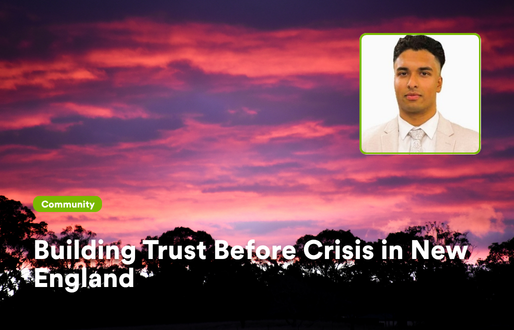
For Clinical Direct Worker Tahsin Sultan, mental health care in the New England region begins with people, not paperwork.
Working with Uralla Shire Council, Tahsin supports community members, including people living with disability or cognitive impairment, through consistent, person-centred care.
“Person-centred support just means starting with the person, not their diagnosis,” Tahsin says. “In my day-to-day work at Uralla, it might mean slowing down how I communicate, being flexible with how we engage, or just showing up consistently so they know they can count on me.”
That focus on relationships has carried across roles in mental health coordination in Armidale, direct community work in Uralla and earlier tutoring leadership roles. In smaller communities, Tahsin notes, people can immediately tell if you are genuine.
“In the regional context, people know when you actually care vs when you're just going through the motions. A big part of my role is just being someone people can trust.”
Regional Mental Health and the Role of UNE
Moving from Melbourne to the New England region highlighted for Tahsin how much geography shapes mental health.
“In the city there is a lot more infrastructure. Out here, services are stretched, travel distances are longer and the workforce just is not there in the same numbers,” he explains. “Mental health in regional areas is wrapped up in isolation, distance, financial stress and limited services. People also worry about stigma in small communities, so they wait, and things get harder before they get better.”
Tahsin has seen the difference it makes when local services, GPs and community organisations in the region coordinate their efforts instead of working in silos.
“Rather than the person having to navigate everything themselves and repeat their story, we worked it out between us. There was a coordinated, consistent response and over the following weeks, that person genuinely stabilised. That is the kind of care I want to help build more of in this region.”
Growing Up Around UNE and Building a Regional Workforce
Tahsin’s approach has been strongly shaped by growing up in a UNE family. His parents, Dr Tina Tarafder and Dr Parves Sultan, are both UNE academics.
“Conversations at home were often about ideas, the evidence behind those ideas and why things work the way they do,” he says. “Watching them engage with their students and communities showed me what genuine investment in people looks like. That is something I have tried to carry into every role I have had.”
Although completing an Honours in Psychological Science at Charles Darwin University, Tahsin describes UNE and regional NSW as home, from early childhood in regional Queensland to his current life and work in the New England region.
He also sees clear opportunities for collaboration between local councils, services such as HealthWISE and UNE to improve mental health outcomes.
“There is a real opportunity for councils and UNE to work more intentionally together on student placements in community settings, research driven by questions practitioners are facing and collaborative projects that build local capacity over time,” he says. “If students who come through UNE have meaningful training experiences embedded in the regional context, more of them might choose to stay and build their careers here. That is how you build something sustainable, through people who are invested in this community for the long haul.”


