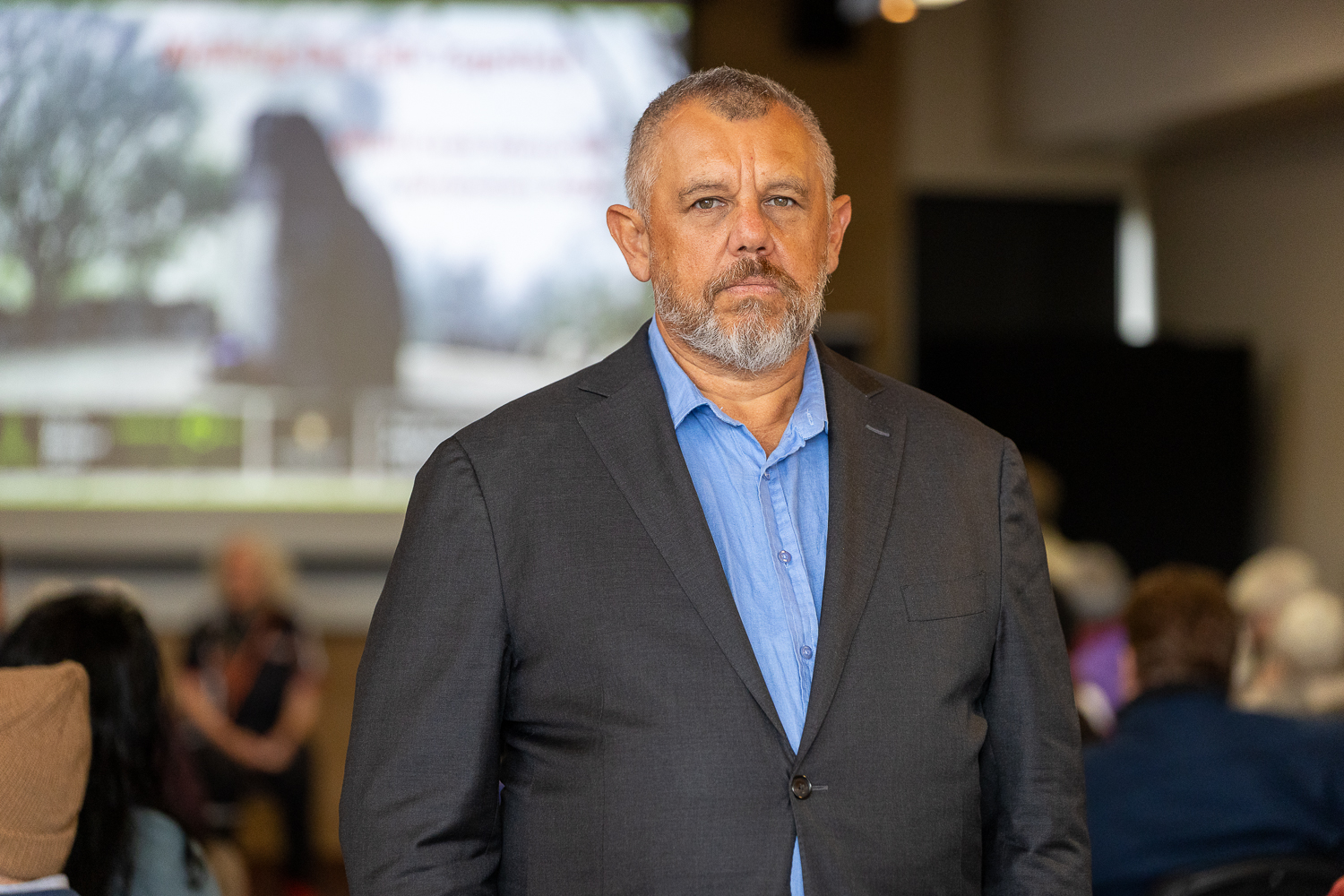
The symposium featured keynote speaker, Mr Tony McAvoy SC, a Wirdi man from Central Queensland and Australia's first Indigenous Senior Counsel, alongside a series of presentations and panel discussions examining justice, history, healing and reconciliation.
In his keynote address, Mr McAvoy encouraged participants to consider the purpose of truth-telling and its potential to strengthen relationships between First Nations and non-Indigenous Australians.
"Aboriginal people in seeking the truth do not wish to hold the present-day Australians responsible for what happened in the past, but we do wish to hold the institutions of government and business responsible for the continuing injustices that have flowed from that horrific past," Mr McAvoy said.
Mr McAvoy also spoke about the transformative power of confronting difficult histories.
"Once you engage in the truth and put down the burden of secrecy, you are freed in the sense that you can walk together with First Nations people and really this country can become what it ought to be."
Drawing on his experience as a senior lawyer, Mr McAvoy highlighted the importance of understanding Australia's legal and colonial history.
"As a senior lawyer, I reached the conclusion a number of years ago that one of the serious setbacks in the development of our law is the extent to which the true history of the development of the law in this country is not taught."
Emeritus Professor Judy Atkinson, Founder/Patron/Elder and Lead Facilitator of We Al-li - an organisation dedicated to the Culturally Informed Trauma Integrated Healing Approach - joined fellow panellists, A/Prof Peter Smith (UNE Faculty of Medicine & Health), Dr Sujata Allen (Armajun Aboriginal Health Service, Armidale), in discussions reflecting on the continuing significance of the Myall Creek Massacre and its place in Australia's collective history.
Through truth-telling, deep listening and shared commitment, panellists explored how communities can continue the work of honouring history, strengthening relationships and creating pathways towards healing, justice and reconciliation for future generations.
The symposium also heard from children's lawyer Karen Conte, who shared perspectives on Indigenous youth justice, the impacts of trauma and cultural displacement, and the critical role Elders play in supporting young people. While acknowledging ongoing challenges, Ms Conte pointed to signs of progress and the importance of sustained community-led approaches.
Fiona Lovelock (Aboriginal Client & Community Support Officer in the NSW Local Court) noted other promising developments that could improve the interactions of young people with the legal system, including the Youth Koori Court process. Ms Lovelock supported the expansion of processes like Youth Koori Court to other regions in NSW and beyond.
Throughout the day, speakers and participants examined how truth-telling can contribute to a more complete understanding of Australia's past while helping to build a more just and inclusive future.
The Myall Creek Symposium is a shared partnership between UNE’s Oorala Aboriginal Centre, the Armidale Friends of Myall Creek, School of Law, Faculty of HASSE, Faculty of Medicine & Health, and other community and academic partners committed to supporting truth-telling, education, and reconciliation.


