
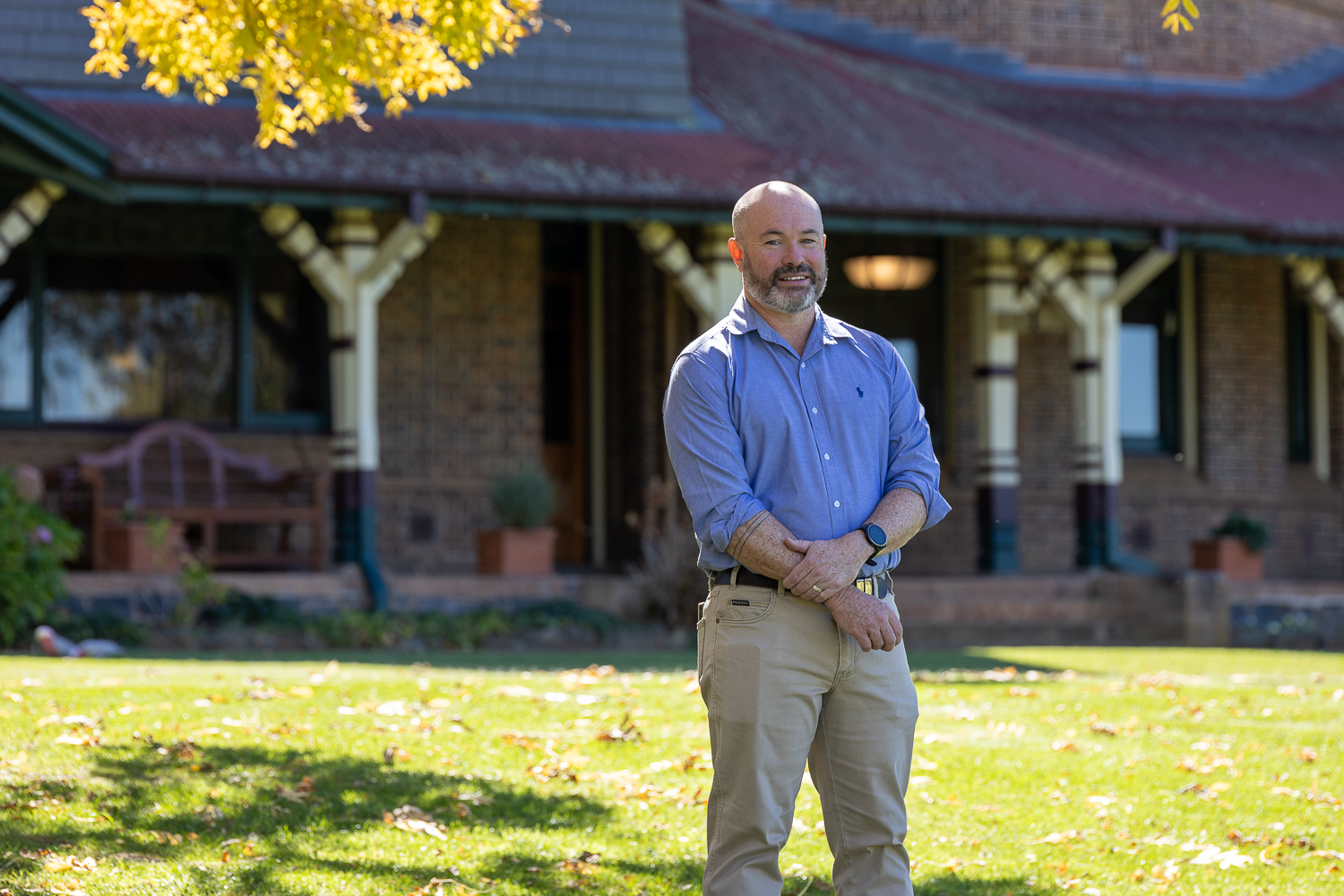
Growing up in Tamworth, Dane O’Connor assumed he would be a tradie. Surrounded by agriculture and small towns, he saw how closely regional life is tied to seasons and markets. A serious rugby injury sent him into a bank teller job while he recovered, and listening to farmers and small business owners at the counter changed everything. He realised he did not have to choose between agriculture and commerce.
“Agribusiness at UNE felt like a bridge between who I was and who I could become,” Dane says. “It grounded economic theory in real paddocks, real towns and real families, and taught me to see regional economies as complex, interconnected systems instead of statistics on a page.” That degree still shapes how he works: strong primary industries underpin regional resilience, and decisions made in offices ripple through real communities.
It grounded economic theory in real paddocks, real towns and real families, and taught me to see regional economies as complex, interconnected systems instead of statistics on a page.
Today Dane is an Economic Development Manager with the NSW Department of Primary Industries and Regional Development. His work is about “connecting policy to place,” collaborating with councils, industry and communities to remove barriers, unlock investment and support growth that makes sense locally. Good regional economic development, he says, is patient and grounded. It strengthens primary industries, builds local capability and creates conditions where businesses can innovate and attract people.
Dane has worked on projects including the New England Renewable Energy Zone, hydrogen, advanced manufacturing and ag‑tech. He sees renewables and new industries as an extension of agribusiness when they are developed in partnership with landholders and communities. Solar, wind and transmission infrastructure can help smooth volatile seasons and markets by providing stable income, while land continues to be farmed. At the same time, these emerging sectors create skilled jobs, demand for local services and pathways for young people who might otherwise leave. “Everyone has their own opinion if it is good for our region or not, and I respect that. My role is to find the opportunities for our region from this project.”
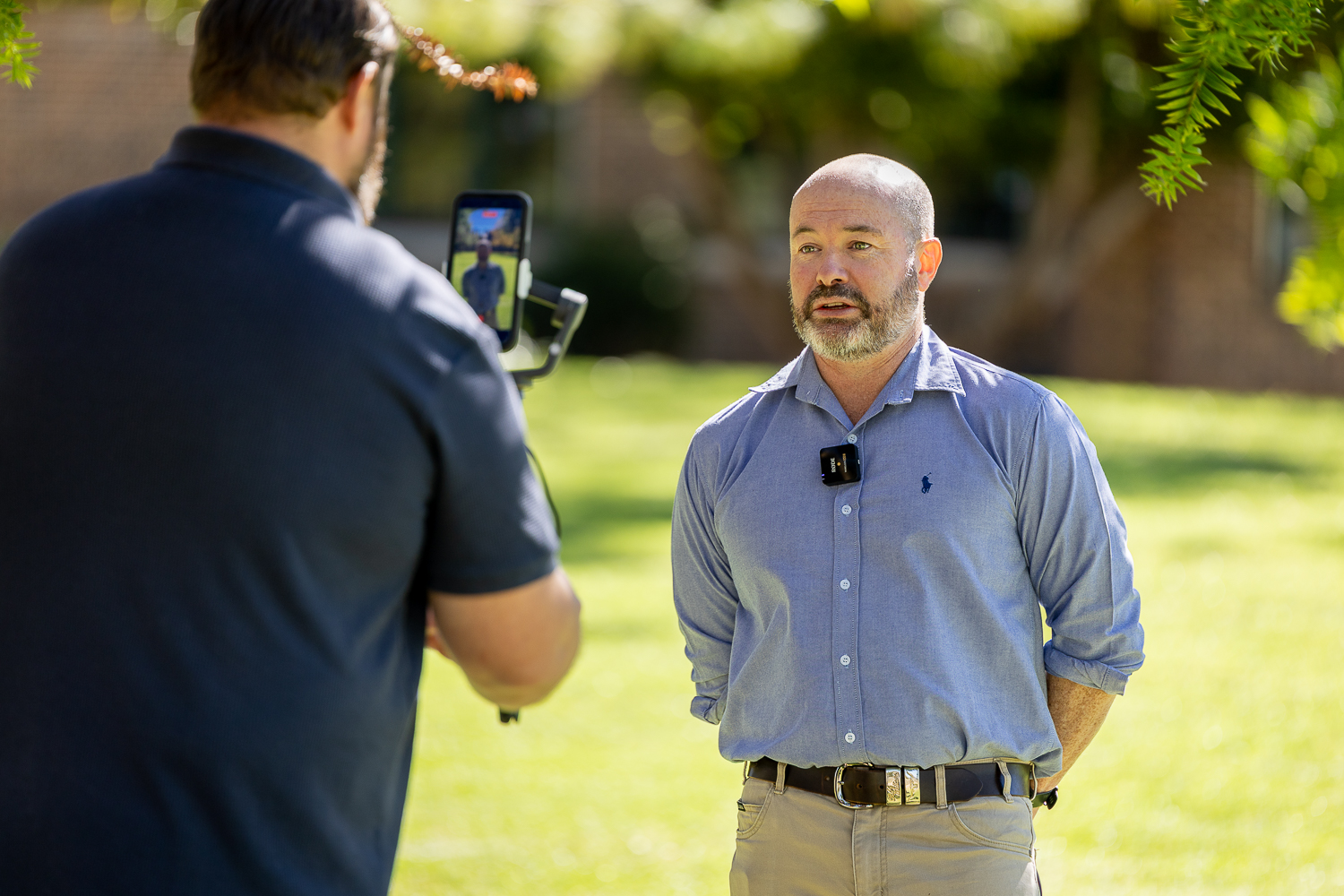
Image: UNE Agribusiness alumnus Dane O’Connor shares his journey in regional economic development and resilience during a interview on campus.
Fourteen years ago Dane was told he had “two years of quality life” after being diagnosed with incurable cancer. It changed his understanding of resilience and prompted him to speak openly about his experience. “Cancer did not just affect my body. It dismantled my mental health and my sense of identity,” he says. Sharing his story became a way to help others, especially men in regional areas, feel less isolated and seek support earlier. He believes practical change starts with flexible work arrangements, genuine understanding of the cognitive and emotional toll of treatment, better access to local and telehealth mental health services, and systems that recognise people can still contribute meaningfully at work while unwell. “Staying in work during cancer is not just about income. It is about dignity, purpose and identity.”
Cancer did not just affect my body. It dismantled my mental health and my sense of identity.
Dane is now remarried to his best friend, Janelle, with five children and three stepchildren. They travel when they can, roam the regions in their caravan, and try to focus on what truly matters. “Resilience is not about pushing through at all costs or wearing hardship like a badge of honour. It is about adapting, valuing what matters and choosing how you show up each day. Real resilience in regional communities is found in connection, perspective and the courage to live fully even when you know the road has an end.”
Resilience is not about pushing through at all costs or wearing hardship like a badge of honour. It is about adapting, valuing what matters and choosing how you show up each day.
Looking ahead, Dane believes human skills are only becoming more important. “In a world increasingly shaped by AI and automation, genuine human connection is becoming the most important skill,” he says. Technology can process information quickly, but it cannot listen, build trust or understand context in the way people can. He encourages current UNE Agribusiness students to keep learning, stay curious and be open to different perspectives.
Although he left UNE more than twenty years ago, the relationships he formed as a student continue to matter. “The connections you build while living and studying at UNE create a lifelong network,” Dane reflects. “I struggled early and even failed a few subjects, but sticking with it was one of the best decisions I made. Setbacks do not define the outcome if you do not give up.”


