At ten years old, Amera Ali was already a talker. Her older brother Ali would laugh at her constant questions and arguments, telling her she "talked like a lawyer" – a comment that would echo through the rest of her life in ways neither of them could have imagined.
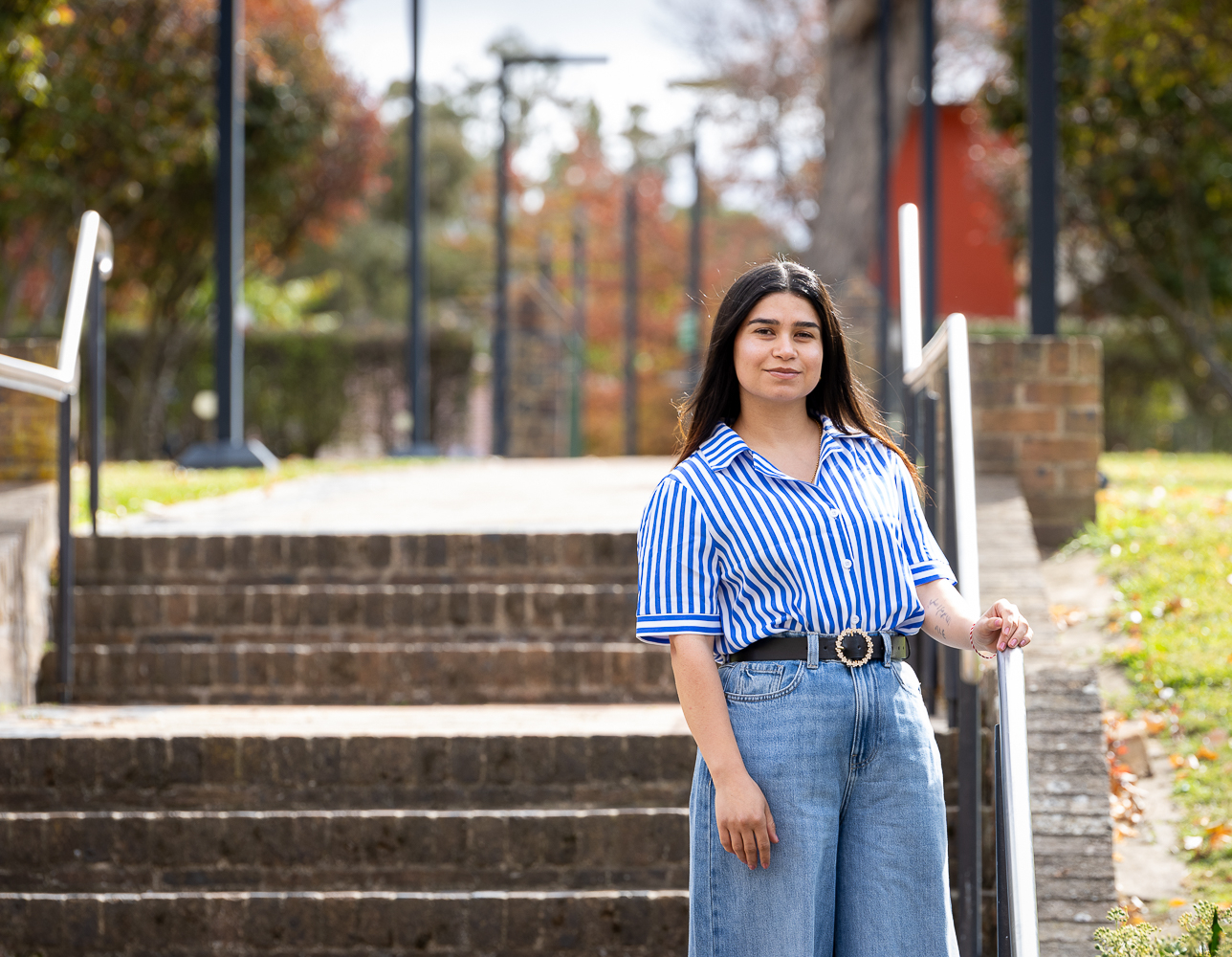
Today, at 22, Amera is studying law at the University of New England in Armidale. But the path from that curious child to law student winds through the horrors of the Yazidi genocide, eight months in refugee camps, and a fierce determination to transform personal trauma into systemic change.
A Childhood Dream Interrupted
Amera's interest in law began long before 2014. Even as a young girl in Sinjar, northern Iraq, she felt pulled toward fairness and truth. "I didn't know what a lawyer really was, but I knew I wanted to work in a court one day," she recalls. "Even as a child, I felt drawn to fairness and truth."
Then, in August 2014, everything changed. When ISIS militants arrived at her family's home, Amera was separated from her brother Ali. She would spend the next eight months in captivity, enduring unimaginable horrors. Ali was taken separately. She didn't know if he was alive or dead.
But even in the darkness, that childhood instinct to speak, to question, to document remained. Amera began writing. On scraps of paper hidden in her clothes and shoes, she wrote messages to Ali, desperate that if he found them, he might find her.
"I wrote because I was scared, but also because I had hope," she says. "I believed that maybe, one day, someone would read my words and understand what ISIS did to us."
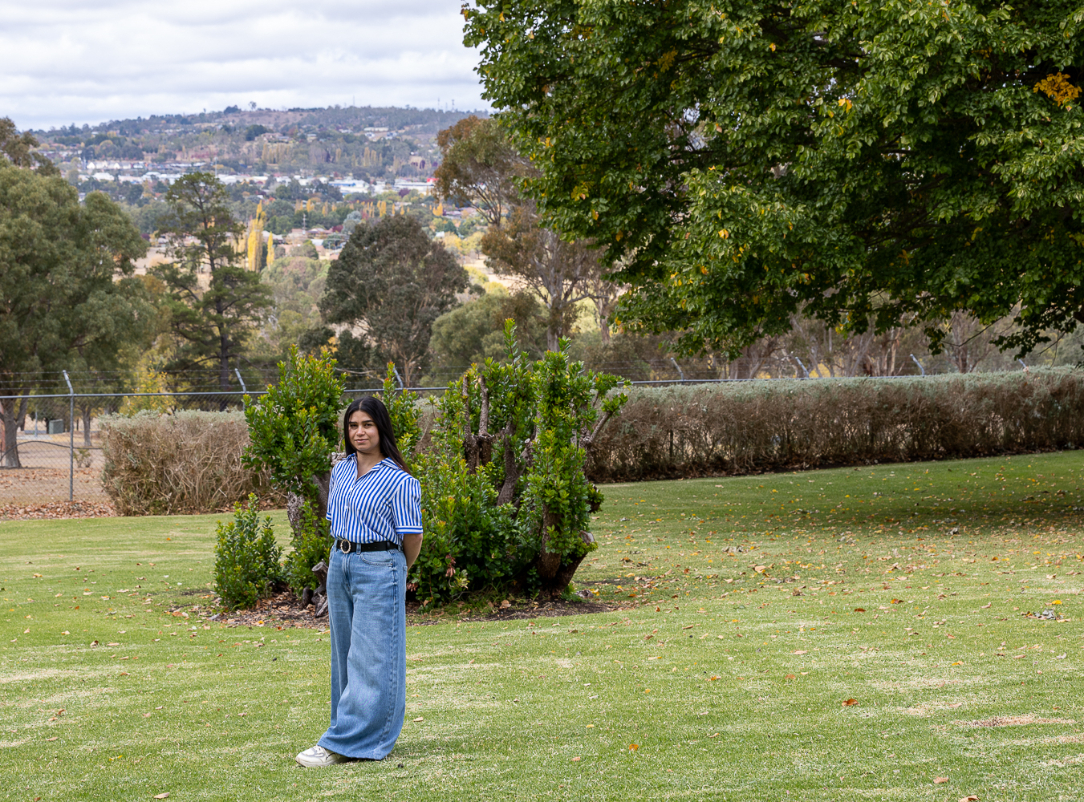
Image: Amera Ali is transforming her lived experience into advocacy for justice and protection for displaced communities.
The Refugee Camps and the Power of Kindness
When Amera escaped in April 2015, the ordeal didn't end. For four years, her family lived in refugee camps in Iraq, struggling to survive on almost nothing. She has described those early months as "harder than ISIS captivity"; a statement that speaks to the profound despair of displacement.
What saved her during that time was human kindness. She met two men – Ali and Haidar – who became like brothers to her. They brought food, brought necessities, brought dignity back into her family's life when the world had turned away.
"Their support and the sense of community they created helped me slowly rebuild myself," Amera says. "It helped me believe in people again. It helped me find the strength to continue, to learn, to study, and eventually to advocate for my community."
In 2019, when her family arrived in Australia and settled in Armidale, Amera carried these lessons with her: that survival requires both individual resilience and community support.
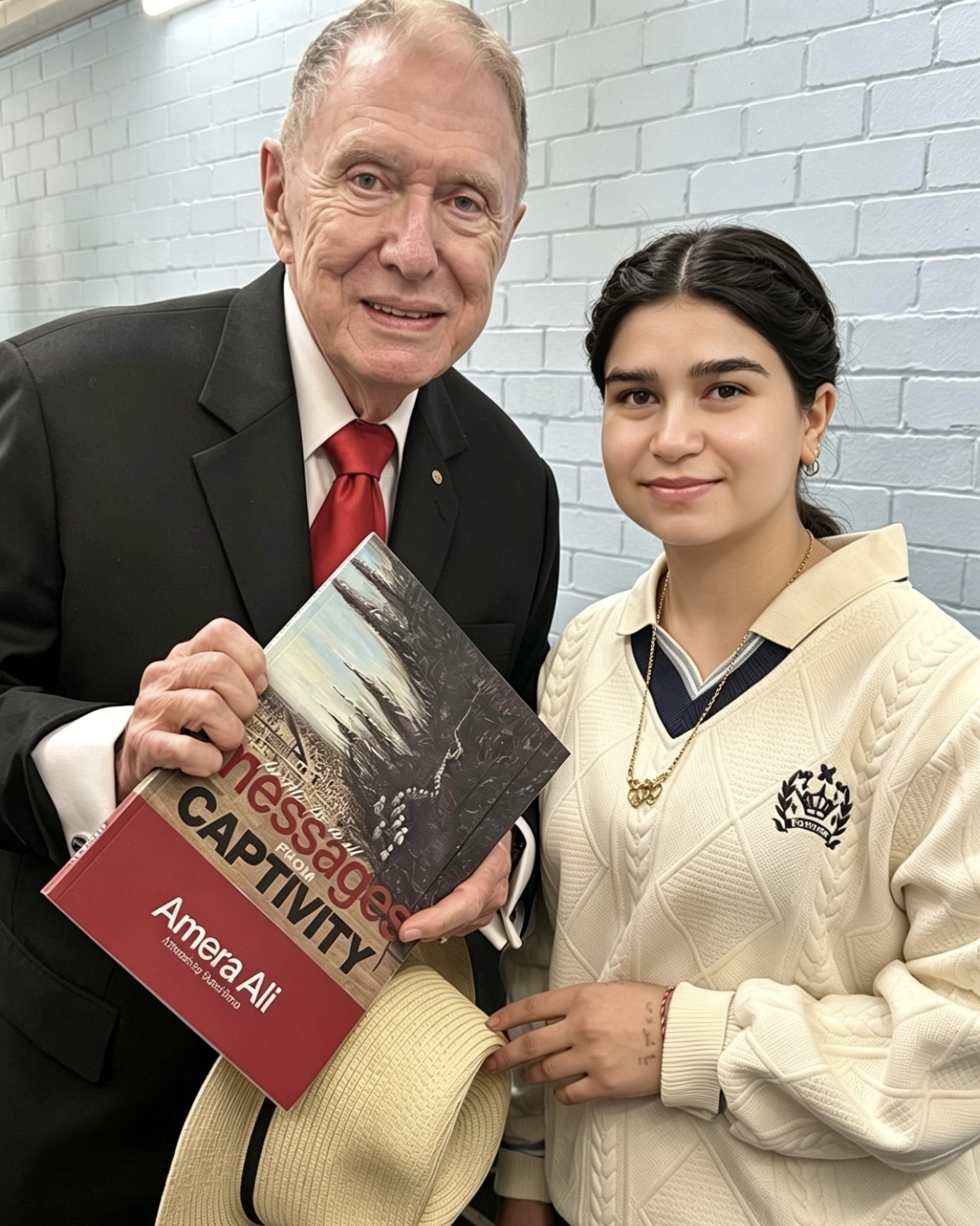
Image: Former High Court Justice and UN Commissioner Michael Kirby with UNE law student and Yazidi genocide survivor Amera Ali, holding her memoir For Ali, For Us All – Messages From Captivity, which documents her experience of ISIS captivity and her ongoing fight for justice for missing Yazidis.
Law as a Language of Justice
When Amera decided to pursue legal studies at UNE, her motivation was clear and urgent. Growing up as a Yazidi girl during and after the genocide, she had witnessed how easily the world ignores the suffering of people with no legal protection.
"After 2014, my relationship with law changed. It became deeper, heavier, and more urgent," she says. "I saw how easily the world can ignore the suffering of people who have no legal protection and no one to speak for them."
Studying law at UNE has given her tools she never had before. She's learning how justice systems work, how cases are built, how human rights are protected, and how change can happen through legal pathways.
"My advocacy comes from lived experience, but my legal education gives that experience structure and strength," Amera explains. "It allows me to speak not only from emotion, but also from knowledge."
For Amera, law is not simply a degree. "It is a childhood dream, a promise to my brother, and a commitment to my community. It is a way to turn pain into action, and memory into justice."
Writing as Resistance, Now as Power
Throughout her journey, writing has remained central to Amera's survival and healing. What began as desperate messages to a missing brother has evolved into testimony and advocacy.
In March 2026, Amera published For Ali, For Us All: Messages From Captivity – a memoir assembled from the scraps of paper she wrote on during captivity. The book is illustrated by her cousin Suad Smo, also a survivor of ISIS captivity.
The publication of this powerful memoir would not have been possible without the support of several key people and organisations. Alex Riske, who has become like a brother to Amera, was the first person to listen to her story and support her during both her book journey and her studies. His belief in her voice and unwavering encouragement proved instrumental in bringing her words to the world.
Armidale Sanctuary Humanitarian Settlement also played a crucial role, providing support and care during the vulnerable process of sharing such painful memories. Their presence created a safe space for Amera to work through her trauma whilst documenting it.
Yamamah Agha, General Manager, Service Delivery Settlement at Settlement Services International (SSI), believed in Amera's voice from the beginning and championed her advocacy work. This institutional support, combined with personal kindness, gave Amera the confidence to share her story publicly.
"Writing is no longer just about fear," Amera reflects. "It is about strength, healing, and justice. Writing means freedom. It means memory. It means responsibility. And it means that the voice of that ten-year-old girl is finally being heard."
The book carries not just Amera's story, but the voices of thousands of missing Yazidis, including her brother Ali, whose fate remains unknown.
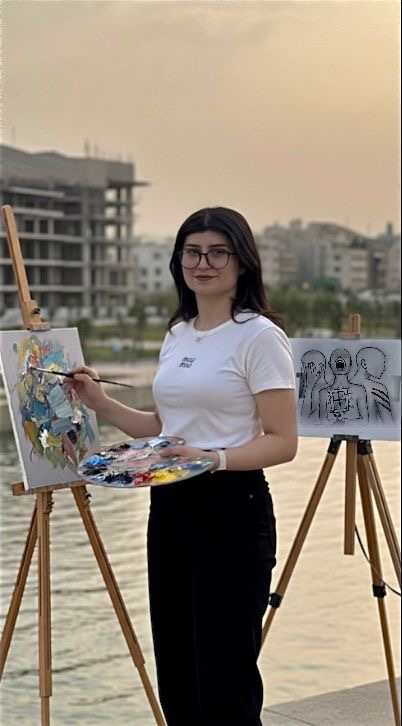
Image: Yazidi artist and ISIS‑survivor Suad Smo painting by the river. Suad created the illustrations for her cousin Amera Ali’s memoir For Ali, For Us All – Messages From Captivity, transforming shared trauma into powerful visual testimony.
Justice as Concrete Action
When asked what justice looks like, Amera doesn't speak in abstractions. She speaks in concrete actions: proper investigations into the missing, international support for independent inquiries, the opening of mass graves with dignity, accountability for ISIS, recognition of the Yazidi genocide, protection for Yazidis today, the rebuilding of Shingal, support for survivors, and legal pathways for resettlement.
She's particularly vocal about the role countries like Australia can play. "We would truly appreciate it if countries like Australia could support or help create a strong international team – experts who can go to Iraq, investigate the missing, open mass graves properly, and find the truth," she says.
Finding Home at UNE
Amera's choice to study law at UNE in regional New South Wales was deliberate. Armidale was her first home in Australia, and it remains her sanctuary.
"Armidale was my beginning," she explains. "In Armidale, I met so many people who cared about me and my community. They welcomed us, supported us, and made us feel safe."
UNE itself has made a profound difference. The university feels personal, not overwhelming. Teachers know their students. People care.
"UNE feels like a community where people help each other," she says. "I think regional universities like UNE can play a very important role in supporting refugee and displaced communities. When we feel supported, our voices become stronger."
 Balancing It All
Amera's life is a careful balance of competing demands. She studies law and works part-time with BackTrack, whilst continuing her advocacy work for missing Yazidis. Yet she remains focused.
"If someone really wants to do something, nothing can stop them," she says simply. "There will always be difficulties, but you can still do it with hard work and the right support."
For young people from refugee or displaced communities considering university study, Amera has a clear message: "Don't be scared. Your lived experience is your strength. In fields like law, this is powerful. It helps you see injustice clearly and fight for people who are unheard."
Looking Forward
As Amera continues her law degree, her vision extends far beyond personal achievement. She wants to use her legal training to support Yazidi families searching for missing loved ones and to help create safer pathways for survivors.
In June 2026, she and her cousin Suad will launch an exhibition titled Drawn From Pain – Written From Truth at the New England Regional Art Museum, bringing together Suad's drawings and Amera's writing.
"We hope that when people walk through this exhibition, they will not only see our story – they will feel it," Amera says.
For Amera Ali, the journey from that curious ten-year-old girl asking questions about justice to a law student fighting for accountability is far from over. But in Armidale, at UNE, surrounded by a community that has embraced her, she's found something she thought she'd lost: hope.
And this time, that hope has structure, knowledge, and the power of the law behind it.


