
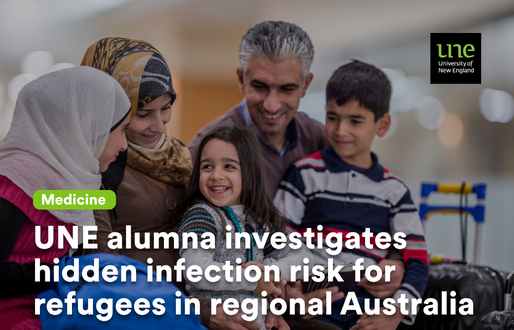
UNE Medicine graduate Dr Madeleine de Carle is helping to uncover a common but often overlooked infection affecting refugee communities in regional and rural Australia, working alongside UNE academic Dr Salma Ali and UNE Head of School of Rural Medicine, Professor Michelle Guppy.
For the past decade, Dr de Carle has studied and worked across the Hunter New England region. After beginning in physiotherapy at the University of Newcastle, she joined the Joint Medical Program at UNE, completing a Bachelor of Medical Science and Doctor of Medicine.
“Across my years of study, I lived in Armidale, Taree, Warialda and Newcastle and was constantly humbled by the selfless and tireless work of the health professionals who I had the opportunity to learn under and later work with,” she says.
Now a Basic Physician Trainee with the Royal Australasian College of Physicians, Dr de Carle works across Armidale, Tamworth, Newcastle and Taree and contributes to medical education as a Conjoint Associate Lecturer at the University of Newcastle.
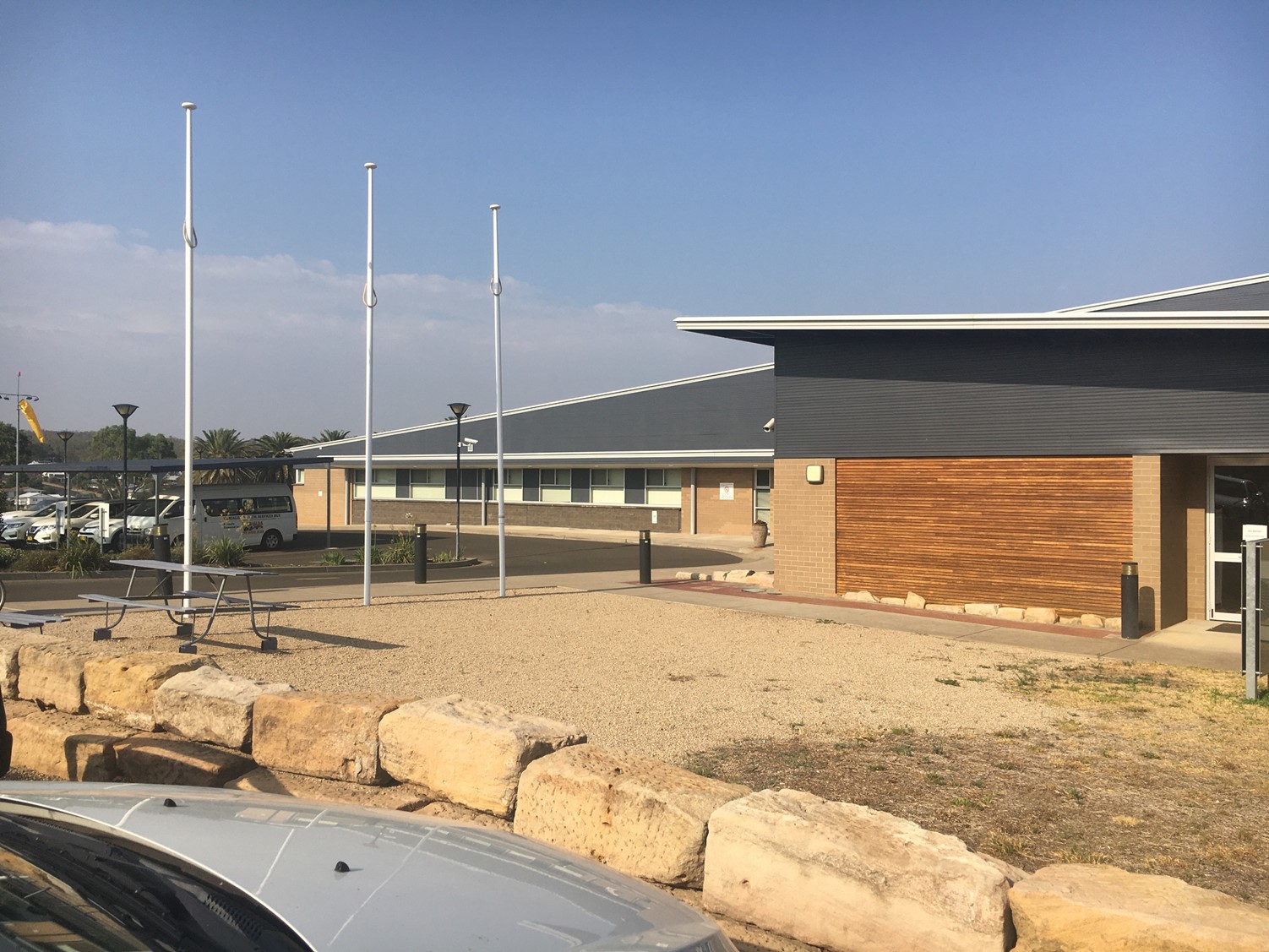
Image: Student placement in Warialda, rural NSW,
Her recent research with Dr Ali and Professor Guppy focuses on Helicobacter pylori (Pylori), a common upper gastrointestinal infection.
“Helicobacter pylori is estimated to be present in 30% of Australian adults,” Dr de Carle explains. “It is an important cause of illness, including peptic ulcer disease and gastric cancer.”
The team knew H. pylori is more common in low and middle-income countries where many refugees have lived, and that resistance to one of the key antibiotics used to treat it is higher in those regions.
“We therefore wanted to look at both how common Helicobacter Pylori was in refugee patients as well as investigate whether these antibiotic resistance patterns were occurring in refugee patients,” she says.
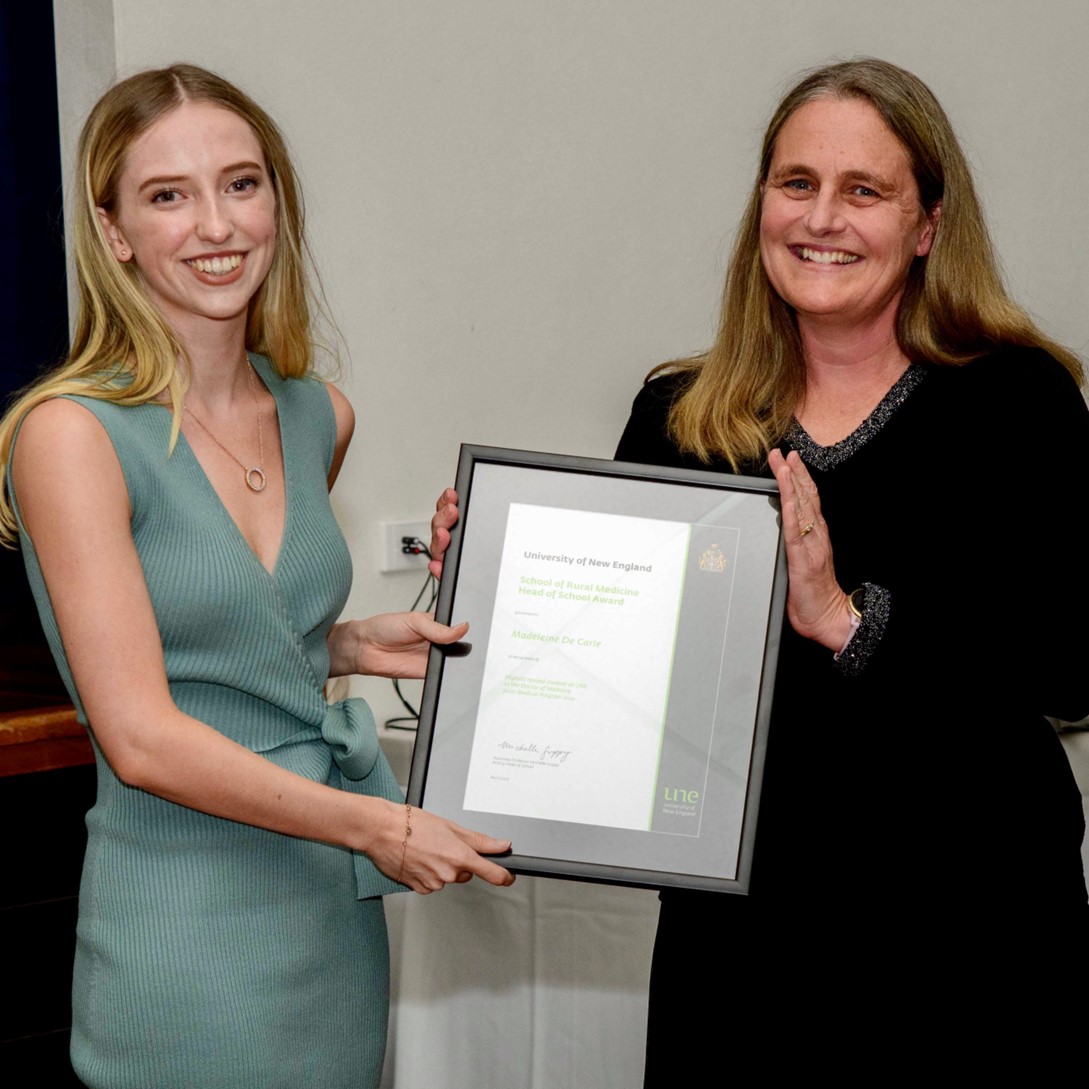
Image: Madeleine with mentor and co-author of research project, Professor Michelle Guppy.
In a cross-sectional study at a rural primary health service in northern New South Wales, the team found that 73% of tested refugee patients were positive for H. pylori. After standard triple therapy, 45% still had the infection, suggesting a high rate of treatment resistance.
“Antibiotic resistance is an incredibly important issue,” Dr de Carle says. “In our study, we demonstrated a high rate of treatment resistance, which likely represents resistance to the antibiotic clarithromycin. Adjusting empirical antibiotic regimens to the local patterns of antibiotic susceptibility is important to reduce antibiotic resistance. Our study raises the question of whether antibiotic susceptibility testing or antibiotic consumption data and clinical outcome data should be considered in the management of Helicobacter Pylori in Australian refugee patients.”
One of the more striking findings was what the researchers saw in people who did not feel unwell. Current Australian guidelines recommend against screening asymptomatic refugee patients for H. pylori, yet the study found many people who felt well but had a family history of H. pylori still tested positive.
“International literature has suggested a ‘screen and search’ approach where there is a high prevalence of the infection and gastric cancer,” Dr de Carle explains. “We hope that further research extending across larger study populations will help to inform whether current screening guidelines for refugees in Australia should be reviewed.”
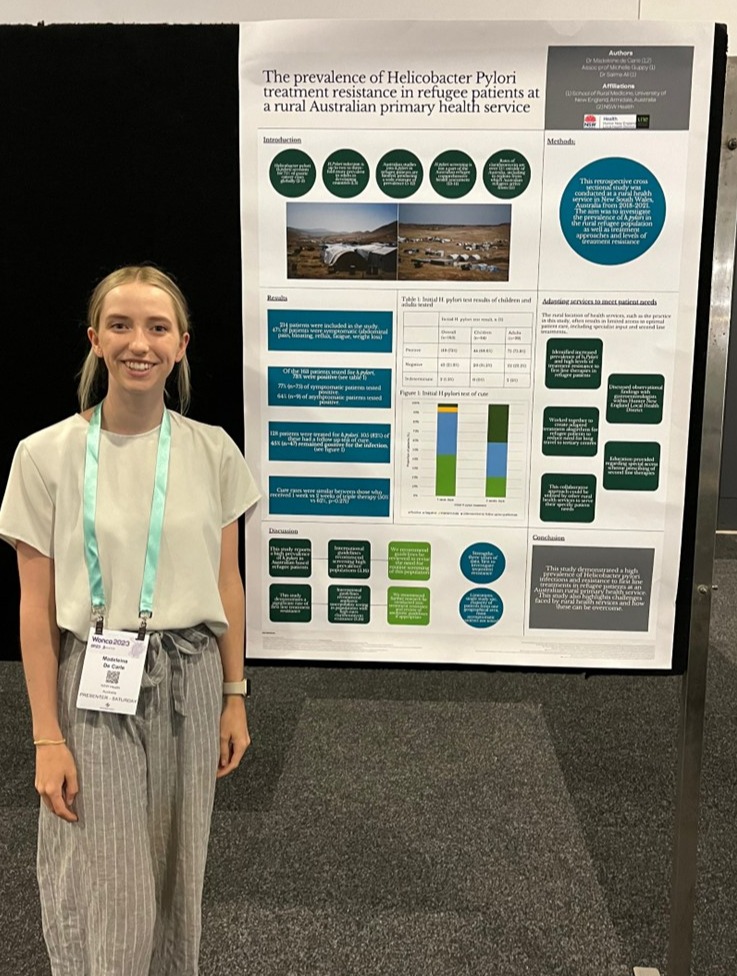
Image: Presentation of this study at the World Organisation of Family Doctors (WONCA) conference in Sydney (2023).
For newly arrived families, that could mean hidden infections linked to future ulcer disease and gastric cancer are going undetected.
The H. pylori findings sit within a broader UNE research program on refugee health in regional New South Wales. Related work has shown that refugees often arrive with complex physical and mental health needs into already stretched rural services, with fewer GPs, limited access to interpreters, strong gender preferences for clinicians and unfamiliarity with the Australian healthcare system. These factors all contribute to longer consultations and additional pressure on practitioners.
By combining service level insights with clinical data, the research team led by Dr Ali, Dr de Carle and Professor Guppy highlights that sustainable refugee resettlement in regional Australia depends on both better resourcing and on screening and treatment guidelines that reflect real world rural practice.
For Dr de Carle, projects like this sit at the intersection of medicine, research and advocacy.
“Most research projects that I have had the privilege of undertaking stem from clinical experience; from reviewing issues that impact our patients,” she says. “I am only in the very infancy of my career, but the advice I would give would be to listen to your patients and advocate for them to receive the highest quality care.”
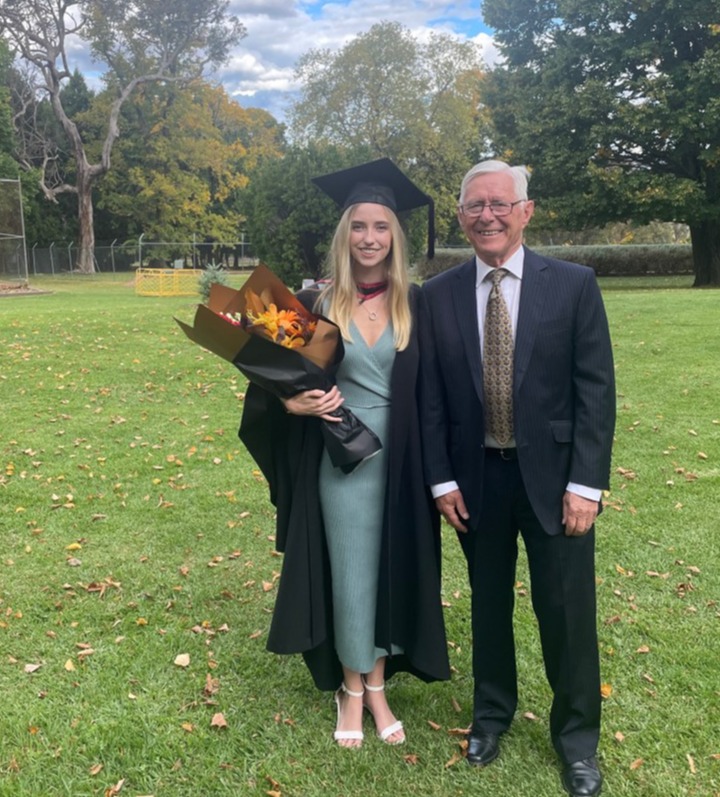
Image: Madeleine at UNE graduation with grandfather, Dr David de Carle (Gastroenterologist)


