
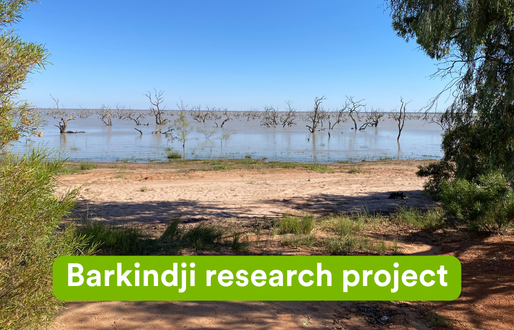
For University of New England PhD psychology student and landscape architect Sophie Zaccone, the most important lesson of her research on Barkindji Country began as a confronting realisation.
“At the beginning of the PhD process I planned to write about Indigenous peoples’ connection to the land, from my desk, without knowing any Indigenous people – not a culturally aware or safe mode of operating,” she reflects.
That early plan, she says, sat alongside a deep discomfort about even starting a conversation. “I was just full of so much shame that I was very anxious about how to even start a conversation.” More than six years on, her experience could not be more different.
“Not one of the Indigenous people I have met in over 6 years has been anything other than loving, peaceful, intelligent, family-oriented and deeply caring for their Country.”
The work has been “extremely humbling.” It has reshaped how she understands her own non-Indigenous identity on these lands.
“It’s rebuilt for me the relationship I thought I had with the land, and in the end led to an acceptance of the unbelonging I feel here as a convict-descendant and non-Indigenous person. My flesh and form feels unbelonging but underneath that I feel a oneness with all things – with the universe generally as a result of this journey.”
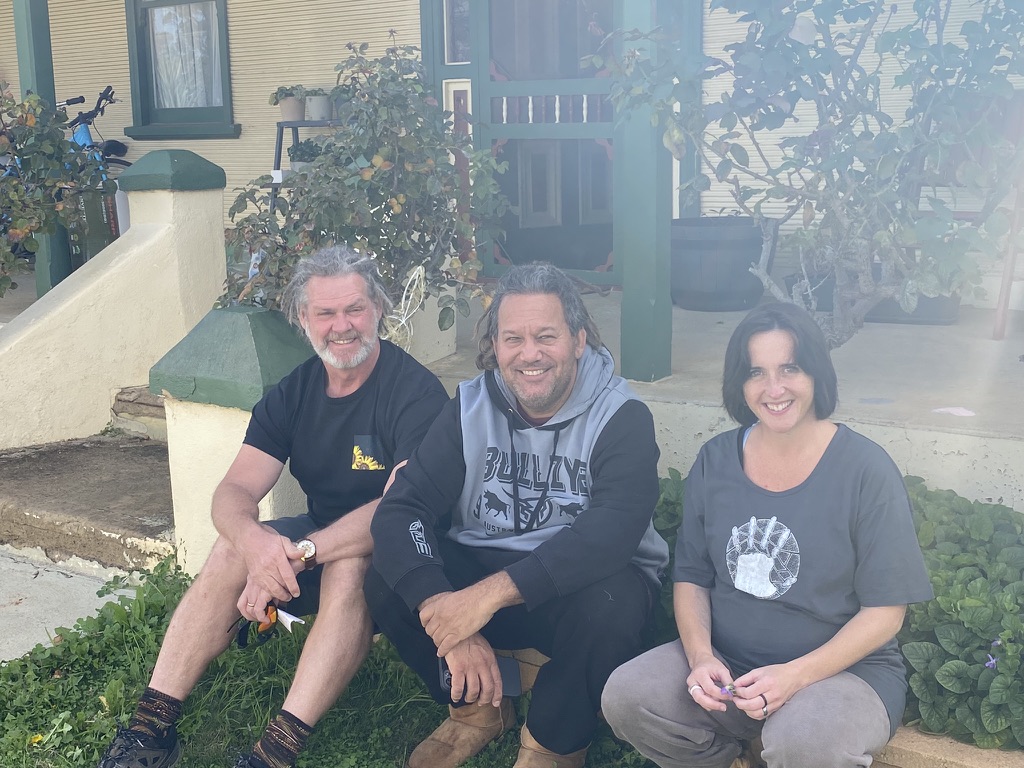
Image: Dave Doyle (Barkindji/ Malyangapa), Dr Mark Lock (Ngiyampaa) and Sophie Zaccone.
From CBT to Country-led wellbeing
Sophie’s research contributes to a Barkindji Wellbeing Framework, co-designed with Barkindji collaborators and Country. Explaining it to psychology students trained in cognitive behaviour therapy, she begins by gently widening the frame.
“Wellbeing is more than the scientific descriptions, therapies or theories of wellbeing,” she says. “No amount of textbooks or intellectual comprehension brought me closer to wellbeing myself.”
For her, the Barkindji work makes it clear that:
“Wellbeing is actually beyond the western scientific written description of the term. If you are feeling well, a sense of wellbeing, you know it. It’s nervous system regulation, grounding rituals that give structure to your life – meditation, prayer, mindful action – it’s being able to enjoy the present moment exactly as it is right now.”
Within the Barkindji Wellbeing Framework, she notes, that also means being able to “make a living being close to your family and Country – your kin.”
Learning wellbeing on a flooded road
One of Sophie’s most vivid lessons about wellbeing came not in a therapy room but on a flooded back road between Menindee and Wilcannia after the rains of 2022.
Her Barkindji colleague and co-author David Doyle took Sophie and her supervisor Dr Mark Lock out on Country to look at plants. The road was submerged. “Our cars got bogged at least 5 times, I was 6 weeks pregnant, we had to push the cars for over a 100 kilometres in January 40 degree heat.”
Sophie had long lived with anxiety and panic, yet something different happened that day.
“Dave’s calm and grounded vibe as a human being is so chill, I had never felt that kind of nervous system regulation under pressure in my life and it was like my nervous system sort of borrowed his calm.”
“That day I learnt that wellbeing is modelled, not taught via books, it’s actually something you can emanate to other people through the work you have done on your own self. Lived experience and life-challenges will make you more fit to heal people than 10 years of book-learning.”
After many years of seeing psychologists, she says, “just being in his presence was a very big lesson for me. He is a true healer in my eyes.”
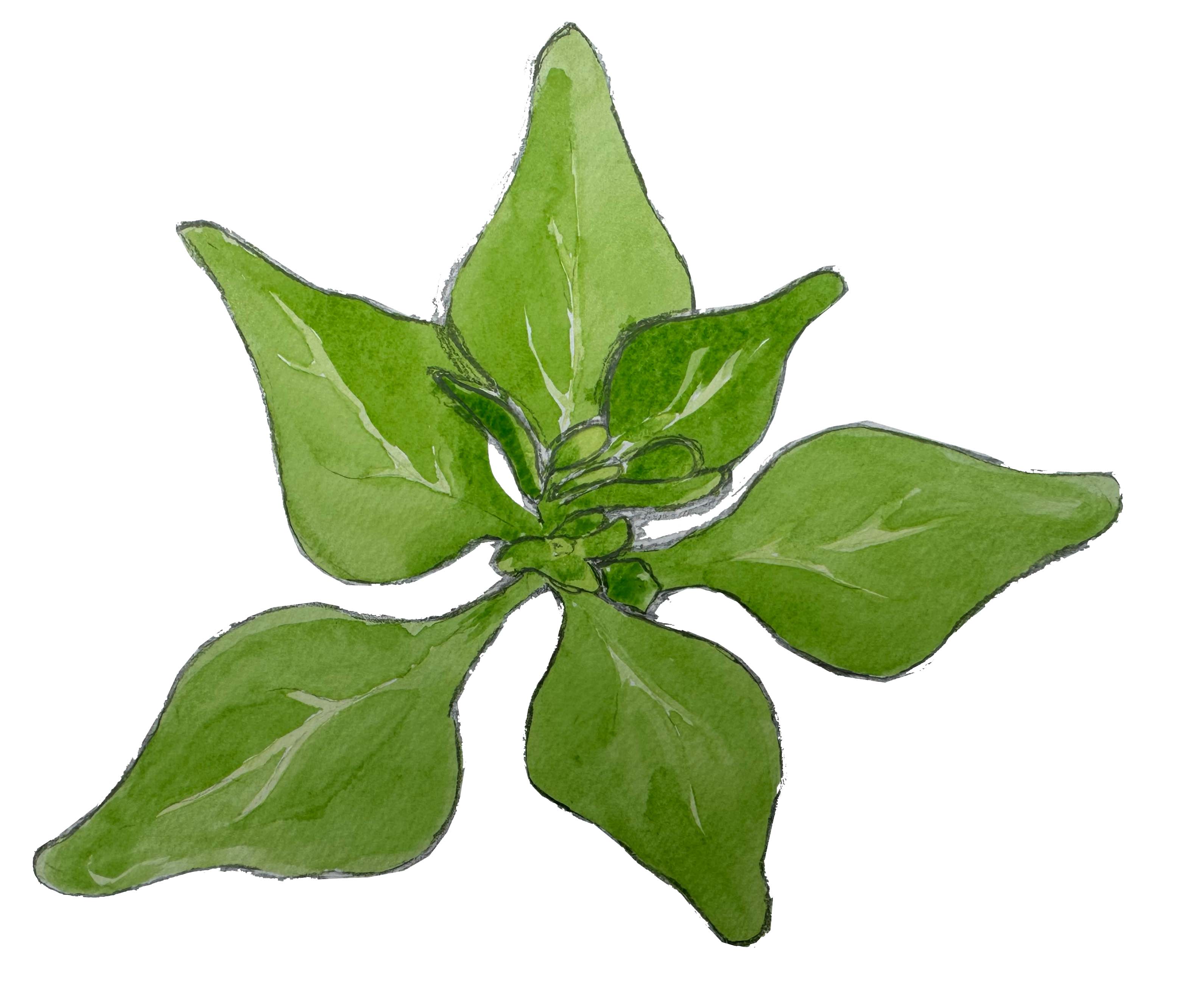
Image: Wild spinach - Sophie Zaccone.
Yarning, dadirri and being willing to be changed
Working with Indigenous supervisor Dr Mark Lock through yarning and, later, dadirri (deep listening) has also reshaped Sophie’s sense of what counts as “good” psychological research.
“His safety as a supervisor and his rigour as a researcher allowed me to rest into more of who I really am as a person,” she explains. That support helped her to accept the spiritual side of herself and to genuinely encounter dadirri.
“It’s easy to intellectually understand – deep listening – but to know the lived experience is another story and that was truly transformative.”
For Sophie, culturally safe psychology research with First Nations communities must change the researcher too.
“To me ‘good’ psychological research should reveal new knowledge but also transform the researcher themself through the journey, if they are willing to accept that the research journey is both external and internal.”
Her advice to other psychology researchers is simple and demanding.
“Be committed to be changed, and accept that that change will only be transformative if you give it no bounds, let yourself rethink all you thought you knew about yourself, your history, the outcomes of your research, your hopes for the future.”
Weaving a Barkindji emu net of land, plants and people
These personal shifts sit within a larger cross-cultural collaboration on Barkindji Kiira (Country), centred on land-based participatory research, native edible and medicinal plant knowledge, and the crucial role of Barkindji women in community healing.
In their recent journal article “Women, (re)birth and collective wellbeing on Barkindji Kiira”, Sophie and her co-authors describe their work as a word-weave, patterned on a traditional Barkindji emu net made from Club Rush collected on the banks of Menindee Lakes. Each sentence is a rush, each paragraph a twine, woven into a collective net of relationships between land, plants, people and psyche.
They present the Barkindji Wellbeing Framework as a context-specific response to national social and emotional wellbeing work, grounding psychology in First Nations landscape research, plants as kin, yarning and dadirri, and the recognition that “Country authors life.”
For readers who want to move beyond textbook models of wellbeing and understand how land, water, plants and community are shaping new cross-cultural psychologies on Barkindji Country, the journal articlee offers both theory and “practical lessons” for more culturally safe practice.
It is, in her words, an invitation to “rethink all you thought you knew” – beginning with how we listen to Country and to the First Nations communities who care for her.
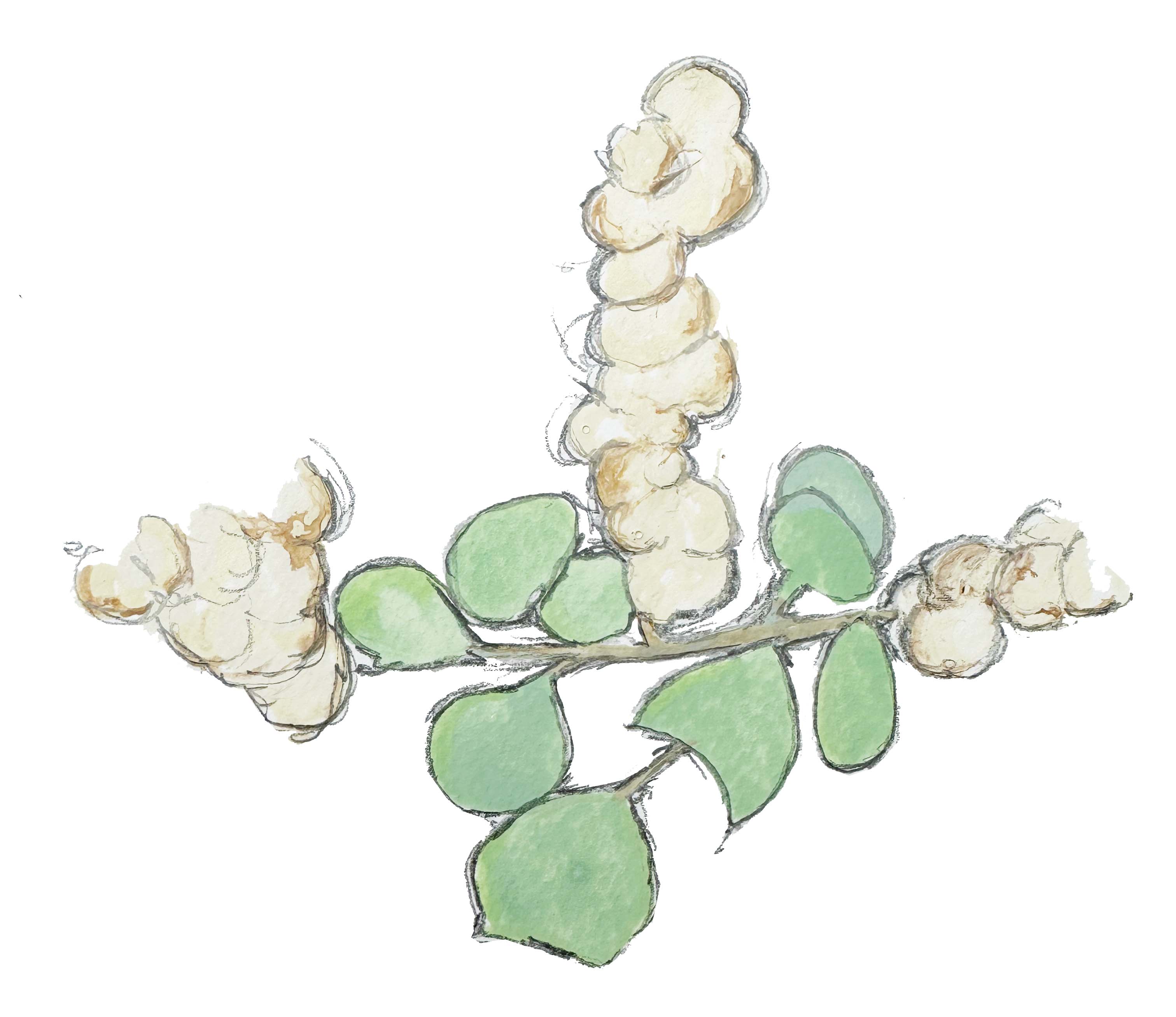
Image: Old man salt bush - Sophie Zaccone.


