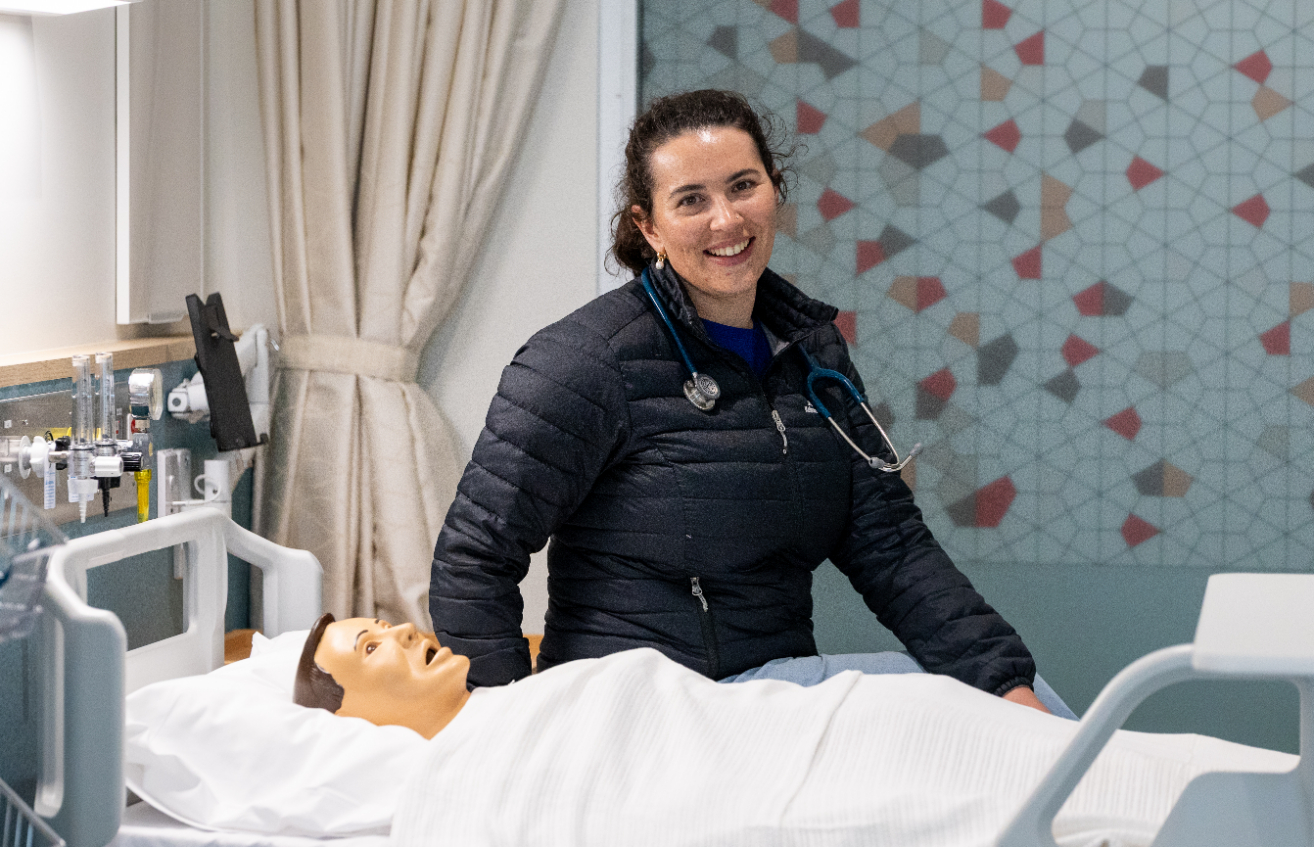
UNE Joint Medical Program student and NSW Rural Doctors Network (RDN) Cadetship recipient Jordan Ashby has spent most of her life in rural and regional Australia. Born in Rockhampton and raised on farms across Queensland and New South Wales, including Emerald, Berrigan, a stint in Armidale and now a beef and irrigation cropping property near Howlong, she has seen first hand both the strengths and the challenges of country communities.
Jordan originally trained and worked as a veterinarian, spending several years in the Republic of Ireland, Northern Ireland and England, mostly in referral equine hospitals. When she decided to retrain in medicine, UNE and the JMP quickly emerged as her preferred option because of her existing connections to the region and what she had heard about UNE graduates.
“I had heard that JMP UNE doctors post graduation were very competent, but also very good at patient focussed care, which is something that is important to me,” she said.
Alongside full time medical study, Jordan works part time, initially in out of hours equine practice and now in consulting and tutoring. She has also taken on leadership roles, including co chair of NERCHA, UNE’s club for rural health, and secretary for AMSA’s Rural Health Summit 2026, which will bring medical students from across Australia to Armidale. Away from campus, she is training for her first open water marathon swim with the High Country Open Water Swimmers, a local masters squad that has helped her connect with the wider Armidale community.
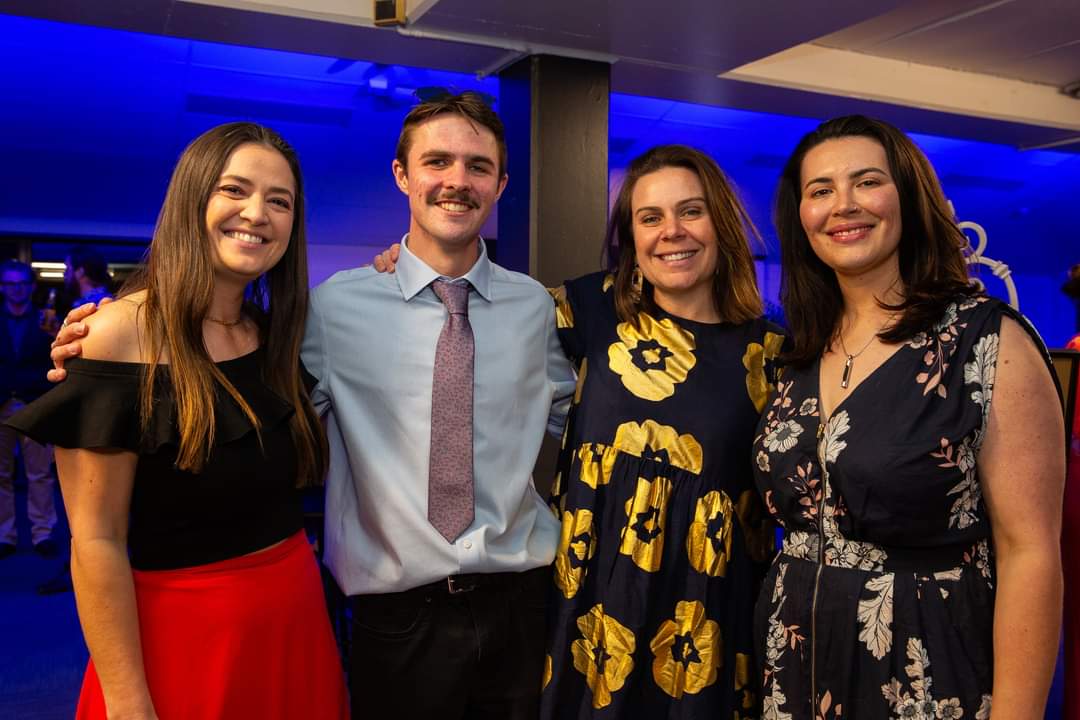
Image: Jordan (right) with Allie, Luka and Hannah at the UNE Life Clubs Awards.
Jordan encourages other students to make the most of the region and the networks around them. She suggests joining local sporting clubs or UNELife societies and reminds prospective students that there is no single “right” entry path into medicine. UNE, she notes, offers multiple pathways, bridging programs and strong academic support. For her, the life experience gained before medicine is now a strength, particularly when working with patients and families on some of the hardest and best days of their lives.
Her commitment to practising in rural New South Wales is deeply personal. Having lived and worked in rural or regional areas for most of her life, she says she loves the country, the space and the sense of community, but has also seen the impact of health inequity on people she knows. While she is realistic that she cannot solve these issues alone, she is determined to be “boots on the ground” while also helping to inspire future rural health professionals. One of the things she is most looking forward to after graduation is returning closer to her family on the Murray River, which she describes as her favourite place in the world, and working in smaller regional hospitals where junior doctors are more than just a number and can access closer supervision and support.
The RDN Cadetship has been central in making this pathway possible. Offered by Rural Doctors Network on behalf of the NSW Ministry of Health, the program provides up to $15,000 per year for the final two years of a medical degree, or $30,000 spread across study for Aboriginal and Torres Strait Islander students. In return, cadets agree to undertake two of their first three postgraduate years in an eligible rural NSW hospital, in locations such as Tamworth, Dubbo, Orange, Wagga Wagga, Broken Hill and Albury. In their final year, cadets apply for an intern position through the Rural Preferential Recruitment process or Aboriginal Medical Workforce pathway, administered by the Health, Education and Training Institute.
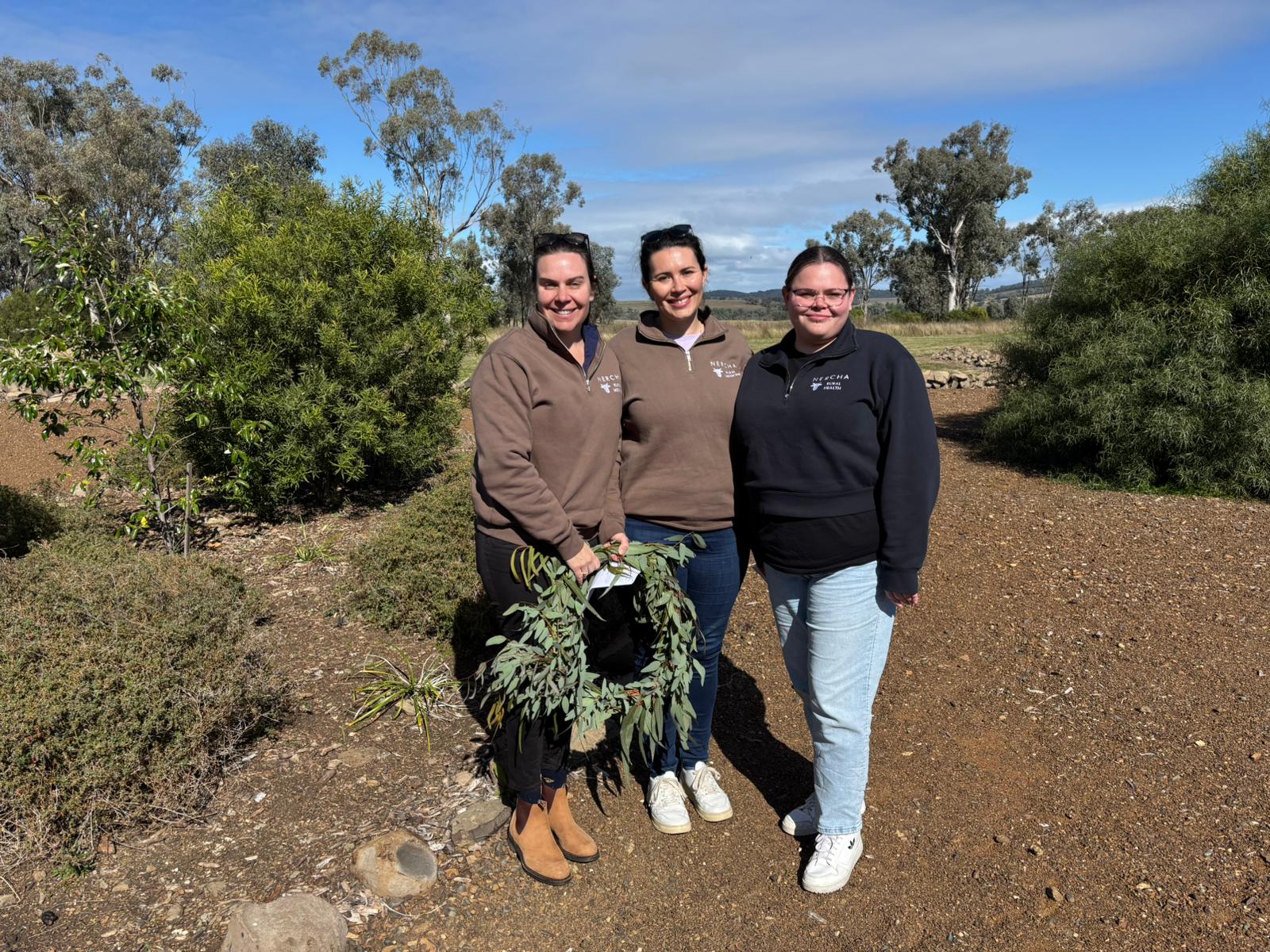
Image: Jordan with Allie (left) and Shari (right) as part of NERCHAs Myall creek massacre memorial trip.
For Jordan, the financial support means she can work less during the demanding final years of the course and focus more on study, particularly in fourth year. It has also created space for personal goals, including future long distance swims she would otherwise have delayed. She is quick to point out that the benefits are not only financial. She values the pastoral care, community and professional development embedded in the program, including résumé and interview preparation and ongoing check ins after graduation. Cadets, she says, are ambassadors for the future rural health workforce, with a strong understanding of the realities of rural practice and the issues faced by country communities.
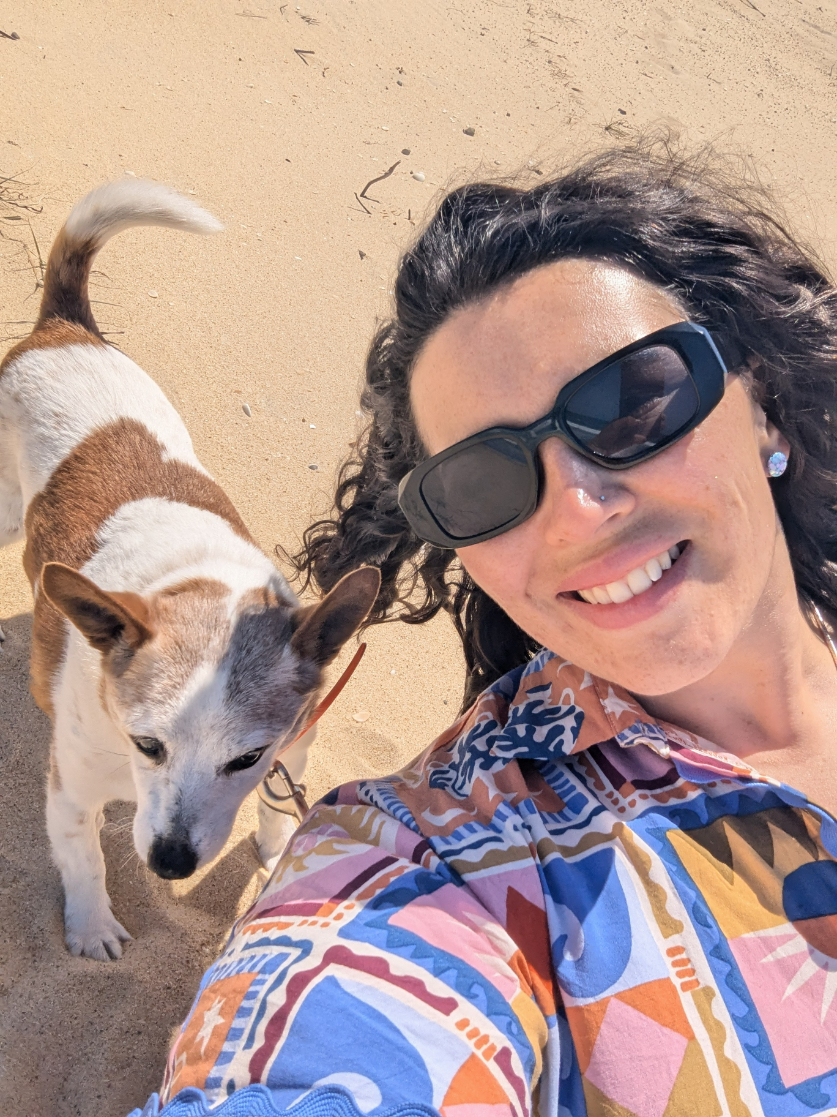 UNE’s success in this space is significant. Of the 48 RDN cadetships awarded across New South Wales last year, 10 went to UNE students. It is a result that illustrates how consistently UNE performs above its much larger metropolitan counterparts when it comes to attracting and nurturing future rural doctors. Jordan believes this is linked to UNE’s selection processes and the way staff support students once they arrive. Academic scores are treated as a hurdle rather than a ranking tool, with interviews focusing on the personal and interpersonal skills needed to succeed in medicine. This is reinforced by small class sizes and meaningful contact with lecturers and tutors who bring real world rural experience and a genuine passion for mentoring the next generation of rural practitioners.
Applications for the 2026 intake of the Cadetship Program have now closed. Aboriginal and Torres Strait Islander JMP students are eligible to apply in their second year, while non Indigenous JMP students may apply in third year. The process involves providing a résumé, references and written responses, followed by a Zoom interview with a panel of RDN staff and a previous cadet. Students who are interested in future intakes can sign up for email alerts and follow NSW RDN and NERCHA on social media.
For Jordan, the combination of UNE’s rural focussed medical education and the RDN Cadetship has allowed her to deepen her commitment to the communities she comes from, invest in her own wellbeing and training, and prepare to join a growing cohort of doctors working to close the health gap for regional Australia.


