Dr Gerard Davis - 2025 UNE Distinguished Alumni Award
In recognition of his pioneering leadership in agricultural biotechnology and global innovation that advances food security and sustainable livestock production.
A new era in beef and dairy livestock production has dawned. In which elite embryos carrying the most desirable genetic traits can be produced, at scale. An era that promises to boost herd genetics, animal welfare, productivity and environmental gains in paddocks large and small.
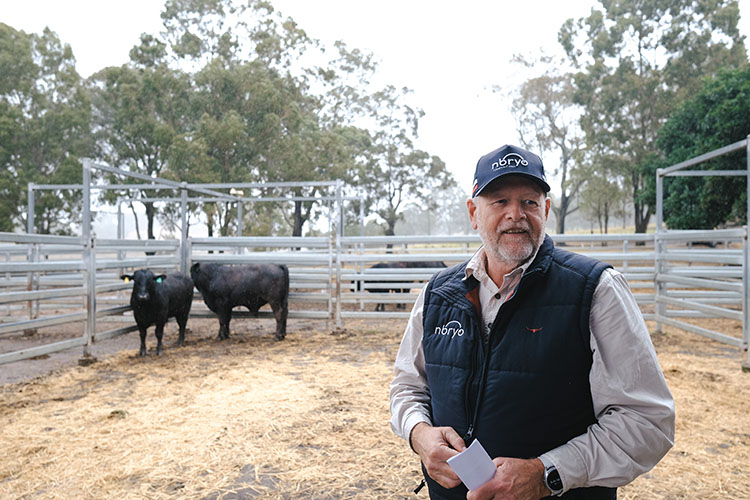
And at the forefront of that revolution is 2025 UNE Distinguished Alumni Dr Gerard Davis – a former CSIRO research scientist, modern-day entrepreneur and international development consultant.
Completing his PhD at UNE in 1988 (in sheep genetics and reproductive physiology), Gerard could not have foreshadowed the brave new world of reproductive biotechnology that would transform animal breeding.
“I could see the promise of technology to accelerate genetic improvement across the livestock industry, but back then it was difficult and expensive,” says the executive chairman of ag-tech company Nbryo. “We had the tools to identify elite animals, but artificial insemination only affected one half of the genetics of the offspring.
“The platform we’re developing at Nbryo today harnesses the power of the embryo, the full package of genetics. We have the ability to develop the best embryos and to make lots of them. It’s a massive opportunity, capable of condensing seven years’ worth of breeding into a seven-day in vitro embryo production cycle.
“Our aim is to make livestock IVF more affordable and accessible: for large-scale beef producers in Australia as much as smallholder farmers in Bangladesh. We can move the needle significantly.”
The suite of novel technologies and tools Nbryo is busy commercialising – including an embryo transfer device to simplify artificial insemination – are forecast to drive down the cost of advanced reproduction and accelerate genetic gains across the cattle industry, uplifting productivity and sustainability. So much so that they have attracted the financial backing of the Gates Foundation, with its focus on global food security and human nutrition.
Lewis Frost first met Gerard when Gerard co-founded the biotech start-up Genetic Solutions – later to become Catapult Genetics and acquired by Pfizer Animal Health, (now Zoetis) – which developed gene marker technology that is now used in virtually every livestock industry globally. He describes Gerard as a “fierce innovator” and generous mentor.
“The technology pioneered by Nbryo has the potential to change millions of lives in developing countries by improving access to reliable protein and simultaneously reducing enteric methane emissions,” Lewis says. “Over the years Gerard has also served on the boards and in an advisory capacity for numerous Australian agri-tech start-ups, giving back and helping others on their own journey of innovation and value creation.”
A desire to bridge the gap between science and commercial viability has typified Gerard’s career.
Working for Pfizer – and commuting from Brisbane to 42nd Street in New York – he led the research and development pipeline for animal genomics and the integration of molecular diagnostics.
As General Manager of Innovation and Strategic Development with the Australian Agricultural Company (AACo) – the world’s largest listed livestock company – Gerard expanded the organisation’s capabilities in genetics, nutrition and sustainability, spearheading multi-million-dollar projects that reconfigured its wagyu beef supply chains.
Consultancy appointments have since seen Gerard collaborate with research bodies including the CRC for Food Agility and lead international development projects in Africa, South Asia and New Zealand, where partners say he has combined “deep technical expertise with commercial acumen”.
“I’ve always been someone prepared to give things a red, hot crack,” Gerard says. “I’m not here to make marginal change, but to take forward projects that improve the ease of adoption and deliver real benefit.
“The key is to keep learning and innovating, so you are improving all the time – and that’s a mindset that sometimes requires a big gulp of your ego. Taking something from every situation means what you do next is better. It’s all about testing and turning quickly.”
Images from visits to Kenya, Tanzania and Ethiopia, and the possibility of improving the livelihoods of the world’s poorest people, often swirl in Gerard’s mind.
“We have to be constantly thinking about how people will apply the technology,” he said. “Like the woman in Kenya, who has a couple of cows living in a shed at the back of her house, that not only provide the milk for her children’s nutrition but also excess milk for sale, which pays for their school fees. Any improvement we can make for her makes a substantial difference.
“I try to be very deliberate in anything I do; to be clear on the reason behind it and the benefits it will hopefully bring. Anything I have done has not been done alone – it’s all about working in partnership, in teams.”
Breaking new ground has demanded resilience, persistence and a degree of entrepreneurial courage. “When we brought the first genetic markers to market in Australia it initially ruffled the feathers of vested interests and was met by stakeholder scepticism, but if you believe that what you are doing is going to be beneficial, then you need to plough on.
“Some of the technologies we have pioneered have been taken to levels and applied in ways that even I couldn’t have imagined.”


