
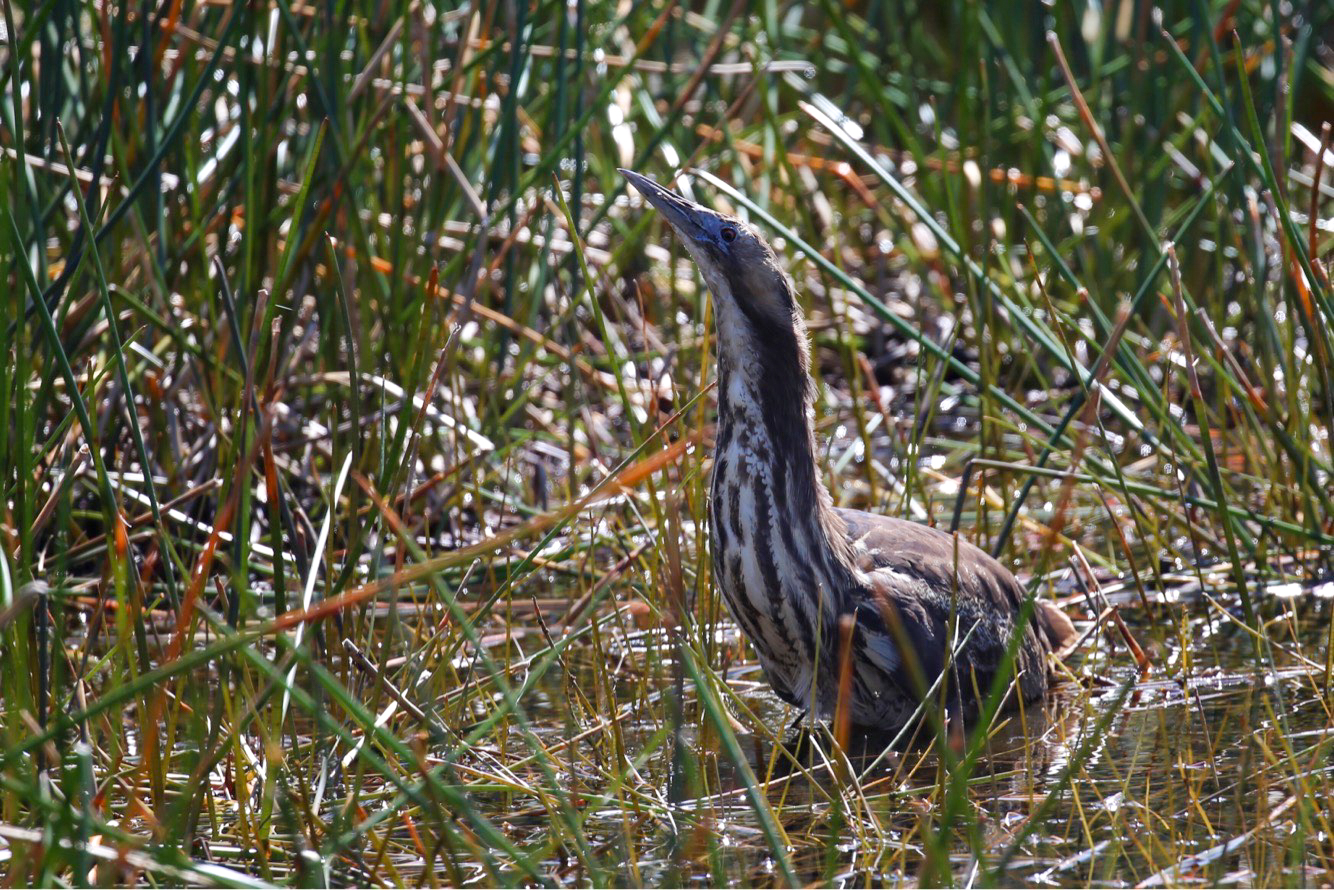
An endangered Australasian bittern has been recorded during surveys of the Gwydir wetlands, sparking hope of a breeding comeback in the area.
Monitoring of waterbirds in the Gingham, Lower Gwydir, and Mallowa Wetlands has been undertaken by the UNE Aquatic Ecology Research group, in partnership with NSW Department of Climate Change, Energy, the Environment and Water (DCCEEW), as part of the Commonwealth Environmental Water Holder’s (CEWH) Flow-MER Program and previous CEWH funded science programs.
The Australasian bittern is known for its distinctive booming call, which is thought to be the source of ‘bunyip’ legends.
Sightings of the bird have been diminishing across Australia and are otherwise only found in small numbers in New Zealand and New Caledonia.
“The bird we heard was a male and presumably trying to breed,” says Dr John Grant, Aquatic Ecology researcher at UNE.
“We’re not sure if he was successful, but it’s a promising sign that these birds may be returning to the wetlands.”
A second Australasian bittern was sighted four months later in May 2025 in the Mallowa Creek by landholder Jon Guyer at Valetta, who spotted the bird hiding in dense vegetation.
It’s estimated the Australian population is as low as 1300 birds, however there is uncertainty over the accuracy of this figure.
The Australasian bittern once bred regularly in the Gwydir catchment, but the gradual decline of habitat has seen the species all but disappear from the area.
“The re-establishment of a breeding population in the Gwydir will only be confirmed if more males are heard each summer and successful nesting is discovered,” says Dr Grant.
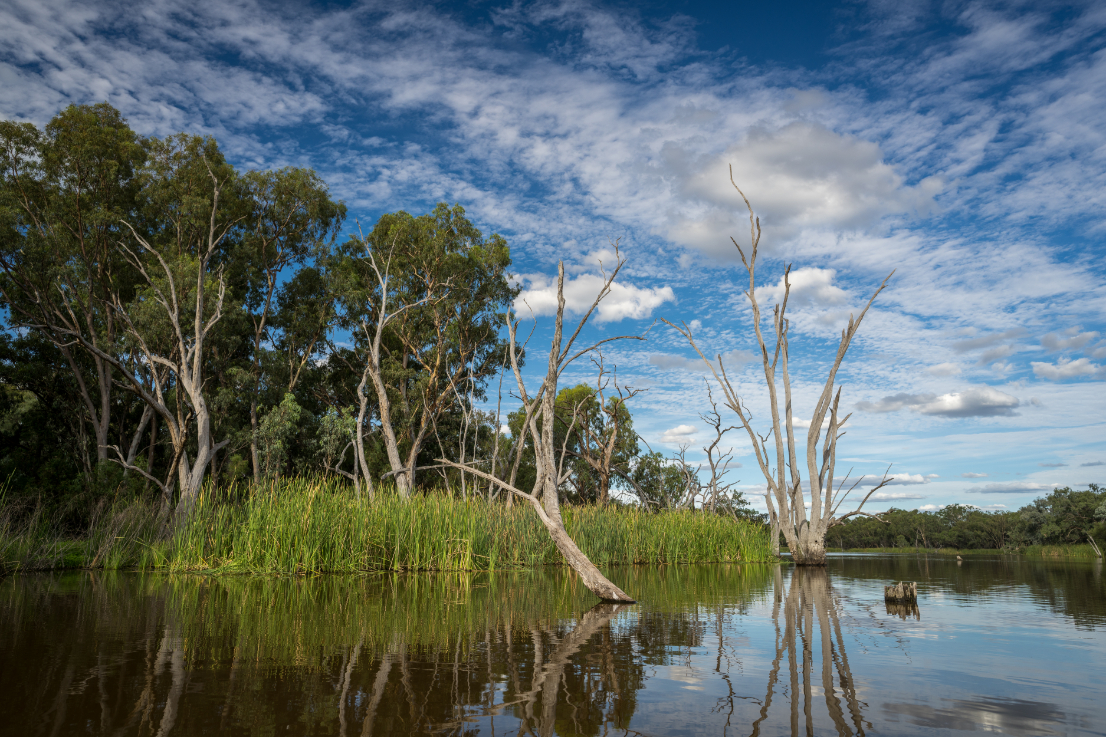
Image: Gingham Waterhole in the Gwydir Wetlands, part of the same system where bitterns have been recorded.
“We are hopeful, though, as the sighting comes at a time when the breeding conditions are positive. Floodplain wetlands are inundated and, with continued inflows, some areas may well remain so for months, priming the wetlands in the lead-up to the spring-summer breeding season.”
The aim of the Flow-MER project is to track waterbird response to both CEWH and NSW environmental water deliveries.
“In the 2024-25 water year, waterbirds were monitored four times, including before, during and after watering events,” says Dr Sarah Mika, Lecturer in Aquatic Ecology and Project Lead.
“The first survey was conducted in November 2024, before the environmental water arrived in the wetlands, the second in January 2025 when the wetlands were filling, and the third in February 2025 to capture response to peak water levels. The final survey was conducted in May 2025 to observe post-watering responses.”
This project is supported by the Australian Government through the Commonwealth Environmental Water Holder’s Science Program, Flow-MER. You can read more about the Flow-MER project here.


