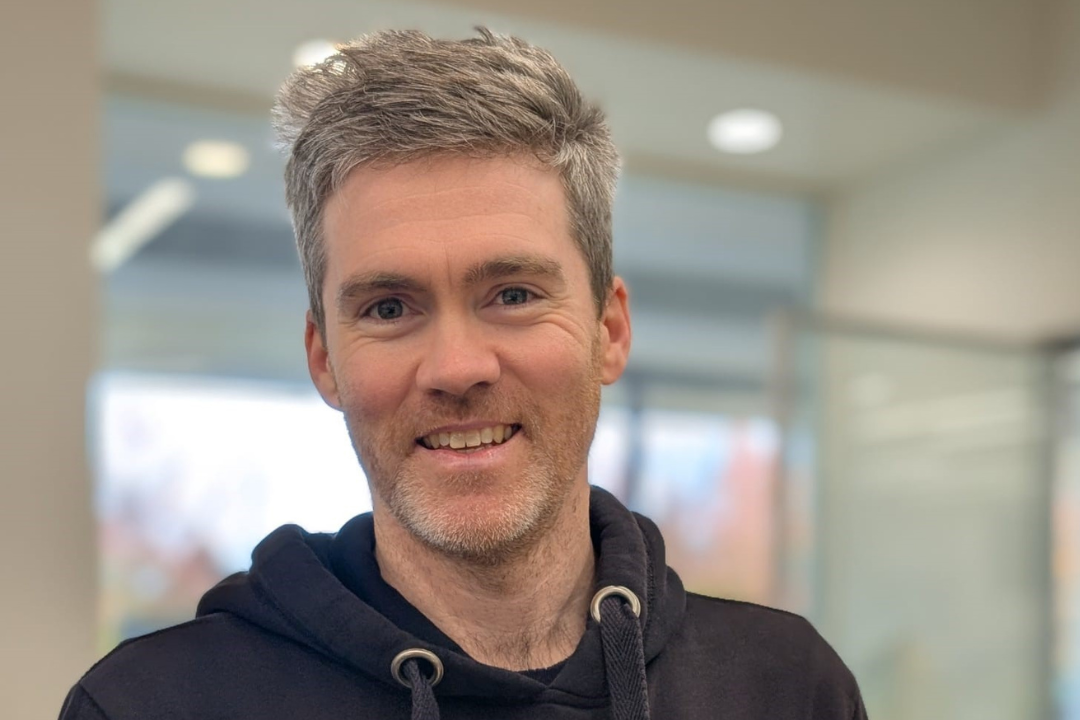
University of New England (UNE) palaeontologist, Dr James Holmes, has been awarded a prestigious Discovery Early Career Research Award (DECRA) from the Australian Research Council for a project that will transform our knowledge of how life on earth has evolved over time.
The first-of-its-kind project will focus on trilobite fossils, the ancient arthropod relatives of crustaceans, millipedes and spiders, with the findings to be applied to other fossil groups with high quality records in the future.
“In particular, this project focuses on how trilobites radiated into a range of ecological niches across the entire world, which occurred very quickly during the Cambrian Period about 520 million years ago,” says Dr Holmes.
Dr Holmes will develop a new method of analysing the fossil record to track how much trilobite body structures varied, and how this might be related to factors such as the environments they lived in.
“This new method will focus on quantifying the age ranges that different trilobites existed for and then calculating how morphological diversity changed over time in much higher resolution than previous studies,” he says.
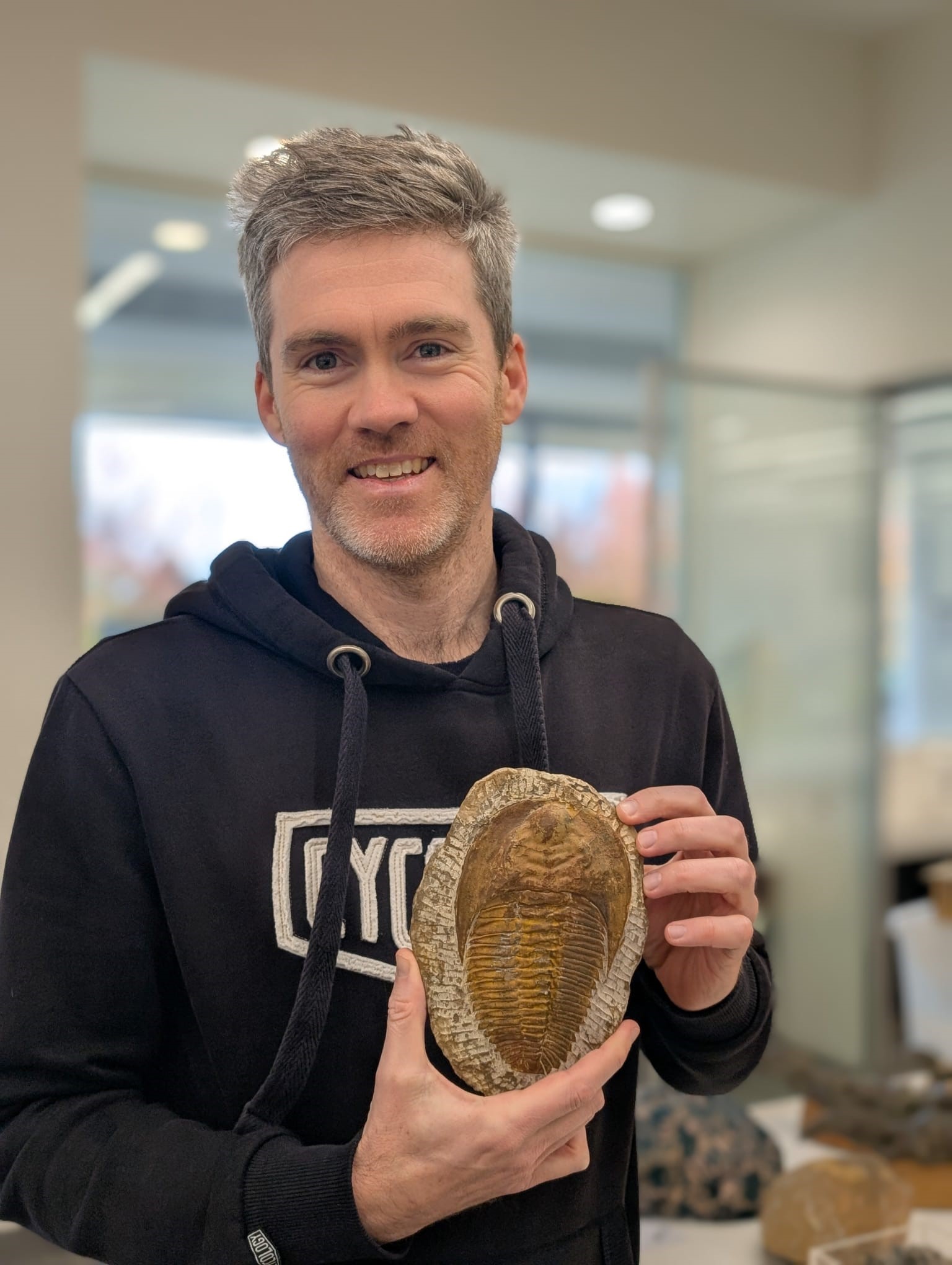
Image: Dr James Holmes holding a trilobite fossil
“Essentially, it will allow us to see exactly how these structures, for example, eyes or spines, are evolving through time, and this approach can also be used for other fossil groups with excellent fossil records.”
This is the fourth DECRA that UNE has received for palaeontological research, solidifying the university’s reputation as a leader in this space.
“Students also have the opportunity to participate in real palaeontological research like this DECRA project, so I think UNE is clearly the place to be if you’re interested in palaeontology,” he says.
“We have palaeontologists working across both the Zoology and Geoscience disciplines at UNE, and students can approach this area of study through either our Bachelor of Zoology or Geoscience degrees, depending on if they want a more biological or geological flavour.”
The project will get underway mid-2026 and will run for three years, in collaboration with colleagues at the American Museum of Natural History, Uppsala University in Sweden and Friedrich-Alexander University in Germany.


