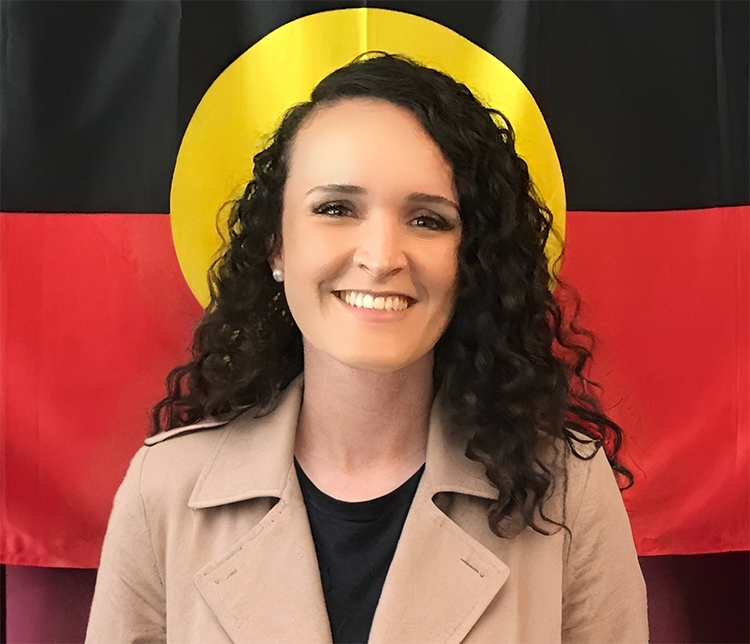
Andrea Londono - 2025 Alumni Rising Star Award
In recognition of her exceptional leadership in inclusive early childhood education, championing culturally and linguistically diverse children and families while mentoring educators.
There are times in professional life when years of personal experience, education and professional expertise beautifully synchronize. And the chorus is rich and powerful.
In a sector that has been under unprecedented strain this year, 2025 UNE Rising Star Andrea Londono’s contributions are an anthem of hope.
“Andrea reminds early childhood educators and aspiring professionals that they don’t need to have all the answers to make a difference. What matters most is their willingness to listen, learn and lead with their hearts,” says UNE Lecturer in Early Childhood Education Dr Somayeh Ba Akhlagh. “She is not only an effective leader but a genuinely human one.”
Since 2021, Colombian-born Andrea has been an early childhood pedagogy advisor with the not-for-profit Creche and Kindergarten Association, mentoring and supporting educators across more than 90 Queensland centres. A graduate of UNE’s Bachelor of Early Education and Teaching program, she has been recognised for her commitment to inclusive education that improves outcomes for culturally and linguistically diverse children and families.
That compassionate approach also extends to the bilingual educators with whom she works. “Andrea encourages them to draw upon their linguistic and cultural strengths, to integrate their own cultural knowledge and enrich early learning environments,” Somayeh says.
Arriving in Australia 14 years ago, Andrea experienced the challenges first-hand.
“Cultural and linguistic diversity is not just important to me; it’s who I am and has been part of my journey. I know how especially tricky it can be when a child or family cannot find the right words to communicate. But it is so important that they can connect with early childhood educators, so their voices are heard.
“When we see people as individuals and respect their needs and customs and integrate them into best practice, we do well for everybody.”
Appreciating and celebrating diversity in any community provides opportunities for all parties to learn and grow. And it need not be complicated.
“Many early childhood educators are already doing amazing work. It might mean celebrating a special day or a special person in the child’s life. Or organising the home corner in a kindergarten to include recipe books or cooking tools from other countries and kitchens, so children can engage with them in playful ways,” Andrea says.
Colleague Michelle Doig says Andrea possesses a remarkable ability to translate complex learning theories into practical strategies. “Her approach is both evidence-based and deeply empathetic, recognising that successful inclusion requires not just structural changes but also shifts in mindset and practice. She understands that effective education is a partnership between educators and families, and she works tirelessly to foster these connections.”
That dedication is exemplified by Andrea’s previous work with refugee and asylum seeker families as part of the Save The Children It Takes a Village program. When the playgroups she was organising failed to attract families, Andrea consulted the parents and redesigned the groups to better reflect their needs.
“Many had other priorities; they were more worried about having a roof over their heads and food to eat and some even feared us taking their children away. We transformed the playgroup into more of a community meeting, where children could come and play and parents could access a food bank and nappy bank. I realised that instead of having our own agenda about what’s best for the families, we needed to ask them and listen. After developing those relationships, they felt comfortable bringing their ideas.
“In the end we had seven playgroups operating around Brisbane, engaging hundreds of families, and they’re still running. It all changed because we turned the playgroup into a community resource.”
Working with two Victorian academics, Andrea has also been instrumental in improving the transition of culturally and linguistically diverse children to school. “Kindergarten becomes a very safe space for children and they and their families need support to better understand and face the challenges of starting school,” she says. “We still have families showing up to kindergarten or school at the start of the year having not enrolled their child and without a school uniform because they don’t know the process.”
As part of the Queensland Government’s Kindy Uplift program, Andrea has contributed to research programs exploring the joy that can be found through arts and outdoor activities. And her hopes for a more joyful, inclusive sector are modest.
“In future, I would like to see lower educator to children ratios, and better recognition from the public about the important work educators do in setting children up for success at school. I would also like to see them better paid and having greater access to quality professional development.
“Respecting and celebrating different cultures in early childhood education starts with the first peoples of Australia. Then we need to remember that 40% of the people in Australia today were born overseas or have a parent who was born overseas, and that people in many Australian households speak two languages or more. All this rich diversity needs to be brought to life, to remind children that it’s okay to be different.”


