As Australia continues to interrogate its colonial heritage, the face of research, education and healthcare is changing. Long-held attitudes and policies are being scrutinised; and Aboriginal ways of being and becoming are finding expression and agency.
But challenging systems that have traditionally othered Aboriginal and Torres Strait Islander peoples is not without its tensions, as proud Gamilaroi Calala Murri Yinarr woman Dr Reakeeta Smallwood can attest.
“We see well-intending researchers coming in with deficit thinking that sees Aboriginal people as broken and needing saving. It manifests itself in their research and plays out in subsequent education, and then prevents us from untangling our biases and assumptions and delivering culturally responsive care. We need to take our time, tread lightly and become comfortable in the uncomfortableness.”
Reakeeta is a registered nurse and Senior Lecturer in Nursing (Indigenous and Population Health) at the University of Sydney. She completed a Bachelor of Nursing at UNE while undertaking an NSW Health Aboriginal nursing cadetship and says she experienced first-hand the behaviour she now works to eliminate.
“After eight or nine years in clinical roles, I’d become quite angry – about the everyday racism that Aboriginal nurses face and the treatment of Aboriginal patients,” Reakeeta said. “There were workforce challenges around Cultural Safety, and I was constantly seeing Aboriginal people decontextualised. I became curious about how I could inform change in this precarious space.”
The power imbalance in healthcare poses constant threats to vulnerable Aboriginal people, both patients and practitioners. Through her own co-designed research, Reakeeta aims to amplify community voices and elevate Aboriginal knowledge systems, eschewing the “romanticised, museum archetype” of Aboriginality.
“Hospitals are very isolating and foreign places for Aboriginal peoples,” Reakeeta said. “Nurses are on the frontline and when any nurse puts on that blue uniform, they become part of a system that can cause harm. They are in a powerful position but also have moral and cultural experiences that can make it difficult for them to sleep at night. By critically reflecting on those experiences – and asking what is the right thing to do, as opposed to what the system tells you to do – we can develop new solutions and create a space that is welcoming and safe.”
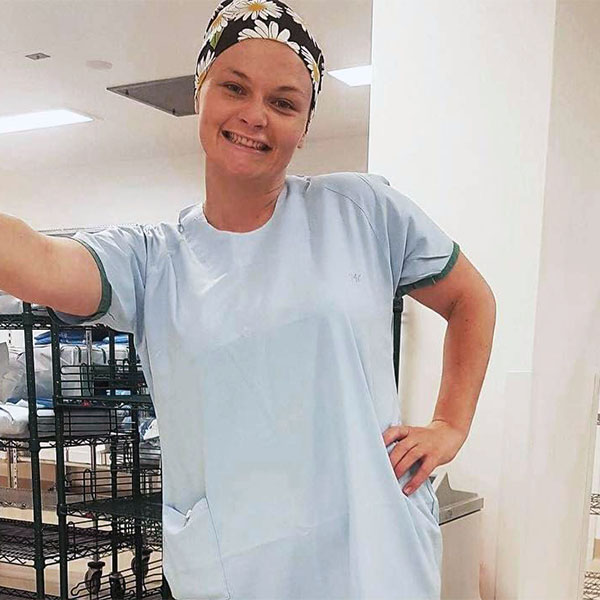 Reakeeta Smallwood
However, it’s not easy and change takes time.
“There will be a degree of cultural clumsiness, and we won’t always get it right, but cultural humility ensures that when you do get it wrong you use that moment to learn. There is learning and unlearning.”
Reakeeta had not yet turned 18 when she enrolled at UNE and would commute from her Tamworth home to the Armidale campus. There, she said, she learnt many valuable lessons, including “the stuff you need to know about what it means to be human”, to nurse with compassion.
“One of the highlights of my studies was being part of the student-led health clinics at the Coledale community [in west Tamworth]. About 3,000 people didn’t have access to a GP service and we had to learn what they wanted by engaging with them and listening meaningfully. It was a privilege to have them come and yarn about their health needs.”
Reakeeta’s PhD thesis examined the historical trauma of young Aboriginal people, and she has since collaborated on research into Aboriginal cardiovascular disease and breastfeeding, as well as broader social and emotional wellbeing. It has fed into the units she teaches, the new curriculum she helped develop, her research models and the hope she holds for improving actual health outcomes.
“Our Elders have been having these conversations since the time of colonisation. We are seeing a shift, but there is still a long way to go as we try to bring Aboriginal and non-Aboriginal people together, so we can move forward.”


