
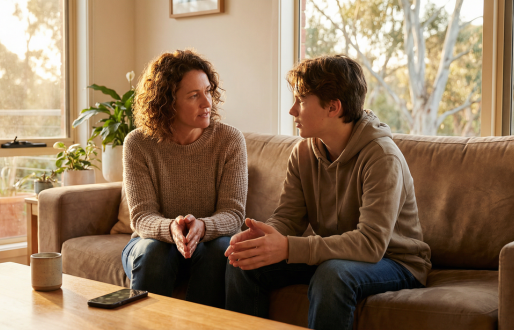
In the lead up to the world-first ban, on December 10, a University of New England (UNE) clinical psychologist has shared her top tips to help families navigate this change.
Dr Amanda Jefferys, Acting Director of the Clinical Psychology Program at UNE, is urging Australian parents to be prepared earlier for the change which could have impacts on mental health and social relationships for our young people.
Dr Jefferys said parents' concerns about their children's online safety are well-founded and it’s important parents are equipped with some useful tools to help their children navigate the changes.
"Social media is always a hot topic of conversation in our modern world. From fake news, AI profiles, the dark web, is it any wonder parents are concerned," Dr Jefferys said.
“Whilst social media can be useful, the world your child, teen, and young adult exist in really matters! Online bullying is rampant, scams on our young people cause so much distress, and our mental health has never been as exposed.
"We need to learn skills and strategies to lean into the change. Why are healthy friendships and relationships the core of our being? How do parents anchor their young people to manage our modern world?"
Dr Jefferys said Australia’s E-Safety commissioner has established a host of useful resources to assist parents in having conversations with their children and planning ahead of December 10.
Meantime, UNE Law Academic, Dr Julia Day said social media companies must now prove they have taken reasonable steps to prevent young people under the age of 16 from accessing their platforms.
“The concept of 'reasonableness' is often used as a test in the legal context,” she said. This means that there is some flexibility in terms of what the platforms need to do to adhere to the ban. The e-Safety Commissioner has been giving direction as to what may constitute 'reasonable steps' in this context.
“Social media platforms are defined under the Online Safety Act as allowing social interaction between two or more end users. Messaging services such as WhatsApp and Messenger Kids can still be used by people under 16.
“There are still many recorded benefits of using social media, such as creation of communities. Many influencers can have a positive impact on kids, especially if they promote self-help and positive behaviours. Children in rural and remote areas may particularly benefit from the creation of an online community.”
Top Tips to navigate the social media ban:
- Open conversations between parent or carer and young people are the best approach. Explain the Law’s aim is to protect, not punish.
- Discuss the change with the whole family and set shared expectations, or you may find it’s better to have separate conversations. Reassure your under 16s, little chats are often more effective than one big conversation.
- Lead with empathy, letting young people know you understand their feelings; discuss how they currently use social media and explore other ways to connect and belong, such as making plans to catch up with friends in person and exploring offline activities.
- Discover the resources available to help you through the change: ESafety has developed specific FAQs for parents and carers, including advice on dealing with conflict, reliance on social media for connection with important communities and services and alternative platforms and their risks.
- Build your community: make a note of your favourite influencers, streamers and celebrities (their account names/handles/gamertags) so you can look them up via a web browser. Find out whether they’re active on other age-appropriate channels.
- Protect your digital memories: take screenshots or download your favourite posts, chats, photos or videos (the platforms should provide instructions on how to do this, or you can check The eSafety Guide for help). Save them in a folder on a device or hard drive like a laptop or USB, or in cloud storage
- Think about winding back your social media use rather than waiting for the platforms to suddenly deactivate or remove your account.

