
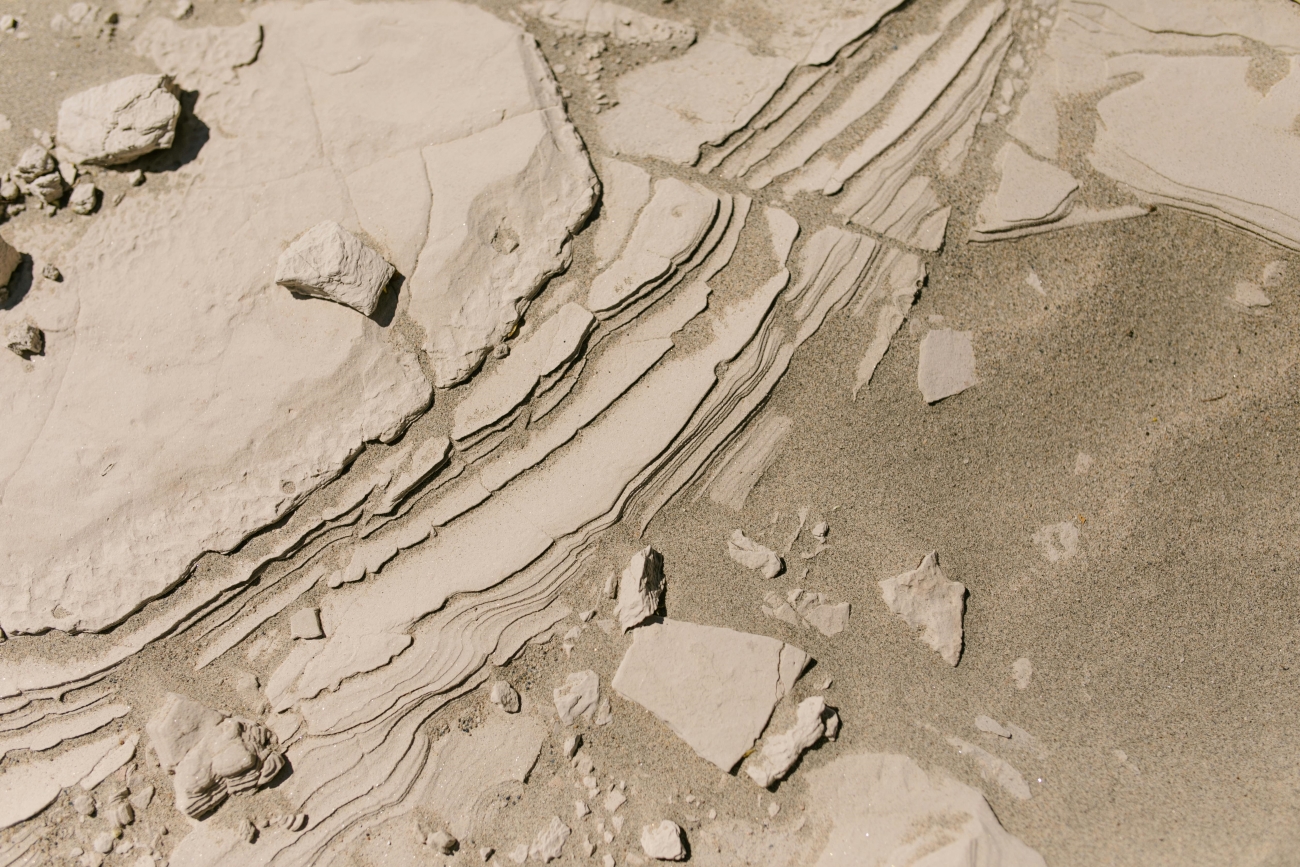
What is geoscience?
Geoscience is concerned with knowledge of planet Earth: its formation, structure and the processes that have shaped and are still shaping it. Those who study geoscience are equipped to work on the discovery and management of the natural resources that shape our human world, support environmental and climate-related initiatives, and deepen understanding of the origins and evolution of life.
Why should I be interested in geoscience?
There is a perception that geoscience is merely "just about rocks". But there is more to it.
Rocks are the source of minerals, metals, gems. The diamonds glittering on a necklace, the gold on the finger of a newlywed, the iron in steel for buildings, bridges and roads, lithium in electric car batteries, the rare earths in your smartphone and computer – all come from the Earth, and are available to us because of geoscience.
So is the phosphate fertiliser that helps food grow. And the knowledge of how landscapes are formed; why rivers flow where they do, how mountains are made, and how volcanoes erupt.
Rocks carry the stories of their own origins, and when they contain fossils, of our origins too. The study of fossils, and what they tell us about the evolution of life on Earth, is the field of palaeoentology – a branch of geoscience.
If you want to understand the foundations of our natural and human worlds, you need to understand rocks. So, rocks and fossils are definitely part of the curriculum when you study a UNE Bachelor of Geoscience.
What kinds of jobs are available to someone who has studied geoscience?
A UNE Bachelor of Geoscience is a full, rounded science degree with the option of two Majors – Geology or Palaeontology. This course provides grounding in knowledge that can take you into a range of careers. Work as a geologist can be incredibly varied ranging from mapping, exploration, data acquisition and interpretation, or even teaching or research. Here are careers many UNE Geoscience students tend to go into:
- Industry. Geoscientific data and expertise drive the responsible discovery, management and extraction of resources. Mineral and metal resources are increasingly sought after for solar panels, EV car batteries, regenerative agriculture and solar-passive buildings – and the screen you are reading this text from. Geologists were involved in the development of every one of those things. Most importantly however, mining for the future is becoming more focused on ensuring better balance between industry, the environment and communities, driving societal changes towards sustainability.
- Palaeontology. The story of how life began and evolved is still unfolding. Every year, new finds and new technologies enable us to better understand the incomplete story presented to us in the fossil record. Palaeontogists do this work, finding and studying fossils and the context they were found in, and use that knowledge to better understand how life evolved its extraordinary structures and capacities.
- Mapping. Geological mapping is central to understanding not just what is exposed at Earth’s surface, but also Earth’s subsurface. It is important for resource exploration, natural hazard risk assessment, infrastructure planning and managing environmental impacts. Geological mapping is constantly evolving as new ways of reading the Earth's surface become available, allied to new ways of presenting information. In addition to classic field-observation methods, geological mappers draw on information from satellites, drones, drilling platforms and other sources.
- Environmental management. Geoscience-trained environmental managers look at the foundations of our environments through disciplines like geology, hydrology, soil chemistry and microbiology. They use their knowledge to repair damaged landscapes, preserve valuable areas, or save places of high environmental value from damage.
Are there many jobs available to those with a Bachelor of Geoscience?
Australia has vast reserves of mineral wealth, but a critical shortage of geoscientists. The situation has grown so acute that qualified geoscientists are now one of the highest priorities for the nation's skilled migrant program. Less than two per cent of qualified geoscientists in Australia report short- or long-term unemployment.
In short, qualified geoscientists are in exceptionally high demand. And because UNE's Bachelor of Geoscience is a full science degree, your options are not limited to traditional geoscience careers – you will have the theoretical knowledge and the analytical skills to enter into a range of careers.
Why should I study geoscience at UNE?
- UNE has maintained a geoscience program in teaching and research since 1939, making it the one of the oldest geoscience disciplines in eastern Australia.
- UNE's Bachelor of Geoscience is the only degree of its type in Australia that can be studied online. This recognises that many Bachelor of Geoscience students are already in the workforce and need further study to lift their skills without the burden of attending university full-time. The online study option works equally well for anyone who, for whatever reason, cannot commit to studying on-campus. Online students do not miss out on the benefits of in-person learning; however, regular Intensive Schools provide opportunities for field trips and practical activities.
- Those who study on-campus at Armidale will find themselves in the middle of a vast natural laboratory, the Northern Tablelands of New South Wales, where they will get a world-class perspective on the natural processes that shaped Earth and its life.
- UNE's approach to teaching geoscience is highly practical and hands-on. Classes and tutorials teach you important skills using equipment you will later use in the field, and field trips are offered across NSW and overseas.
- Teaching methods are highly flexible, to ensure that people from diverse backgrounds have access to the world of geoscience.
- UNE's Bachelor of Geoscience lecturers have good connections to industry and government, and can help students understand and move towards their chosen career pathways.
- UNE’s Palaeoscience Research Centre is the largest of its kind in Australia, covering almost every facet of palaeontology – from the first complex animals to dinosaurs.

