
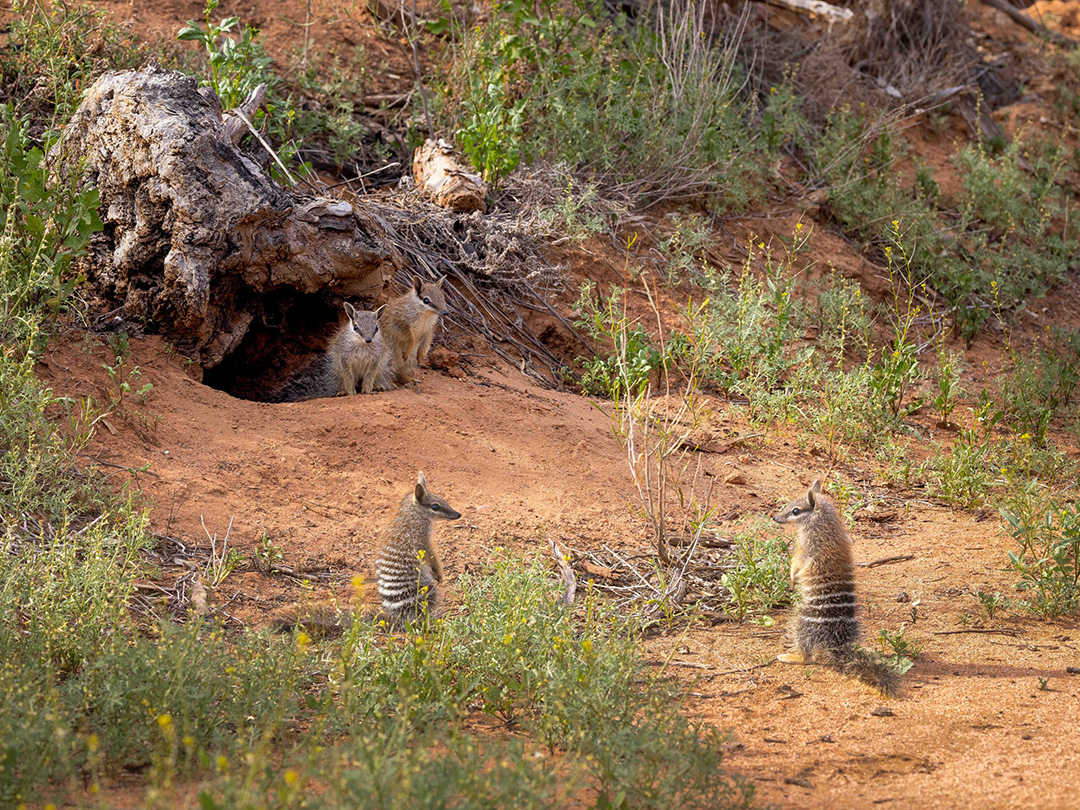
The recent discovery of baby numbats in NSW has conservationists celebrating a crucial milestone in the fight to save one of Australia's most endangered marsupials.
“It’s incredibly exciting and very welcome news,” says Dr Zenon Czenze, a Senior Lecturer in Vertebrate Zoology within the UNE School of Environmental and Rural Science.
“These new babies show that when conservation managers choose the right habitat to create safe havens, the adults will breed. It’s real, on-the-ground proof that evidence-based conservation works.”
Numbats are critically endangered, with NSW populations existing only within predator-proof enclosures.
“There's no way to sugar-coat it, numbats are in trouble," says Dr Czenze.
However, the recent discovery has provided a glimmer of hope for the native critters.
“It means the adults are settling in, breeding, and that the population is on the right track.”
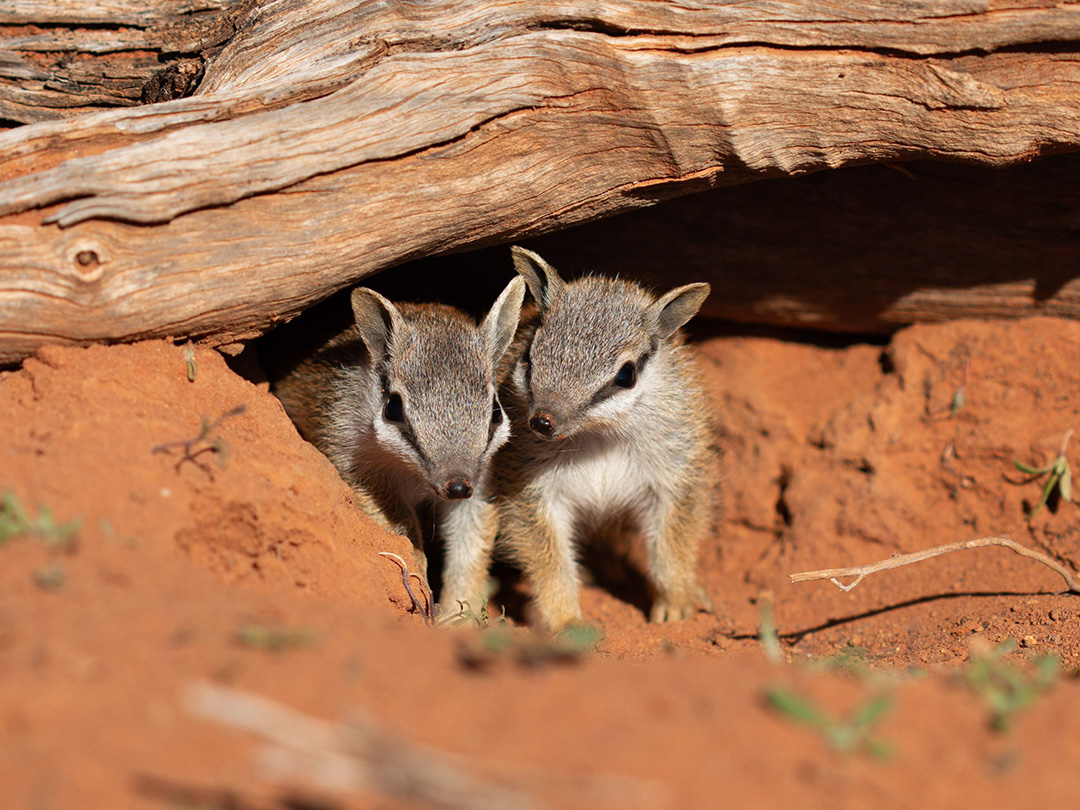
Image: Two baby Numbats were found playing outside their burrow at Scotia Wildlife Sanctuary, about two hours outside of Mildura. Image credit: Julie Kern/AWC
While Dr Czenze wasn’t involved in the NSW discovery, he has been working alongside UNSW’s Professor Katherine Moseby, Dr. John Read and PhD student, Courtney Adams, in Secret Rocks, South Australia.
Together they have been monitoring a translocated population of numbats and investigating their habitat preferences.
"Numbats are diurnal, and when it gets too hot during the middle of the day, they like to have a little siesta in a burrow, hollow log, or debris pile,” says Dr Czenze.
“This is really important because during the summer, very hot temperatures and heatwaves can really threaten these animals, and they need to choose napping sites that don't overheat.”
By finding out this information, the team can come up with evidence-based recommendations for future translocation sites to give the species the best chance at survival.
“If we can determine where a numbat likes to have its afternoon snooze, we can help determine whether a new translocation site is going to give the population the habitat they need, not just in the present but in the future as the world warms due to climate change.”
Numbats are iconic, but they’re just one part of a fascinating desert ecosystem full of species that need our help.
For those interested in joining the conservation efforts, Dr Czenze would love to hear from you.
“If you’re a student interested in how desert animals cope with current and future heatwaves, you should reach out as it’s one of the major themes in my research group,” he says.
“Numbats are iconic, but they’re just one part of a fascinating desert ecosystem full of species that need our help.
“If spending time in 40+ degree weather isn't for you then you can always consider donating to conservation efforts around the country and most importantly, vote for policies that prioritise climate action and biodiversity conservation.”


