
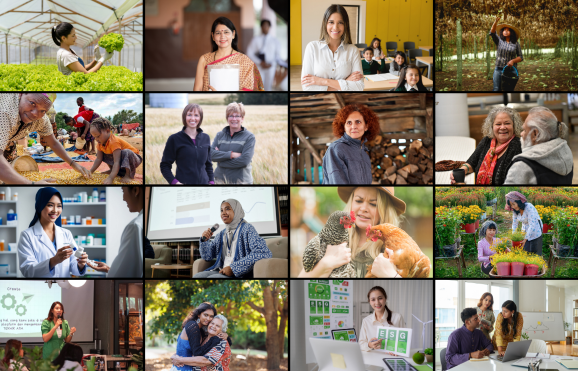
From food security to climate resilience, rural women underpin community strength worldwide, yet their contributions remain under-recognised, writes UNE Chancellor, Dr Sarah Pearson.
Around the world, rural women are the cornerstones of their communities. Their contributions to household incomes, health and education, family stability, food security and the building of climate resilience are significant – but often overlooked.
Even in a progressive country like Australia, we don’t adequately recognise the vital roles that rural women play – as graziers and heads of natural resources enterprises, essential medical personnel, business and community leaders, educators, and the sturdy backbone of volunteer organisations and rural families. Or the challenges they face – including geographical isolation, high rates of domestic violence, fewer opportunities for career advancement and poorer health.
Even in a progressive country like Australia, we don’t adequately recognise the vital roles that rural women play.
It’s even worse overseas.
Discriminatory laws, religion and social rules in many developing countries still deny women land and labour rights. Gender inequality plagues daily life – limiting women’s physical movement, choices and job options, and even their access to clean water and sanitation.
The United Nations tells us that:
- Women make up 43% of the agricultural workforce globally , but only 20% are agricultural landholders;
- About 30% of rural women give birth without a skilled health worker;
- Girls from poor rural households are significantly more likely to be married before the age of 18 than girls from wealthy urban ones, and in some countries over half of girls from poor rural families will be married as children;
- Only 2% of the poorest rural women in low-income countries complete upper secondary school; and
- Most of the 3.7 million people not connected to the Internet tend to be poorer, less educated and rural women and girls.
That’s why the International Day of Rural Women remains important and why we must continue advocating for basic human rights for women near and far.
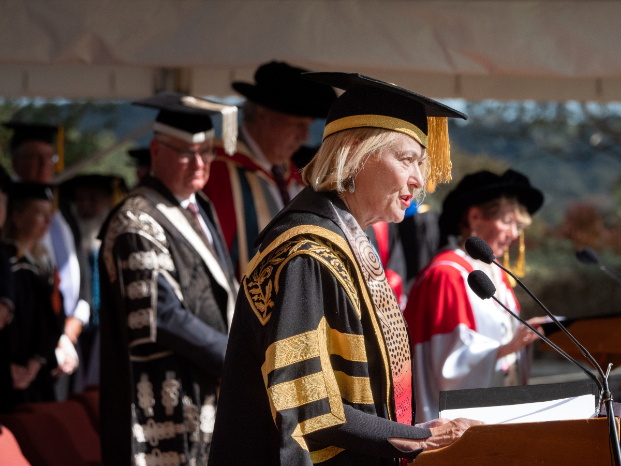
Education as a powerful driver of change
In Australia, we have rural women role models in abundance. Change-makers who are promoting regional development, reawakening First Nations languages, pioneering regenerative agriculture, scaling business solutions and uplifting young people. But we still need to see more of them in decision-making and leadership roles, better policies to protect and empower them, and global action to ensure women the world over enjoy similar access to basic services and opportunities.
Education and training are at the heart of this transformation. And I am very proud of what our institution – the University of New England – has been doing for decades, through our teaching, research and “soft diplomacy”.
Nationally, UNE provides women in rural and regional Australia with the chance to learn and grow, wherever they live and whatever their circumstances. Many have gone on to become community champions, industry leaders and national icons.
Our researchers – many of them women – also lead the world in fields like farm succession, livestock genetics, soil science, pest and natural resources management, methane reduction in livestock, and law. Their work is shaping the future of farming, the fortunes of rural communities, and directly improving the lives and livelihoods of women.
A global legacy of support
Internationally, UNE has a long history of providing allyship to our sisters abroad – through teacher education, and agricultural research and extension stretching back to the 1960s. By preparing the next generation of teachers, and boosting production systems and career options, we are improving the position of women today and the prospects for countless girls of tomorrow. With education comes confidence and economic security, which has profound implications for the health, advancement and cohesion of entire populations.
Since 2019, under contract to the Australian Centre for International Agricultural Research (ACIAR), UNE has been teaching management and leadership skills to scientists – many of them women – in developing countries. Our partnerships equip them with the technical skills and expertise to coordinate research teams and assume positions of leadership. Meryl Williams Fellows, especially, are now moving to the forefront of their institutions and communities.
Further, our UNE alumni are rolling up their sleeves to advance gender equity. Assuming senior roles in organisations like the Asian Development Bank, the United Nations and tertiary institutions, their practical contributions are helping to sustain some of the world’s poorest people, including women and girls.
Among the advocates working to strengthen global laws for food production and the sustainable use of natural resources are UNE academics. In this governance space, their contributions ensure women farmers are included in agricultural extension, land allocation and climate adaptation – all critical to a healthy and equitable future.
When rural women thrive, everyone thrives
By elevating the roles of rural women, UNE researchers, educators and graduates are having a truly global impact. They are offering women a seat at the table, boosting their financial security and living standards, and access to basic human rights. This is fundamental to meeting Sustainable Development Goals that recognise women’s needs for “equal access to land, technology, markets, and decision-making”.
This year, on the International Day of Rural Women, I salute the many people within our UNE community highlighting gender inequity and working to remedy it. Who promote innovation and leadership models that ensure rural women have the opportunities and rights they deserve, and the support they need to thrive. Because when rural women thrive, everyone thrives.
- University of New England Chancellor, Dr Sarah Pearson

