
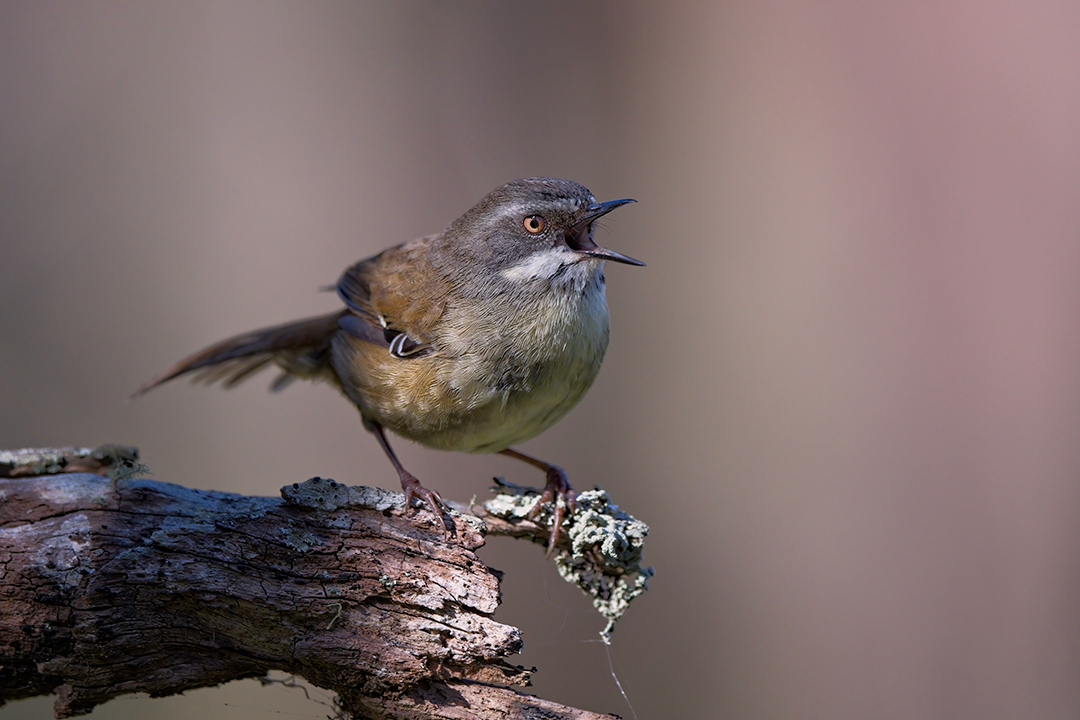
Researchers have revealed that human-generated noise in urban environments is negatively impacting how animals communicate, with some species forced to modify their calls or risk going unheard.
The study, which was published in Nature Ecology & Evolution, analysed urban and natural soundscapes in 139 locations across six continents, including at the University of New England’s (UNE) Armidale Campus and Newholme Field Laboratory, to better understand how humans are affecting our natural acoustic landscapes.
“We found that human noise is likely to compete with the production of natural sounds, potentially masking them from intended audiences or forcing animals to vocalise around our noisy periods,” says Professor of Animal Behaviour Paul McDonald from UNE’s School of Environmental and Rural Science, who worked on the study alongside UNE Professor of Wildlife Ecology and Conservation Biology, Karl Vernes.
“For example, the low, constant rumble of traffic noise in an urban area might drown out a singing bird, so to be heard it would either need to sing at a different frequency, or perhaps louder to make its song audible to its audience.”
The research revealed a striking contrast between natural and urban acoustic environments. Natural soundscapes followed predictable daily and seasonal patterns that animals have evolved to rely on, while urban areas were found to generate unpredictable, persistent noise that disrupts these established patterns.
Urban noise removes the predictability needed for these important dialogues, making critical behaviours like mating, feeding and predator avoidance more difficult.
"Sounds are produced by animals for a reason, which is to reach their audience and influence behaviour," Professor McDonald says.
"For example, bird song might be to attract a mate, whereas whale sonar is produced to safely navigate through an environment to avoid obstacles or find prey.
"Competing against background noise makes this both more difficult and less effective for signalling animals.”
However, predictability of interference can help animals work around the disturbances.
Professor McDonald says this is one reason why bird chorus is so strong at dawn, as there is less competing background noise from the natural environment at this time.
However, as human populations expand and disturbances grow more prominent and unpredictable, the broader impact of urban soundscapes on animal behaviour and communication is a growing concern.
"Urban noise removes the predictability needed for these important dialogues, making critical behaviours like mating, feeding and predator avoidance more difficult.”
The research is part of the larger LIFEPLAN project, which is an international initiative documenting the current state of biodiversity across the globe to accurately plan and predict future scenarios. The project is expected wrap up late 2025. Read more about it here


