Online home practicals introduced during COVID lockdowns last year are back by popular demand - and necessity - at UNE. And one of the unexpected benefits could be healthier students.
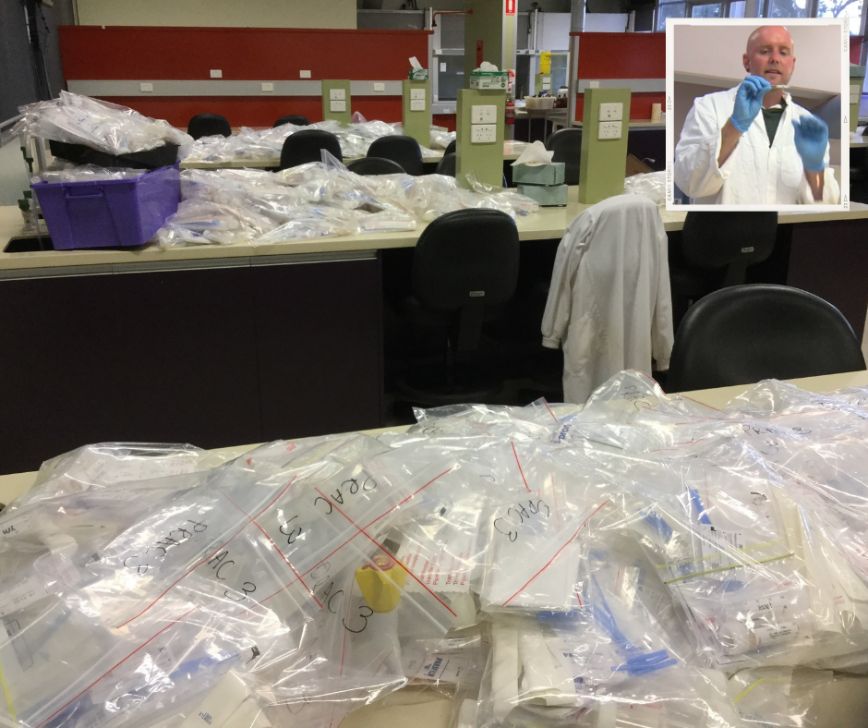
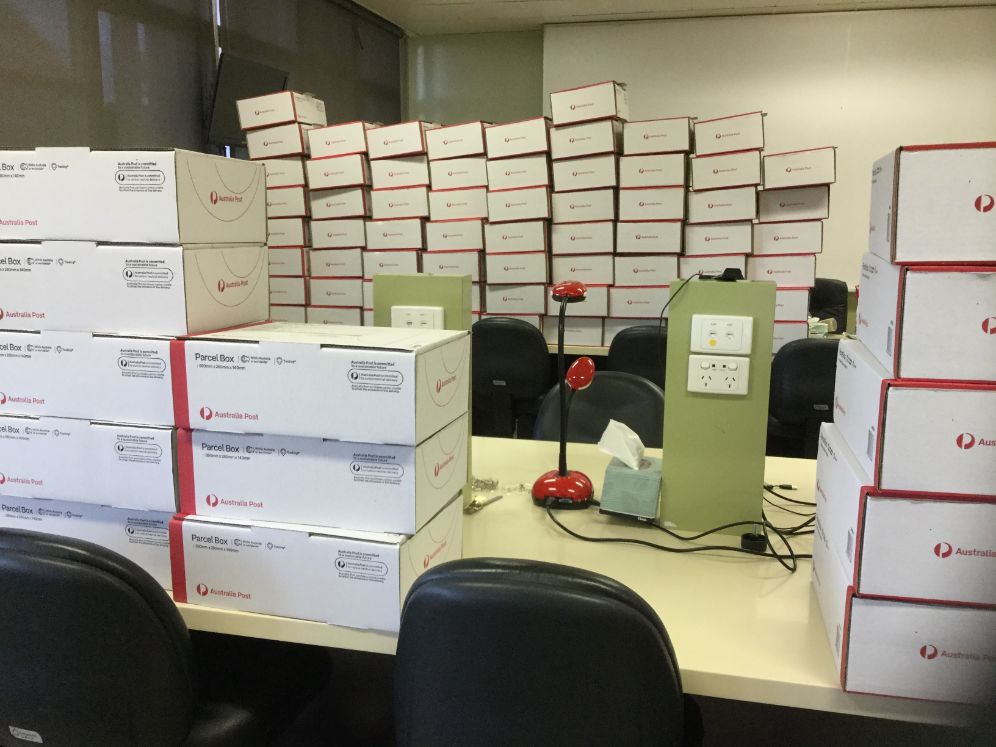
When fundamental Microbiology practicals could not continue in-person a year ago, members of the enterprising UNE Biomedical Sciences team moved swiftly to ensure students didn't miss out on vital learning. This meant a frantic four weeks of planning, testing and preparing "take-home packs" containing all students needed to carry out a home experiment.
It was no mean feat. By then, student numbers had swelled from about 75 students to more than 100, and it needed to be an exercise that was safe, engaging and instructional.
Senior Lecturer in Biomedical Sciences, Dr Gal Winter, had the perfect solution. She was already making sauerkraut - said to be good for ensuring gut health - as part of her passionate iso-cooking, so she helped staff to design and film a practical experiment to make the cabbage-based condiment, which conveniently combines many of the technical skills students needed to develop.
Sauerkraut is an ancient food preservation technique and a perfect vehicle for learning.
"Sauerkraut is an ancient food preservation technique and a perfect vehicle for learning," says Unit Co-ordinator for Introductory Microbiology, Dane Lyddiard, who was last year working as a learning developer and only joined the Biomedical Sciences team full-time during the 2021 COVID lockdown himself.
"You simply cut up cabbage, add salted water and close it up in a jar to let it ferment. Bacteria already present on the cabbage leaves in small quantities grow, so students can monitor the acidity of the liquid and count the number of organisms growing over time."
Breaking it down
But the lessons were not nearly so simple to replicate outside the laboratory environment.
"Everything had to be individually and accurately weighed out - the agar media and saline - into little vials for posting out to every student, and we then broke the experiment down into individual steps and filmed each one to demonstrate safe practices and techniques," Dane says.
"We had to ensure we had the right number of pipettes and disposable loops and spreaders. It took an insane amount of work, especially addressing work health and safety issues, and we ran out of media and even had to make our own at one stage."
Students reported that they appreciated being able to continue learning important skills at their own pace in the comfort of their own homes.
Microbiology is a very hands-on course and we are determined to impart fundamental skills, despite any ongoing COVID restrictions.
"Students evaluated the activities and overwhelmingly reported that they were valuable to their learning, helped to build their confidence in important techniques and were also a lot of fun," Dane says. "It was a real highlight of the unit for some students."
Now sauerkraut is again on the menu, courtesy of the continuing lockdowns.
"Microbiology is a very hands-on course and we are determined to impart fundamental skills, despite any ongoing COVID restrictions," Dane says. "Many of the techniques we use have changed very little from Louis Pasteur's day and they are vital to learning outcomes. So we'll again be offering sauerkraut instruction as part of the Introductory Microbiology unit.
"I'm really pleased we were able to find a solution last year that worked so well and can be re-adapted for other purposes this year."
So novel was the approach that Dane and Gal presented it in June at the Australian Society for Microbiology's annual education conference. It also inspired UNE colleagues teaching Biology and Pharmacy to look at ways they could offer in-home practical experiments, too.

