
Can examining the DNA contained in pollen help us to better manage food crops?
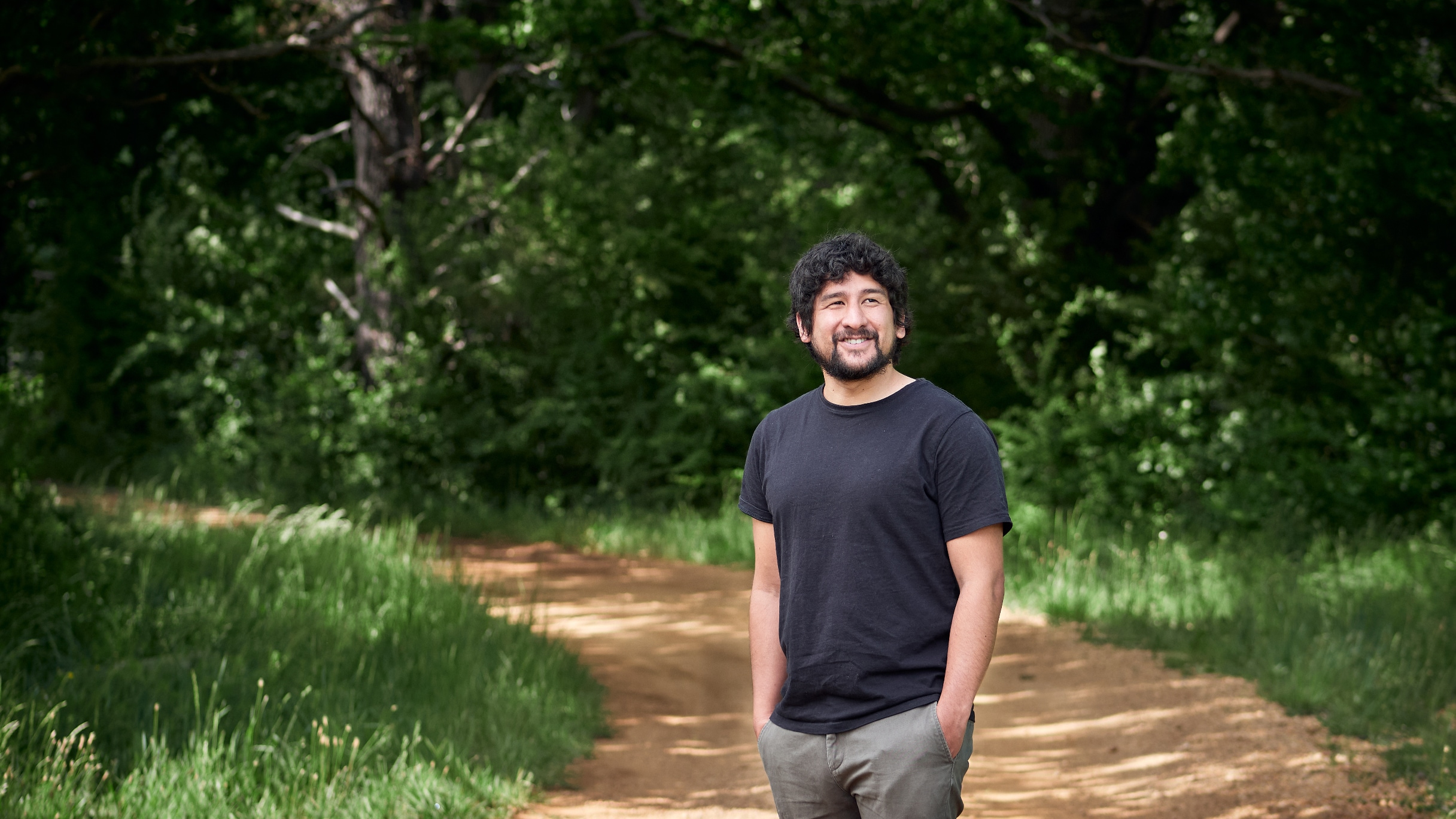
Juan Lobaton Garces thinks the answer is almost certainly yes, which is why the Colombian student's UNE doctoral thesis is integrating the sciences of ecology and molecular biology in search of a better understanding of how pollination works.
His thesis research, now nearing its conclusion, has shown for the first time that molecular technologies can identify which varieties of fruit tree have been visited by bees as they gather pollen. Previous methods could only establish the family of plants, or a few species that the pollen was harvested from.
This, and other discoveries by Juan, have the potential to change how orchardists lay out their tree crops.
The discipline Juan trained for, molecular biology, interested him, but he came to realise that he might need something else. "I couldn't see where I could create some impact with it," he recalls.
At a past conference, he was unexpectedly gripped by a presentation on insect pollination of flowering plants. Pollination's profound importance to all forms of life fascinated him. He saw an opportunity to put his training in molecular biology towards advancing scientific understanding of the priceless work of the world's pollinators.
After finding some pollination-related work with colleagues that drew on his molecular biology skills, Juan began a global search for a doctorate that integrated his established knowledge with his new passion. The internet led him to UNE's Dr Romina Rader, Senior Lecturer in Community Ecology and one of the world's leading pollination researchers.
"When I first wrote to her, Romina responded that she couldn't help me at that time. I dropped the idea for a while, and a year went by – and then Romina wrote asking me if I would like to do a PhD with her and Dr Rose Andrew, exploring new molecular technologies to study plant pollinator interactions."
Interrupted but supported - and undeterred
Three years ago, Juan packed his bags and left his native Colombia to "travel around the world on the wings of bees" to Armidale, a place he had never heard of.
"I found this amazing university where everyone helps me, and I am given all the tools and support I need to succeed," he reports.
His work is supported by a UNE International Postgraduate Research Award (UNE IPRA) and CSIRO top-up scholarships, which are offered to top-quality international candidates undertaking research degrees at the University.
When the COVID pandemic overturned his PhD timeline, Juan was one of a number of international PhD students who UNE supported with a six-month extension to their scholarship, supplying living costs and incidentals like health insurance.
Acknowledging and better understanding pollen flow dynamics between plants and pollinators is essential to manage and conserve wild plants and ensure the productivity of food crops. Juan's first paper, in which he describes how he used molecular methods to track pollen flows in apple orchards, has been written and submitted to a journal.
"This work is novel and exciting because most previous pollination molecular work of this kind has been conducted in a lab in the absence of actual pollinator visits under field conditions," Dr Rader observed.
Combined with other observations gained from his molecular-level tracking of pollen across orchards, Juan is hopeful that his work will eventually help orchardists design new plantings using patterns that maximise cross-pollination, and thus increase the yield and efficiency of their tree crops.
Meanwhile, although COVID restrictions mean he is unable to return to Colombia, Juan has settled happily into a different style of life to his homeland (and to England, where he also lived and studied).
"It takes a lot of courage to live far from home. But I don't regret at all my decision," he says.
"I have found good friends, and they are with me in science, sports, and music. I have made a life here. I am loving life in Australia."

