
UNEBS Seminar of Dr Tasmiha (Tina) Tarafder and Dr Md Parves Sultan (UNEBS)
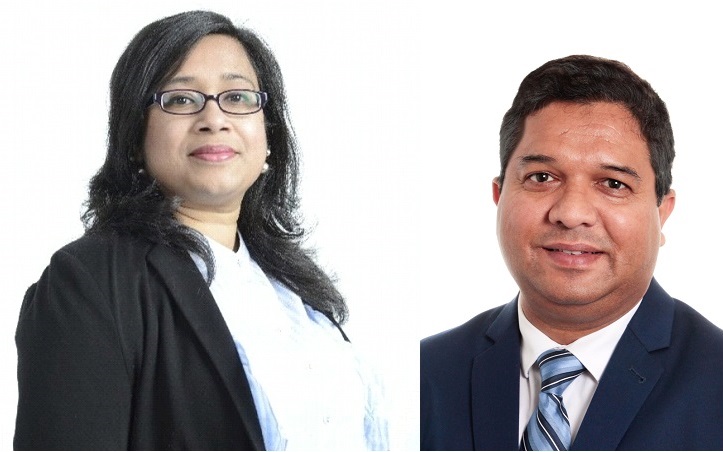
Seminar of Dr Tasmiha (Tina) Tarafder and Dr Md Parves Sultan (UNE Business School)
Date: Fri Nov 21, 2025 11:00 am
Location: W40 LT2 EBL Building and Zoom
Contact: Emilio Morales emilio.morales@une.edu.au 2031
Leveraging Social Media and Digital Platform for Women-Led Micro and Small Enterprises” and “From Market Segmentation to Advancing the Theory of Planned Behaviour”
The UNEBS R&RT Committee cordially invites you to the Seminar of Dr Tasmiha (Tina) Tarafder and Dr Md Parves Sultan (UNE Business School). The session will be held on Friday 21st November at 11:00 AM in W40 LT2, EBL Building, and through Zoom: https://une-au.zoom.us/j/85052331067?pwd=ENw7n0qgajyfXxIRx8r7j0njj6y9bA.1
(Password: 558930). Light food will be offered.
Abstracts
Topic: Leveraging Social Media and Digital Platform for Women-Led Micro and Small Enterprises: Evidence from Bangladeshi Digital Entrepreneurs
Micro and small startups are often viewed as vulnerable due to factors like limited funding, skills, resources, and ineffective marketing and planning. Their ability to adapt to market changes is also hindered by their small size. This vulnerability is often heightened in women-led micro and small enterprises, especially those from South Asian ethnic backgrounds, which face additional cross-sectional disadvantages. However, digital entrepreneurship offers new opportunities for agile women-led MSEs. Despite these benefits, digital platforms pose unique challenges that are not well-covered in current research. Many women from South Asian backgrounds enter entrepreneurship primarily through social media and informal social capital, sometimes unaware of the full range of emerging opportunities and threats. This paper highlights insights from 10 Bangladeshi female entrepreneurs to explore current and future opportunities and challenges, providing implications for digital entrepreneurs and managers of MSEs.
Keywords: Digital entrepreneurship, Micro and small enterprises, Bangladesh, Women, social media.
Topic: “From Market Segmentation to Advancing the Theory of Planned Behaviour: A Progressive Multi-Study Contributions to Understanding the Australian Organic Food Consumers”
Across six interconnected studies, this presentation builds a thorough and ongoing understanding of how Australian consumers think, feel, decide, and act regarding organic food. The work begins by highlighting a key paradox: despite growing awareness, organic food purchases stay low because of poor communication, knowledge gaps, and consumer mistrust. Early conceptual work views brand communication, consumer knowledge, and trust as essential factors that can turn awareness into action, emphasising the need for clearer, value- focused messaging and stronger cues of authenticity. Evidence shows that poor organic labelling damages confidence and reduces purchases, underscoring the importance of communication across all studies. The diversity of the Australian organic market shows that consumers differ significantly by values, lifestyle, retail choices, and self- image. This segmentation clarifies that organic buying is not a single behaviour but a mix of motivations, barriers, and situations that marketers must address with targeted strategies. The research then enriches behavioural theory by incorporating perceived organic food value into attitudes and actions, revealing that health, environmental, and safety values greatly shape opinions, intentions, and actual behaviour. A cross- country comparison deepens this view by showing how cultural and income differences affect these processes. The next research phase tackles the ongoing gaps between intention and behaviour, as well as perceived control and action, demonstrating that communication, satisfaction, and trust are key moderators that help convert strong intentions into real purchases. The work further progresses with an S–O–R- based model showing that both controlled and uncontrolled communication sources trigger hedonic and utilitarian attitudes, which then influence behavioural intentions- closing the loop between external signals and internal psychological responses. Future work will integrate digital tools like QR codes, provenance cues, community food hubs, behavioural interventions, and sustainability initiatives that align well with UNE' s strengths in future food systems, regional hubs, consumer trust, and sustainable farming.
Dr Tasmiha (Tina) Tarafder is an accomplished academic and business lecturer with extensive experience across Australian higher education institutions. She holds a PhD in Management from RMIT University and specialises in human resource management, business analytics, and digital learning innovation. With a strong focus on student engagement, equity, and academic integrity, Dr Tarafder has led curriculum development, quality assurance initiatives, and mentoring programs that have significantly improved student outcomes. A published author and researcher with over 18 papers and book chapters, she brings deep expertise in analytics, educational governance, and inclusive pedagogy. Beyond academia, she actively contributes to community empowerment and multicultural education through her volunteer work and public engagement.
Dr Md Parves Sultan serves as a Senior Lecturer in Business at the UNE Business School. He holds a PhD in Marketing from CQU, Australia, in addition to a Bachelor of Business Studies with Honours and an MBA in Marketing from RU, Bangladesh. He also obtained an MSc by Research from RAPU, Japan. With over twenty years of academic experience, he has occupied senior teaching and leadership positions at various universities across Australia and Bangladesh. Dr Sultan’s research interests include sustainable consumption and energy, service quality, branding, higher education, entrepreneurship, and the role of artificial intelligence in learning. He has supervised numerous PhD and Master’s students and has been recognised with multiple awards for teaching and research excellence. His Google Scholar profile can be accessed here: https://scholar.google.com.au/citations?user=fL9m8gcAAAAJ&hl=en
