
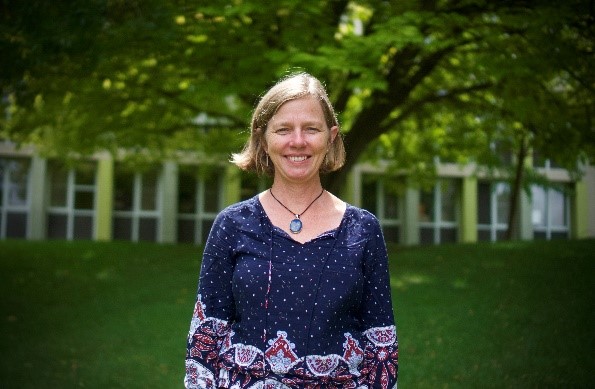
Dr Louise Morley
Senior Lecturer - School of Health
Phone: +61 2 6773 4537
Email: lmorley4@une.edu.au
Biography
Dr Louise Morley is a Senior Lecturer in Social Work at the University of New England, Armidale, whose academic work is deeply rooted in a career of meaningful direct practice with some of the most vulnerable people in our communities. Before moving into academia, Louise worked across a range of challenging and rewarding practice settings in Australia and the Republic of Ireland, including child protection, sexual assault counselling, oncology social work, disability services, and community development — experience that continues to shape everything she does as a researcher and educator.
A particular passion of Louise's is community-based practice in rural and remote contexts. She has worked directly in small rural communities on domestic violence prevention, drawing on community development approaches to build local capacity and create more responsive, connected systems of support for people experiencing harm. This commitment extends to her interest in social work's role in disaster response and recovery — an area she explores in her coordination of HSSW 303 Rural Social Work, a unit that examines the unique challenges and strengths of rural communities, including how social workers can support communities to prepare for, respond to, and recover from disaster. This teaching is informed by collaborative research with students and colleagues that has contributed meaningfully to the field of social work education in disaster management (Doyle et al., 2023).
Her research sits at the intersection of two closely connected threads. The first centres on the lived experiences of practitioners working within complex organisational systems, and what these experiences mean for practice. Drawing on her doctoral research — which examined the emotional labour of social workers supporting vulnerable children and families — Louise has continued to explore how systemic pressures, organisational dynamics, and relational demands shape the way practitioners are able to do their work. She is particularly interested in what enables social workers to practise with humanity and integrity under difficult conditions, and what gets in the way. This work speaks directly to questions of workforce sustainability, professional identity, and the conditions needed for genuinely relational, ethical practice.
The second thread concerns the application of public health frameworks to child protection and family welfare. Louise is part of a prominent national research team exploring how a public health approach can shift the focus of child welfare systems — from reactive crisis intervention towards earlier, more preventive responses that build community capacity and reduce harm at a population level. This includes recent collaborative work on preparing child protection workforces to take on the mantle of prevention (Russ et al., 2025), as well as research into sexual violence and assault in rural and remote communities (Jones et al., 2026) — an area where Louise brings both scholarly expertise and direct practice experience. Her broader publications span feminist social work practice (Orr et al., 2024), trauma-informed relationships in social work education (Morley & Crawford, 2025), and the professional ethics underpinning social work practice.
Louise is a qualitative researcher working within constructionist and interpretivist frameworks, with particular expertise in narrative inquiry, discourse analysis, and collaborative research methodologies. She actively supervises Higher Degree Research students and maintains strong research partnerships across disciplines and institutions.
As an educator, Louise brings this same warmth and commitment to her teaching. She is passionate about helping students connect knowledge, skills and values in ways that translate into genuine, person-centred practice. She encourages students to think critically and to see themselves as agents of positive change — not just for the individuals and families they work with, but for the broader systems and communities around them.
