
Precision at Speed: How AI is Reshaping Material Discovery
The challenge
Chemical innovation underpins our economy and quality of life — from the batteries powering electric vehicles and homes to life-saving medicines and the fertilizers that feed the global population. Yet, discovering high-performance molecules is a complex undertaking that requires navigating a virtually infinite chemical universe. Computer simulations significantly accelerate this discovery process, enabling researchers to explore these enormous chemical spaces and predict molecular performance before moving to resource-intensive laboratory testing. However, accurately simulating the behavior of atoms and electrons requires solving incredibly complex quantum mechanical equations. These simulations have long faced a fundamental trade-off: they could be precise enough to trust, or fast enough to run — but not both.
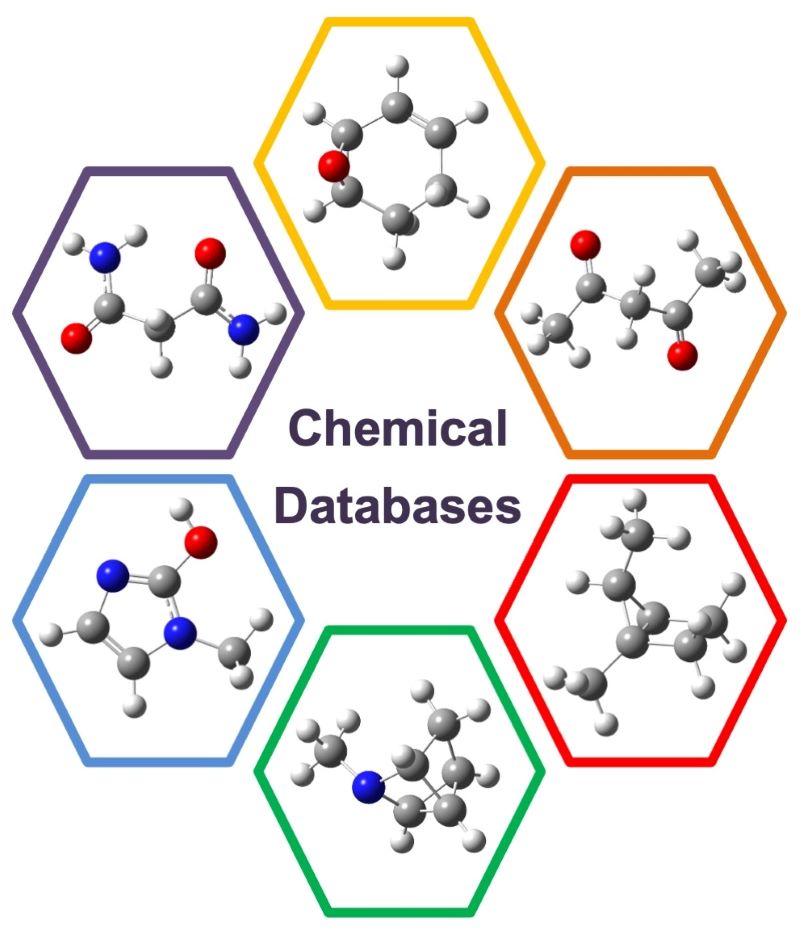 The solution
Researchers at Microsoft Research AI for Science and the University of New England have applied deep-learning techniques to dramatically improve the accuracy of Density Functional Theory (DFT), the ‘workhorse’ of modern quantum chemistry. The key idea behind this research was that AI could ‘learn’ the complex laws of quantum mechanics if given enough high-quality chemical data. By training AI models on vast datasets of highly reliable chemical properties, this groundbreaking research has overcome long-standing weaknesses in traditional DFT calculations. These AI-enhanced simulations can now predict how molecules will behave with much greater confidence, while remaining fast enough to be practical.
The impact
This breakthrough allows researchers to explore millions of chemical possibilities on a computer before ever stepping into a laboratory. As a result, industries can design better batteries, cleaner industrial processes, more efficient catalysts, and safer pharmaceuticals with unprecedented speed. Just as AI has transformed how we process information and analyse data, it is now accelerating the discovery of new materials and transforming how modern chemical technologies are developed.
Web Links:
- The MSR-ACC/TAE25 database: Accurate Chemistry Collection: Coupled cluster atomization energies for broad chemical space (Nature, Scientific Data, 25 April 2026)
- Microsoft Research Blog: Breaking bonds, breaking ground: Advancing the accuracy of computational chemistry with deep learning
- Chemical and Engineering News: Machine learning helps improve accuracy and efficiency of small-molecule calculations
