The trauma and heartbreak are unfathomable.
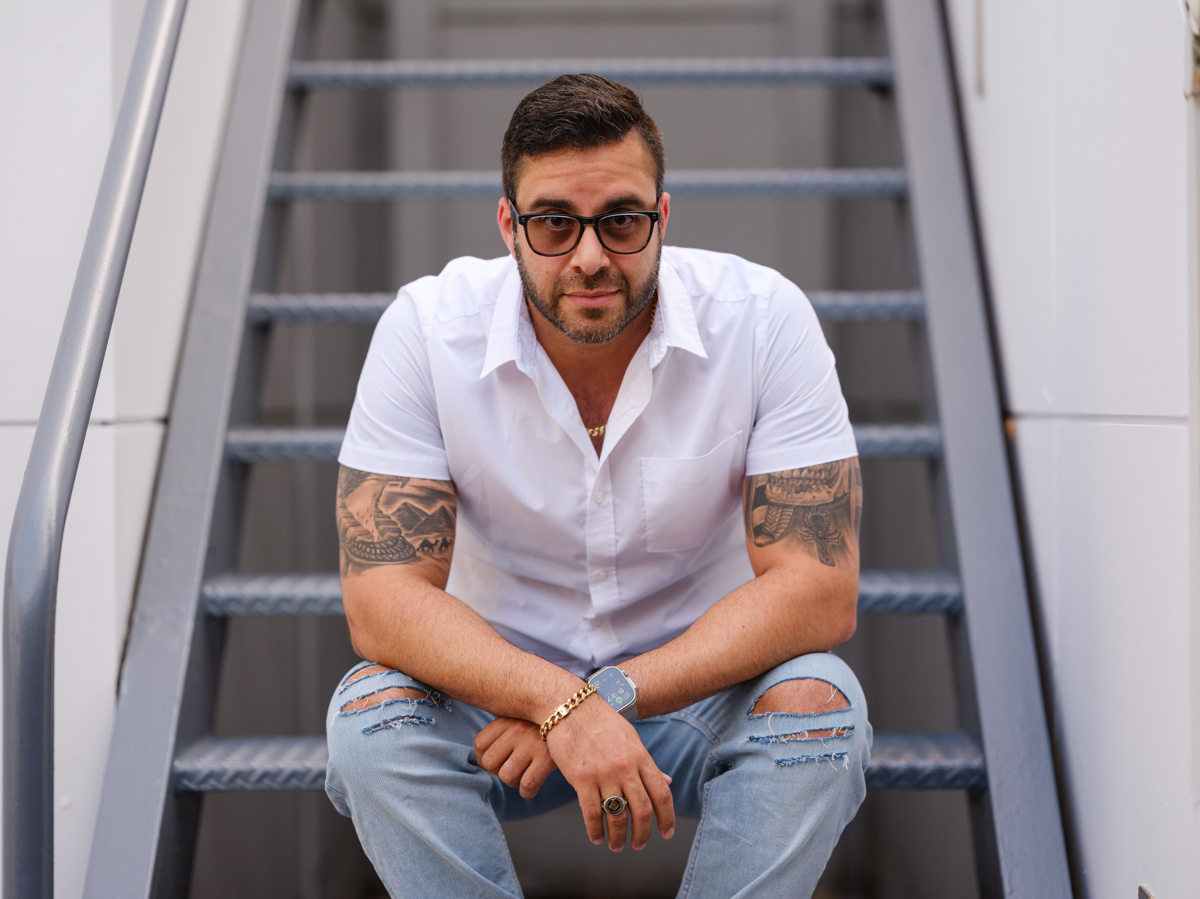
At 14, Michael Elwan’s father – a former general in the Egyptian Air Force suffering PTSD – had a stroke, leaving him blind. Michael took on his care, in addition to that of his mother, who struggled with an undiagnosed mental health condition. After his father passed away two years later, Michael would care solely for his mother for another decade, until her death by suicide.
“My mother refused to go to a psychiatrist, so I went myself, at the age of 16,” Michael remembers. “He was so cold. He told me that she likely had schizophrenia, that there was no cure, and she needed to take medication for the rest of her life or be permanently hospitalized. I was not going to see her locked up, so I gave her the medication every day from then on.”
But there was no such treatment for the public shaming he was subjected to.
“When my mother died, I not only lost her but everybody else, because speaking about mental health and suicide was taboo in Egypt,” Michael said. “People would avoid me in the street and neighbours refused to talk to me.”
Following his mother’s death, Michael moved to Australia with a very clear purpose – to become a mental health and suicide prevention advocate and employ his experience to help others. But first he needed to educate himself.
A Bachelor of Accounting taught him about budgets, financial management and analysis. Then a Master of Business Administration introduced Michael to organizational leadership and strategy. To consolidate the practical skills he already possessed, Michael undertook a Master of Social Work at UNE, and subsequent qualifications focused on organisational psychology and business leadership.
“I then made a deliberate decision to pursue an entry level role as a mental health support worker, so I could learn from the ground up,” Michael said. “They were the best days of my life. Having supported my Mum and Dad, it was like second nature.”
Michael was soon elevated to more senior roles in the not-for-profit sector and last year established his own consultancy – Lived Experience Solutions (LEXs), offering both counselling and advisory services.
Today, this dynamo is undertaking a PhD, under the supervision of Manna Institute stalwarts Russell Roberts and Belinda Cash, as well as Tania Pearce from UNE. He also sits on numerous boards and is an inaugural member of the Mental Health Commission of WA’s Lived Experience Advisory Group (LEAG).
Not surprisingly, the subject of Michael’s PhD is deeply personal – Lived Experience in leadership and how people can best use their experiences to enact change. And making change, at the national and international policy level, is his primary goal.
“For many, many years I was self- stigmatizing myself,” he said. “I did not disclose my experience because I did not want to be labelled, but it felt like I was hiding. By speaking out, I hope others will become proud of their Lived Experience, embrace it and see it as a strength.
“I want to see them continue to be successful in leadership roles, so that they, their colleagues, their clients and their organisations all benefit. When these people – people like me – are in leadership positions in the workforce, they provide the tangible proof that recovery from mental health challenges is real. It gives others hope.”


