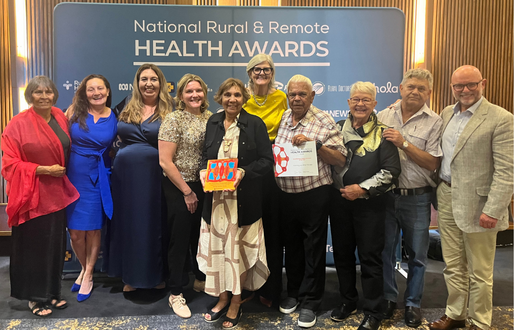
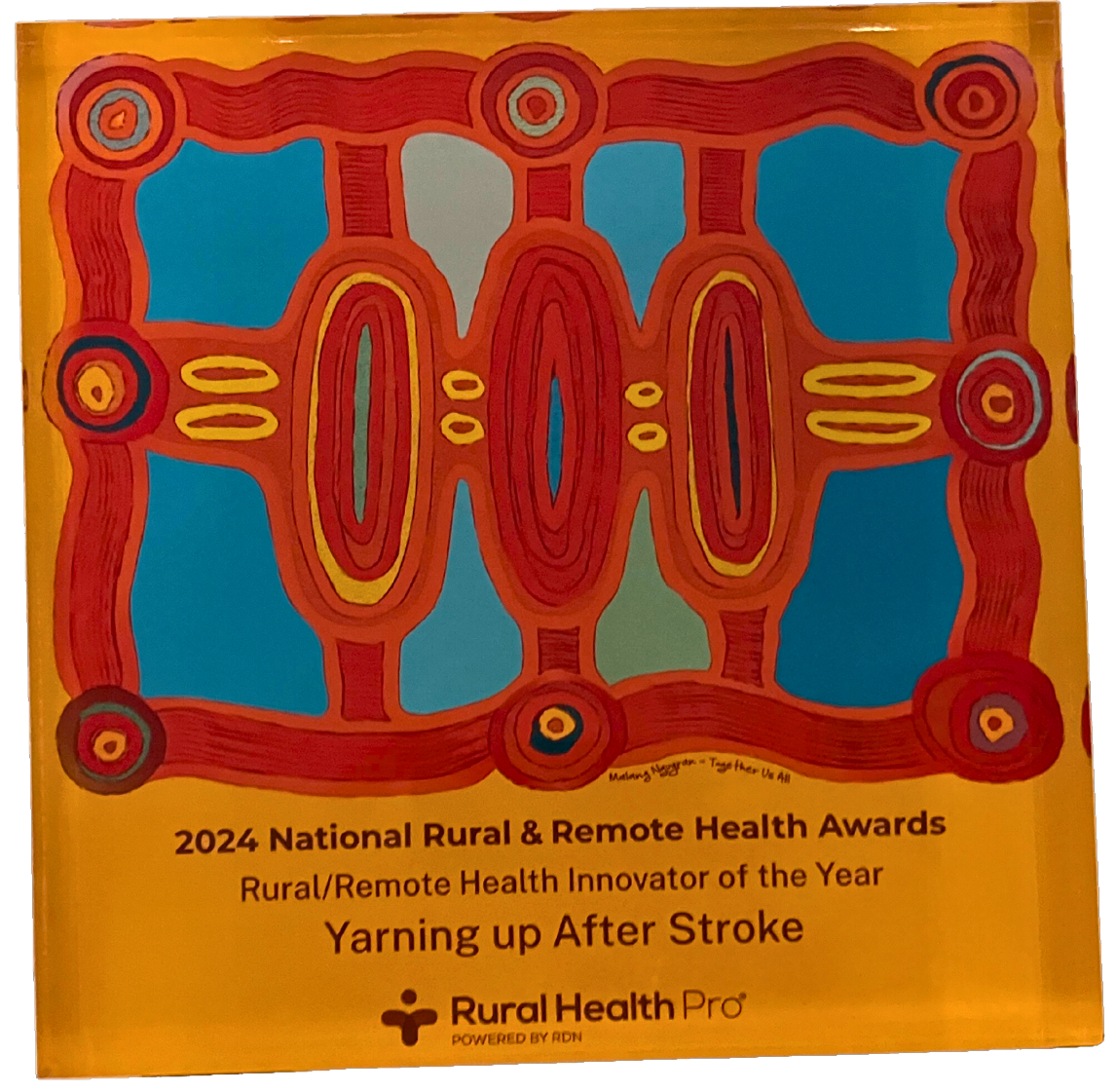
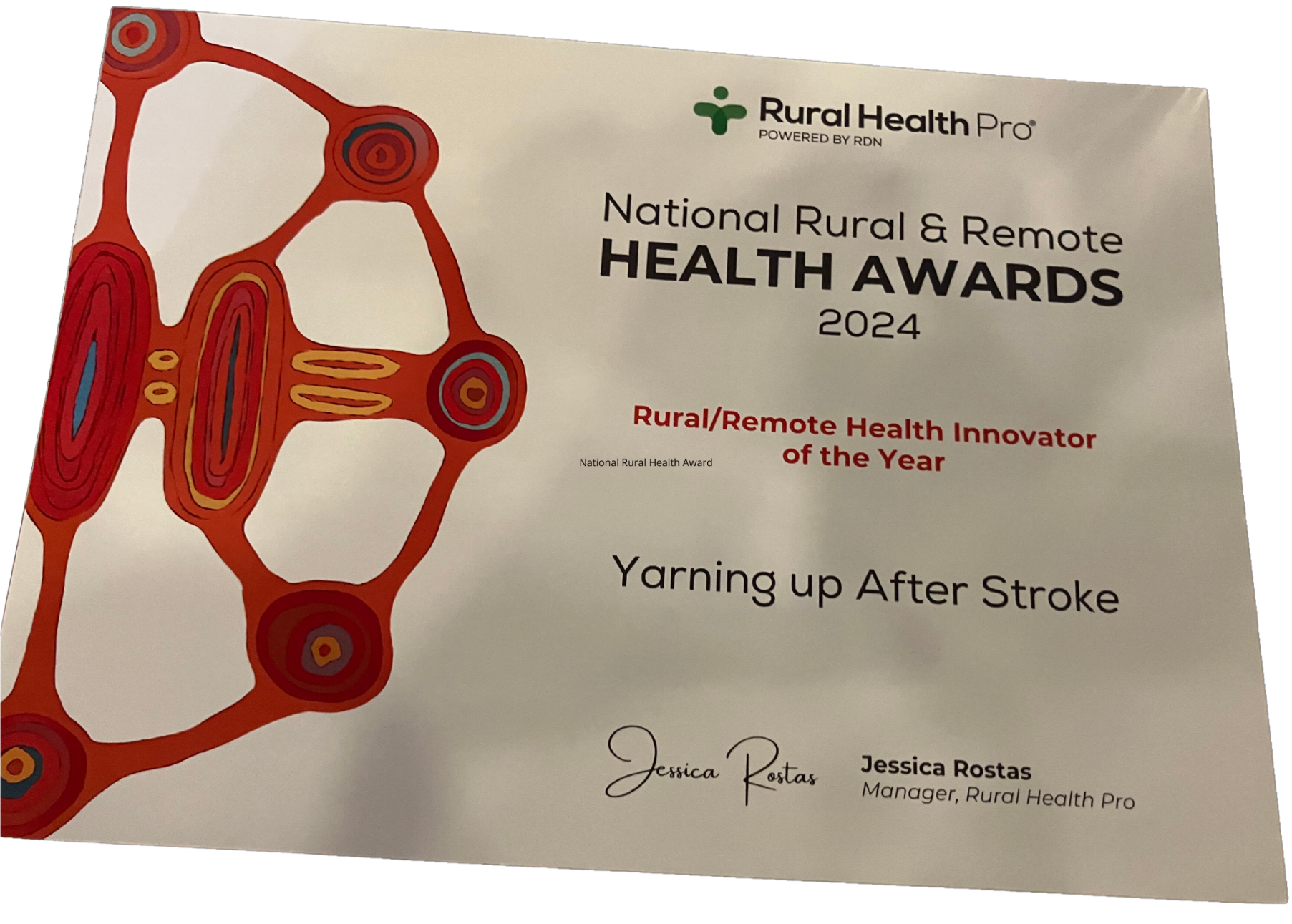
A ground-breaking effort to tackle the impact of stroke with Aboriginal and Torres Strait Islander communities - the Yarning Up After Stroke program - has received the National Rural Health Award for Innovation and become a shining example of culturally sensitive, community-driven health research.
The initiative, led by the Gomeroi Community, including Elders Uncle Neville Sampson, Aunty Audrey Trindall and Kooma man, Uncle Joe Miller, and a team of researchers from the University of Newcastle, the University of New England and Hunter New England Local Health District is redefining stroke prevention and recovery solutions with Aboriginal and Torres Strait Islander people.
Professor Kim Usher, one of the program’s lead researchers from the University of New England, said the program’s success could be attributed to its collaborative approach.
“This project wouldn’t exist without the help and guidance of local Indigenous communities,” she said.
“Their input shapes everything we do. It’s not just about collecting data—it’s about building genuine partnerships and ensuring the voices of Aboriginal and Torres Strait Islander people are central to the process.”
It’s about building genuine partnerships and ensuring the voices of Aboriginal and Torres Strait Islander people are central to the process.
The Yarning Up After Stroke program is supported by clinician, community leaders and members, and a multidisciplinary team of researchers and health workers, all working together to address the unique challenges faced by Indigenous stroke survivors. From culturally safe service delivery to building resources for prevention and recovery, every aspect of the program has been informed by the lived experiences of local communities.
Uncle Joe Miller, a Kooma man from Western Queensland and a stroke survivor himself, plays a vital role in bridging the gap between researchers and the community. His lived experience and cultural knowledge provide invaluable insight, and his tireless advocacy ensures the program remains deeply connected to those it serves.
 Joe’s recent recognition as the Northern Tablelands Volunteer of the Year underscores his contribution.
“It’s fantastic. I feel so proud, not just for myself, but for everyone involved in the program,” Uncle Joe said.
“This award shows how much we’ve achieved in addressing stroke, especially within Aboriginal communities. Until we started this, nothing was really being done for us.”
Dr Heidi Janssen, working alongside Professor Chris Levi and other clinical researchers from the Hunter New England Health District’s Hunter Stroke Service, agreed that meaningful engagement with local communities has been the cornerstone of the program’s success.
“This Community-Led project relies on building and maintaining the trust and support of the Aboriginal Community and team members that we have been working with since 2020,” she said.
“The relationships we’ve built with the Community are fundamental to why we have made the progress we have. We continue to listen, learn and be guided by the Community Elders and members.”
The relationships we’ve built with the Community are fundamental to why we have made the progress we have.
The program’s culturally sensitive approach, rooted in the tradition of yarning—a conversational method of sharing stories—has helped to create a safe space for participants. It allows people to share their experiences with stroke while contributing to a broader understanding of the barriers they face in accessing care and recovering.
Joe said this approach empowered Aboriginal men and women to speak openly about their health.
“We’ve done so much research work here, and it makes me real proud to see Aboriginal people stepping up, sharing their stories, and contributing to something bigger,” he said.
The program’s National Rural Health Award has also led to greater recognition, which both Joe and Kim believe is critical for securing future funding.
“Winning awards like this gives us hope when applying for grants,” Joe said, “you need resources to engage communities and carry out research. This puts us at the forefront. It shows we’re the real deal—not just regional workers, but national award winners recognised by our peers.”
It shows we’re the real deal—not just regional workers, but national award winners recognised by our peers.
“The input of local communities and the dedication of our team of researchers have been the driving force behind this project,” Kim adds, "it’s about working together, respecting one another’s expertise, and creating solutions that are culturally appropriate and sustainable.”
 For Joe, his work with the program is deeply personal. After years of advocating for stroke awareness, he unexpectedly found himself experiencing the very condition he worked to prevent.
“I’ve had five strokes and a heart attack, but I’m still here. That bloke upstairs must be saying, ‘Not yet.’ So, I’m still at it,” he jokes.
“All my life I’ve been involved in something—child protection, fetal alcohol syndrome, you name it. But this program is special. It’s not a one-off. It’s ongoing, and we’re only just getting started.”
The program’s future lies in its continued partnerships with Indigenous communities and the ongoing contributions of its dedicated researchers. “This isn’t just about stroke,” Kim said. “It’s about building stronger, healthier communities by listening, learning, and acting together.”
Joe said, “Next year will be another milestone. We’ve got more people getting involved, more stories to share, and more work to do. And I’m proud to be part of it.”


