Darren Phillips
Experience + expertise = empathy
23 March 2026
A UNE Social Work degree, combined with hard-earned lived experience, equip Darren Phillips to help some of society’s most vulnerable.
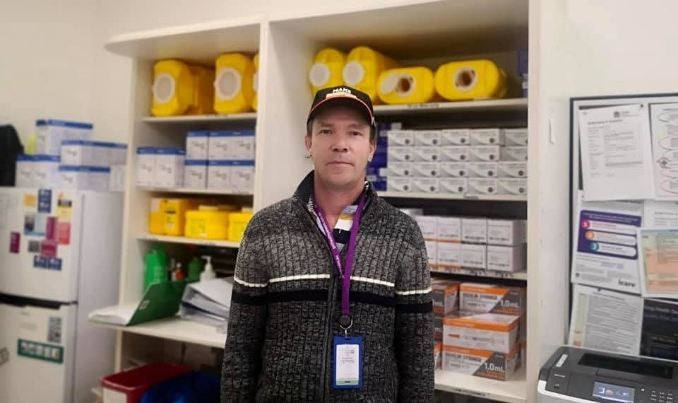 Image: Darren Phillips
“My journey is a very interesting one,” he says. “I started using drugs at a young age, when I was 13 or 14. I didn’t finish high school and by the age of 27 I was homeless and my life was falling apart.
“I ended up spending a year in a residential rehabilitation centre run by the Salvation Army, where most of the workforce is peer-led. I realised that I had made some pretty poor choices, so I then went to TAFE and did a Certificate IV in Alcohol and Other Drugs because I wanted to help others.”
Enrolling in the Bachelor of Social Work at UNE in 2011 – one of six men in a cohort of 80 – was a natural progression for the then 36-year-old. “That was never really a choice; to me, social work became a calling,” Darren says. “I wanted to help one person to get to where I was.”
He worked full-time as a case manager at a drug and alcohol rehabilitation centre while studying full-time in his first year, then combined study with being a stay-at-home Dad the following year. To accommodate the degree’s work placements, Darren took casual positions and worked full-time in the latter stages of the degree.
“One of the most important things I learnt at UNE is that my job as a social worker is all about building trust and relationships through conversations,” says Darren, who earned a medal for academic excellence on graduation and had his thesis (on consumer participation in specialist homelessness services in NSW) published in the journal International Social Work.
Today, Darren is a Dual Diagnosis Senior Clinician with a mobile, multidisciplinary treatment team operating out of the Camperdown Community Mental Health Service. This NSW Health team supports clients with mental health disorders and substance use disorders concurrently, helping them to live in the community.
“We start the process while they are an inpatient and follow them up in the community for as long as required,” Darren says. “It’s a long process. Most people don’t want to stop using, so I do a lot of harm reduction and health promotion and work closely with drug health nurses, a psychiatrist and drug health consultants.
“Sometimes it makes me cry and sometimes it makes me joyous. But I get the clients and have a level of empathy that others can’t have – because I know what it’s like and also know what it’s like to get better.
“I had the field expertise, as I like to call it, but the UNE degree enabled me to advance very quickly into a senior clinician role. And it’s allowed me to specialise, to work with people who have treatment resistant schizophrenia and comorbid substance use disorder. There are only four others in the state who do what I do.”
