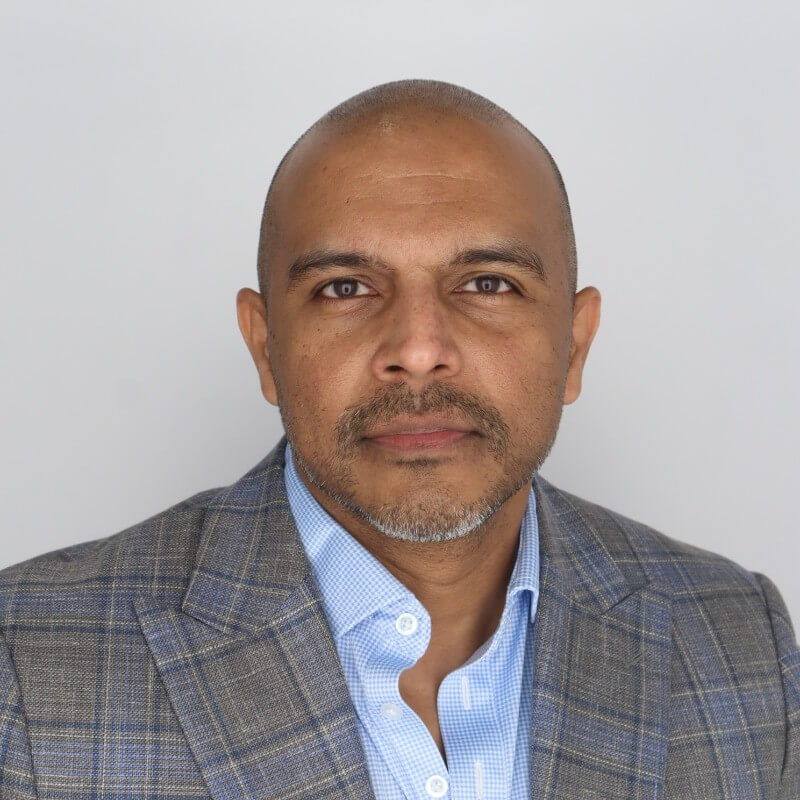
Nik Mohan took a Bachelor of Economics from UNE, added studies in IT and multiplied his career prospects. Moving from Armidale to Melbourne, then Singapore and Seattle, the global tech executive has worked for several of the world’s most influential tech companies and is now Global Alliance Lead with Google.
Describe your experience of studying at UNE.
Coming from Far North Queensland, UNE made sense for me. The campus, the colleges, the diversity, the city and its surroundings all collectively came together to provide a warm and welcoming place to study. The overall experience was very positive. The smaller cohorts and direct access to lecturers certainly helped. Truth be told, at that stage I had no idea what I really wanted to do, but I knew an economics degree would give me a good foundation to build on.
In what ways has the UNE qualification equipped you for your career?
The qualification taught me to look at the bigger picture – the macro forces shaping everything from geopolitics to economic conditions. Even though I didn’t pursue finance as a career, this foundation provided a solid quantitative perspective, especially in understanding both domestic and international markets. And then there was the social aspect. Such a diverse group of students taught me great interpersonal communication skills.
How did you see economics and IT complementing one another in your career?
Something I would encourage all students to do is to keep informed of market trends. When I was graduating, the IT wave was really taking shape. One of my favourite quotes is from Steve Jobs who said: “You can’t connect the dots looking forward, you can only connect them looking backwards. So you have to trust that the dots will somehow connect in your future”. I saw Economics as giving me the business/commercial fluency and IT the systems and execution with tech specialists. Pricing, marketplaces, platform incentives, network effects – economics is the native language of all of this.
This dual expertise accelerated my early career, leading to impactful roles with T-Systems, Symantec, Australia Post and Ping Identity. Success in the Australian market served as a springboard for me to relocate to Singapore to join Microsoft, where I took on a series of Asia Pacific roles. I then served as a Global Director with Microsoft from its headquarters in Seattle, Washington.
How would you describe the professional world in which you work? What are the major trends in global tech and the major challenges that companies like Google face?
There’s certainly no escaping the impact AI is making in the world today. As AI moves from novelty into more mainstream business, we are starting to see real innovation in industry coming through. But there are still many challenges – public trust, security, the tension between speed and responsibility, the speed at which the technology is evolving and, of course, the much-debated energy requirements and environmental footprint.
The key trends I see right now are agentic AI and AI moving into actual workflows and business processes; compute and energy infrastructure; and security, including regulation and sovereignty, reshaping how global tech operates.
What does a Global Alliance Lead for Google do?
Hyperscalers like Google and many independent software vendors like SAP and ServiceNow, for example, have their solutions implemented by Systems Integrators. These companies implement, deliver and manage these solutions in organisations. As an Alliance Leader, I am responsible for the overall business alignment between two (or more) companies across partnerships, strategic initiatives and the overall go-to-market.
I didn’t know what this field was when I was at UNE and I’ve now been a part of it for 15 years. It reminds me of what [former Meta chief operating officer] Sheryl Sandberg said: “Careers are a jungle gym, not a ladder”. What makes it really interesting is that you are at the intersection of strategy, technology, relationships and commercial outcomes.
How do you view the importance of entrepreneurialism and innovation in society today?
Innovation and entrepreneurship aren’t just for startups – they are a mindset just as relevant to big companies (intrapreneurship). Innovation develops from having a growth mindset, comfort with failure and a bias to action (particularly outside your regular job description). You need to be comfortable with backing yourself even when the outcome is not guaranteed. With the tools available today, anyone can be an entrepreneur without massive outlays of capital.
You are a mentor to start-up founders and an accessibility advocate. Why are these things important to you?
It comes down to being able to give back and pave the way for others. I had help in my own career from various people and I want to do the same – whether that’s providing introductions and opening doors, removing barriers or just passing on advice.
One of the initiatives I’m most proud to have been a part of was the Accessibility Enabler Program we launched at Microsoft, which aims to provide internships, mentorships and training for people with disabilities. This resonated with me because I believe technology should be available to and work for everyone.
What message do you have for other UNE graduates?
You don’t need to have it all figured out. I certainly didn’t. My path was far from a straight line. I didn’t have a multi-year plan, but the dots made sense looking backward. Stay curious, say yes to the unfamiliar, take the opportunities as they come and trust that the effort you put in now will connect and lead to something bigger, even if you can’t see it.
The second thing I would say is to not hold back in reaching out to your UNE alumni. Whether it’s for an introduction or some advice, reach out and start growing your network.


