
It's June 2026 and Russia’s war with the Ukraine is grinding well into its devastating fourth year. Both sides continue to trade long-range missile and drone strikes, adding to the hundreds of thousands of military casualties and civilian deaths.
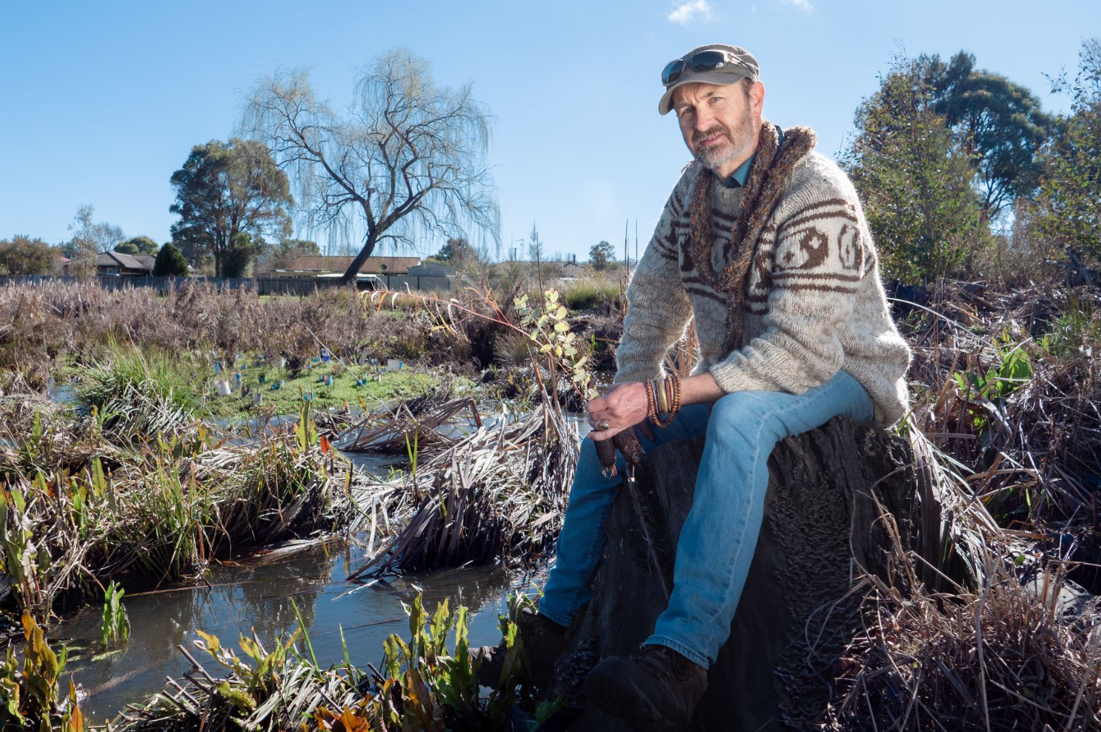
On the other side of the world, artist, committed peace activist and teacher of Peace Studies at UNE, Associate Professor Marty Branagan faced an ethical dilemma. In an ironic turn of events, the International L.N. Tolstoy Peace Prize Foundation and Russian Historical Society had named his book The Cultural Dimensions of Peacebuilding one of the most influential peacebuilding and peacekeeping books for 2024–2025 and invited Marty to speak (online) at the XII Red Square Book Festival in Moscow.
“In an age of global turbulence, your voice reminds us that words are not helpless,” the organisers had written in praise of the book.
Internationally, the book was resonating – perhaps not surprisingly given conflict around the world – but Marty was conflicted.
“One of my dilemmas was whether to engage with Russia at all – I questioned whether I should boycott the event entirely to avoid giving the country any legitimacy. Peace activists are normally thrown in jail in Russia, and I certainly didn’t want to sanitise my message.”
Eventually, Marty decided it was too good a platform to use to press his message of peace. 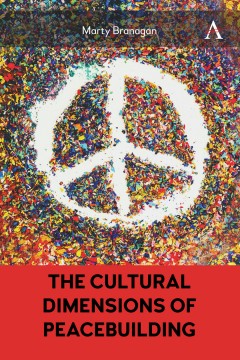
“Some have this view that the world is going down the gurgler, but I wanted to remind the audience that we don’t have to wait for governments or the United Nations. We can find solutions closer to home, in our everyday life, and build peace from the ground up – through our cultures, our language, our education systems, our journalism and even our parenting.”
And even though peace appears that most fragile of things right now, Marty remains hopeful.
People are not inherently flawed or violent and most of us want to live in peace and safety. We’ve allowed our cultures to deeply embed militarism and violence in the fabric of society, through the 24/7 news cycle and movies and even video games that put fear into people’s heads.
“If we start to remove militarism from our societies and consider what personal action we can take, it can percolate upwards – building sustainable peace within ourselves, our families and our communities.
“Every drop of mindful, compassionate action makes a ripple of change towards a global culture of peace. It adds to the streams of equality, justice, love and sustainability, and the ‘infinite ocean of peace’ that resides within us all.”
So, in this spirit, we have borrowed heavily from his Red Square presentation to bring you:
Marty’s practical tips for welcoming peace into your life
1. Avoid violent films and media content.
“Their implicit message is that violence equals power and is exciting and acceptable. And the more desensitised we become to this barrage, the more graphic it has to be to maintain that shock factor, which is then normalised.”
2. Be cautious about military initiatives, teaching, political donations, lobbying and even language.
“The military-industrial complex has a vested interest in continuing armed conflicts, in keeping us believing that violence is necessary. Even our English language is full of violent words and expressions. Swap them for more peaceful terms instead.”
3. Seek out the peace-building successes and good news stories.
“Such as the 22 countries, including Costa Rica, that don’t have defence forces and have much to teach the world.”
4. Work towards being a peaceful parent.
“It can be a powerful agent for positive social change and planetary healing. Education can create well-rounded, empowered young people capable of acting assertively and non-violently. Gender awareness can also counter toxic hyper-masculinities and enhance peacebuilding programs.”
5. Embrace the arts.
“The arts, humour and creativity – from puppetry to prose to punk – can move people from fear to engagement, personalise issues and cause deep changes in people’s worldviews.
6. Find peace within.
“Meditation, yoga and immersion in nature can lead to peace more widely – in homes, workplaces, communities and, ultimately, between nations.”


