
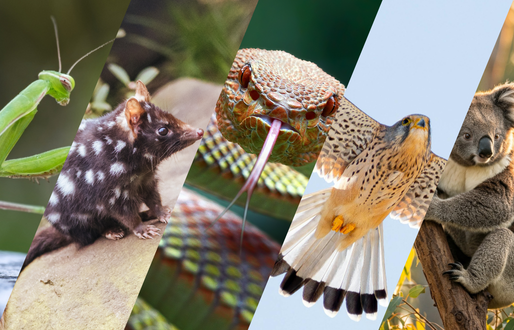
If you have a passion for wildlife, conservation, and ecology, a career in zoology might be perfect for you! Zoology is a varied and rewarding career path, tackling everything from understanding species and their distribution, informing environmental policy, creating natural history displays in museums, and educating the next generation. Whether you're drawn to fieldwork, research, or education, our insights will help you navigate this fulfilling profession.
What is a zoologist and what do they do?
A zoologist is many different things, but fundamentally they study animal biology, ecology, behaviour, and evolution. Zoologists apply this knowledge to wildlife conservation, land management, and environmental policy. Zoologists are different to both zookeepers and veterinarians. A zookeeper is focused on animal husbandry and public education and becoming a zookeeper can be achieved through VET pathways (Certificate III in Wildlife and Exhibited Animal Care/Captive Animals). A veterinarian provides clinical diagnosis and treatment to domestic animals and wildlife. To become a veterinarian, you must complete an accredited veterinary degree.
Types of zoology
- Ornithology: The study of birds: migration, behaviour, conservation.
- Herpetology: The study of reptiles and amphibians: ecology, handling, conservation.
- Mammalogy: The study of mammals: population dynamics, movement, genetics.
- Entomology: The study of insects: biosecurity, pollination, pest control.
- Ichthyology: The study of fish: freshwater and marine ecology, fisheries.
- Parasitology: The study of parasites: disease ecology, wildlife health.
How to become a zoologist
To become a zoologist, you will want a degree in zoology.
- Diploma in Science, major in Zoology
- A diploma is a great stepping stone into tertiary education and testing out the waters to see if you like studying zoology as it is a short, one year full-time course.
- Bachelor of Zoology
- The University of New England is the only university in Australia to offer a named Bachelor of Zoology. This three-year degree offers a grounding in fundamentals of zoology, evolution, and physiology and has four majors to choose from: Animal Ecology, Applied Zoology, Natural History, and Palaeobiology. This degree also has 10 minors to choose from including science communication, botany, spatial science, and more.
- UNE also has an active student-run zoology society which you can find on Facebook and Instagram for a student perspective on what studying zoology is like.
- Bachelor of Science, major in Zoology
- Many universities offer a major in zoology as part of their Bachelor of Science offerings. However, by choosing this pathway, you may find the course is not so focused on zoology and animal conservation and you may need to do units unrelated to zoology.
- Bachelor of Science with Honours
- This is a fourth year “add-on” course for students who want to explore the research opportunities science has to offer. At UNE, there are 18 majors to choose from within the Bachelor of Science with Honours including ecology, zoology, animal science, and environmental science.
Related degrees:
- Bachelor of Environmental Science
- If you want a holistic understanding of the environment around you from animals to plants to soil, you may be interested in a Bachelor of Environmental Science.
- Bachelor of Animal Science
- If you are more interested in domestic animals than wildlife, a Bachelor of Animal Science may be the degree for you. With this degree, you will develop expertise in a specialist area through your major in livestock science or animal bioscience
- Bachelor of GeoScience
- If you’re more interested in extinct animals than live ones, a major of palaeontology within our Bachelor of GeoScience may be your best fit.
Careers in zoology
- Research scientist: Contribute to the global understanding of wildlife. In this career you would work for organisations like universities, Commonwealth Scientific and Industrial Research Organisation (CSIRO), and museums.
- Environmental consultant: Impact assessment, biodiversity offsets, and monitoring. Start your own business or work for an established company like Eco Logical, 2Rog, or Environmental Group Australia.
- Government roles: Contribute to policy and biodiversity conservation, manage threatened species, ensure Australia’s biosecurity. This kind of work might involve the National Parks and Wildlife Service, the Department of Climate Change, Energy, the Environment, and Water (state and federal levels), and CSIRO
- Museum curator/collection manager: Curate natural history collections and create public programs.
- Non-Government Organisations: There are plenty of NGOs in Australia that work to conserve our native wildlife. These include the Australian Wildlife Conservancy, WIRES, Wildlife Warriors, and many more.
Realities of working in Zoology
- Much of the fieldwork that people want to do when they become a zoologist is seasonal and involves early starts, late nights, and working in unfavourable conditions.
- You will often be expected to work with data, entering it, analysing it, and writing reports to strict deadlines
- Collaboration is essential to zoology. Collaborating across scientific fields, government agencies, landholders, and other key stakeholders.
- Zoologists never stop learning. There are always new tools, methods, or regulations to learn.

